
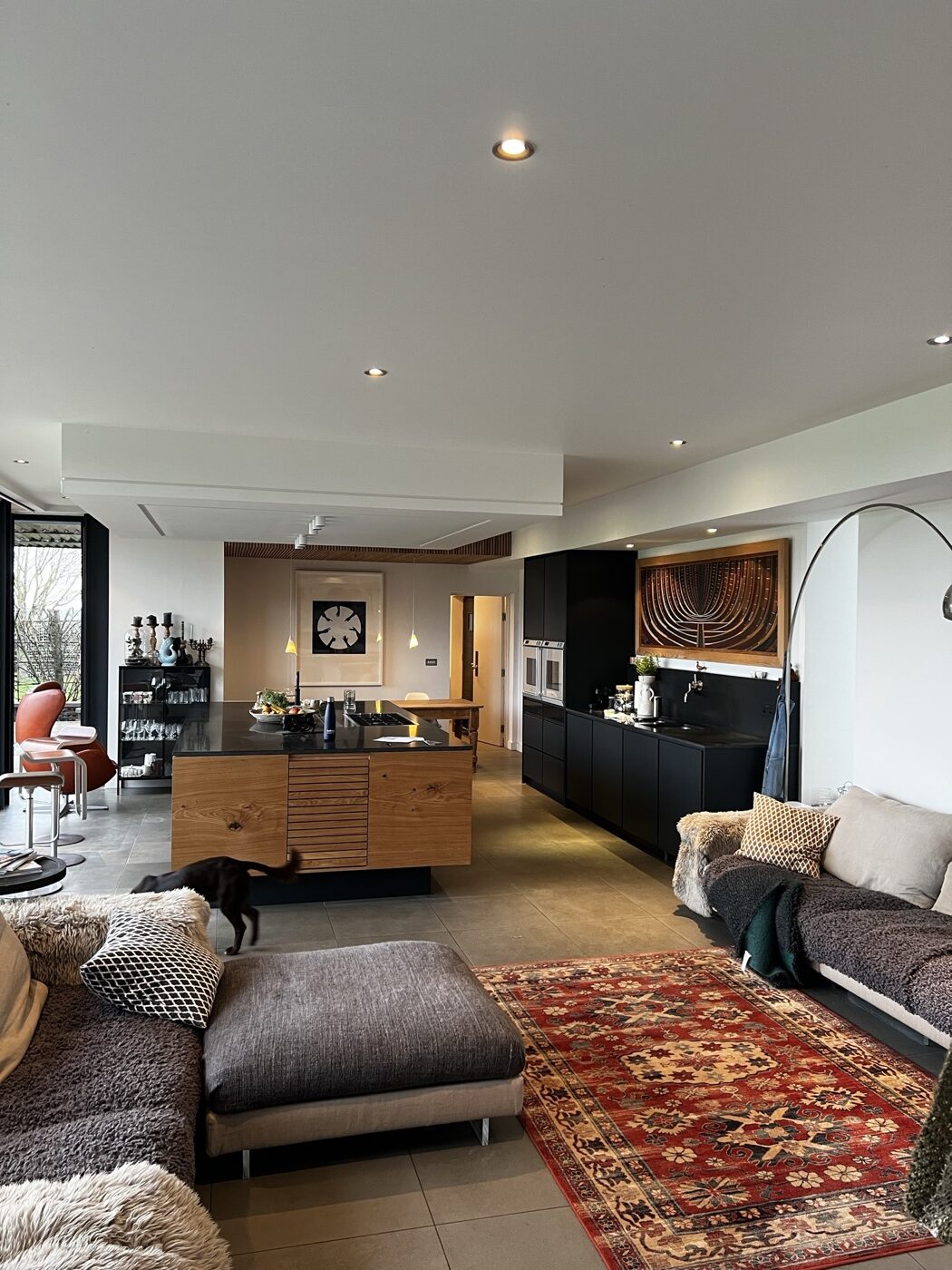
The island is the part of a kitchen everyone wants and the part most often got slightly wrong. Too big and it dominates; too small and it’s a glorified side table; badly placed and you spend your life walking around it. When we design one as part of a bespoke kitchen, we start not with how it looks but with how it’s used.
Decide what it’s for first
An island can be a preparation space, a place to sit and talk to whoever’s cooking, a home for the hob or sink, extra storage, or some combination. It rarely does all of them well at once. Be honest about which one or two matter most to you. A family that eats breakfast at the island has a different design from a couple who entertain and want a clean run of worktop to lay out food.
Get the clearances right
This is where most islands go wrong. You want roughly a metre of clear floor between the island and the runs around it — a little more on the main working side, a little less is just about liveable elsewhere. Less than that and two people can’t pass when a dishwasher or oven door is open. It’s worth taping it out on the floor before you commit; the footprint that looks generous on a plan can feel tight in the room.
If people will sit, design for it properly
Overhangs for seating need around 300mm of knee room and a comfortable stool height under the worktop. Squeeze it and no one uses the seats. We often set the seating section slightly apart from the working zone so crumbs and clutter don’t migrate into where someone’s eating.
Make the storage earn its place
An island is a wonderful storage opportunity — deep drawers for pans, a home for bins and recycling, sometimes a larder end. We plan the internals around what you actually own rather than filling it with standard units. Drawers nearly always beat cupboards here: you can see and reach everything without crouching.
Worktops: where to spend
The island worktop takes the most use and the most looking-at, so it’s the place to spend if you’re choosing where to. Stone is hard-wearing and handsome; timber is warm and forgiving but wants maintenance; the right choice depends on how you cook and how relaxed you are about a bit of patina. We’re happy to talk through the trade-offs honestly rather than steer you to whatever’s easiest to fit.
Don’t forget the services
If your island has a sink or hob, the plumbing, electrics or extraction have to come up through the floor — which means deciding its position early, while the floor is still accessible. Move an island after first-fix and you’re into real disruption. This is exactly why kitchens reward planning the boring bits first.
Every kitchen we make is designed around the people using it, not pulled from a catalogue. If you’re planning one, take a look at our recent projects or come and talk to us.