
Bespoke scandi kitchens from Reeve & Co — handmade in our Suffolk workshop for high-end homes across London, the Home Counties and East Anglia.
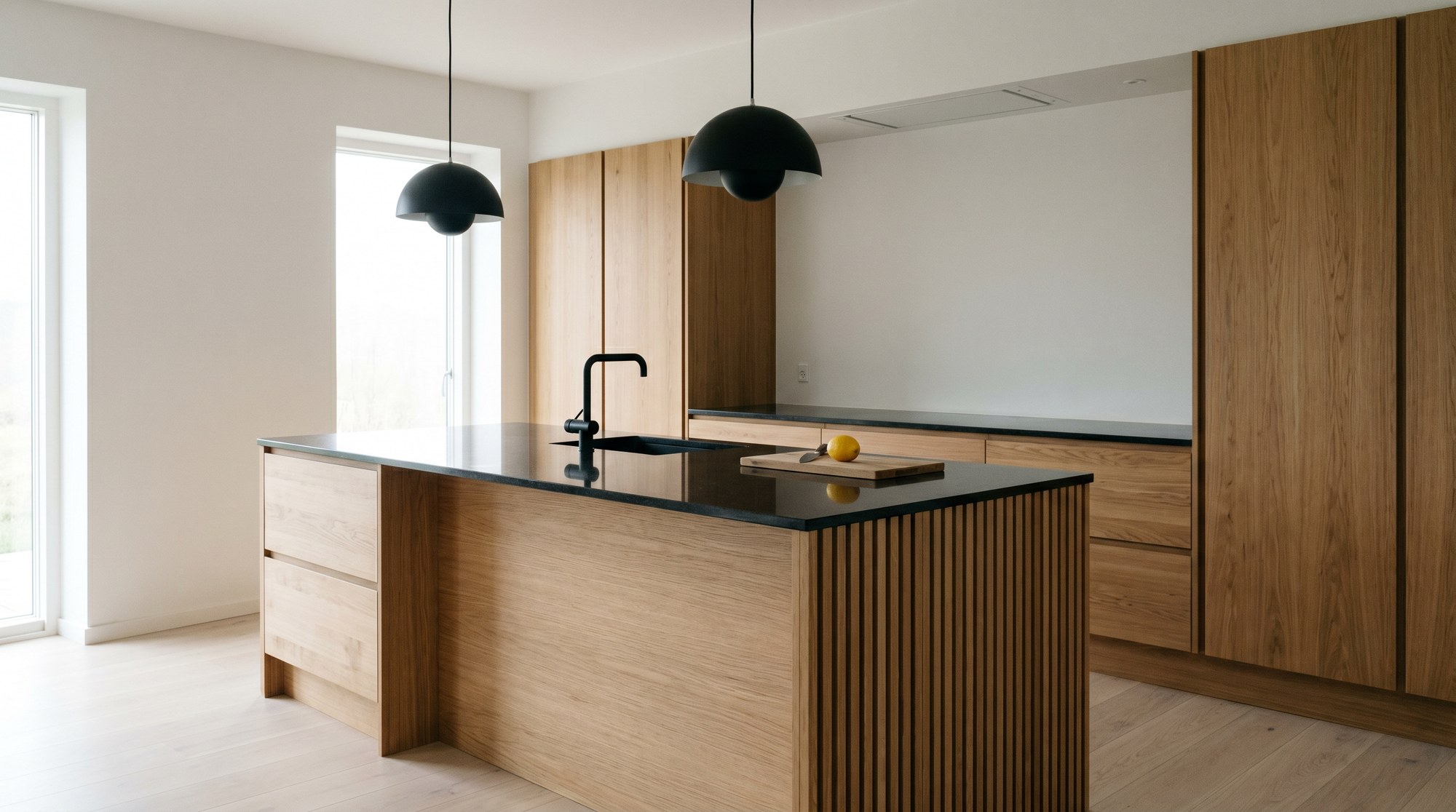
Quiet, modern, hand-made
The Scandi Kitchen
The Scandi Kitchen is our most restrained style. Pale oak, painted cabinetry, finger-jointed fronts, slatted details, matt black or aged-bronze ironmongery. Built in our Suffolk workshop in solid timber rather than veneered MDF — Scandinavian design that ages with the house, not out of fashion.
Workshop-built, not flat-packed
Most Scandinavian kitchens on the UK market are system kitchens: efficient, attractive and often built around factory modules. A Reeve & Co Scandi kitchen is made bench-by-bench in our Suffolk workshop, with carcases and fronts drawn for the room rather than forced into a fixed grid.
The difference is quiet rather than loud. Better junctions. Better material choices. Cabinetry that works around the architecture instead of asking the architecture to work around it.

Oak, finger-jointed and finished by hand
Oak brings warmth to the style, but the finish matters. We sample hard-wax oil, clear lacquer and washed finishes before the kitchen goes into production.
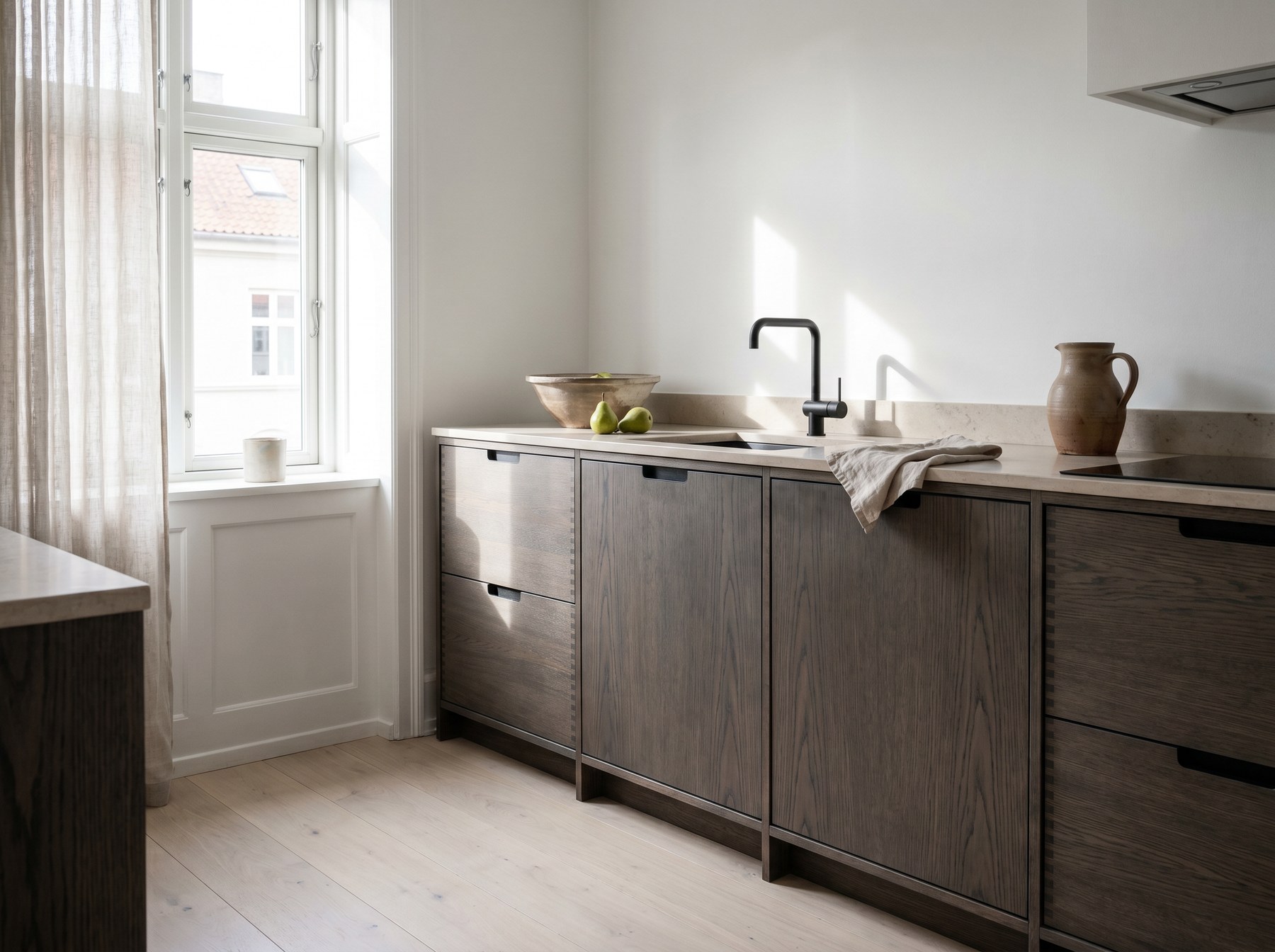
Restraint as a design choice
Handle-less fronts, slim plinth shadows and full-height runs work best when every line is drawn deliberately.
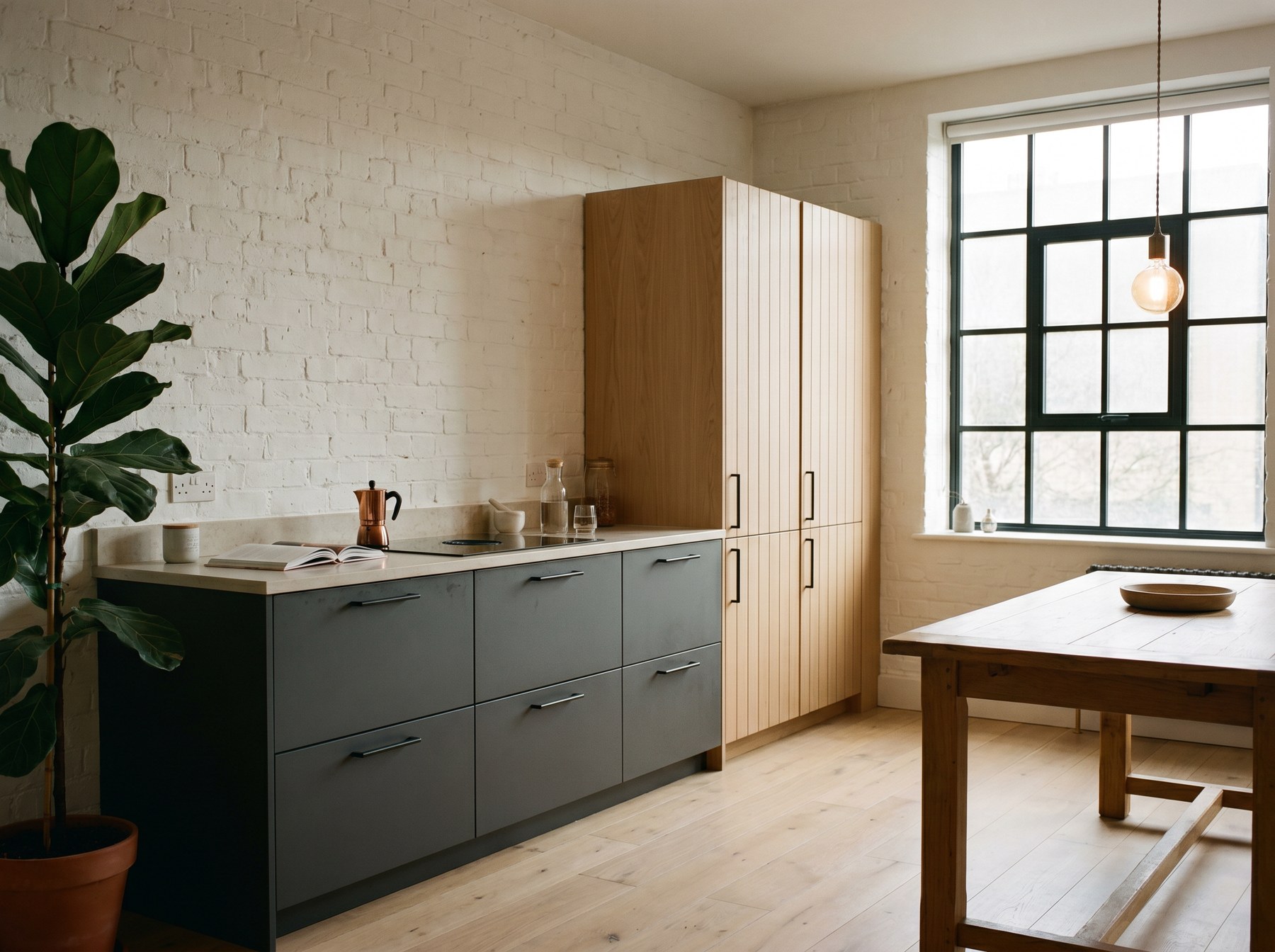
Materials and ironmongery
Solid oak, fumed oak and painted timber, paired with stone, oak, porcelain or stainless steel surfaces.
Where a Scandi kitchen suits
Barn conversions, contemporary new-builds, coastal homes and modern wings of country houses all suit this quieter language.
Designed with the rest of the house
The same oak, paint and ironmongery can carry through into utility rooms, boot rooms, wardrobes or fitted studies where the brief asks for it.
Frequently asked questions
Oil or lacquer for an oak finish?
Oil gives a softer natural surface that can be refreshed. Lacquer gives a harder, more sealed surface. We sample both against the room and the way the kitchen will be used.
Can appliances be integrated behind oak fronts?
Yes. Fridges, freezers, dishwashers and ovens can sit behind fronts drawn into the kitchen run, subject to appliance weight and ventilation.
Do you offer handle-less fronts only?
No. We use handle-less detailing where it suits the architecture, and hardware where the kitchen wants a more tactile or practical finish.
How long does a Scandi kitchen take?
Programme depends on the timber selection, finishing samples and workshop schedule, and is confirmed once the design is agreed.
Keeping a Scandi kitchen warm rather than stark
The best Scandi kitchens are not empty white rooms. They are warm, practical and calm, with real timber, good light, concealed storage and quiet detailing. In a bespoke setting, the work is in the restraint: deciding which lines should disappear, which materials should be allowed to show and where the room needs a tactile moment.
Natural oak, pale painted cabinetry, fumed timber, stone and soft metalwork can all sit within the Scandi language. The challenge is to keep the room from becoming flat. We often do that through shadow gaps, timber grain direction, a carefully proportioned island, open shelving used sparingly and handles or recessed pulls that feel deliberate.
This style is especially useful where the architecture is already doing a lot of work: a barn conversion with large openings, a coastal house with strong light, or a modern extension where the kitchen needs to stay quiet and let the room breathe.
Storage stays hidden
Breakfast cupboards, pantry storage, bins, refrigeration and appliance housings are planned so the room stays visually calm.
Timber should be specified carefully
Oak, ash, elm and veneers behave differently, so we sample finish, grain and edge detail before committing.
Minimal does not mean standard
The cleaner the elevation, the more important the tolerances, reveals and junctions become.
Lighting is part of the furniture
Integrated lighting, shelf lighting and task lighting can be detailed into the joinery rather than added later.
Local kitchen work, national joinery standards
For bespoke kitchens our main local focus is Suffolk, Essex, Norfolk and Cambridgeshire, but Reeve & Co also fits high-end kitchens and fitted furniture nationally. We are regularly working in London on residential joinery projects, so the workshop is used to delivering the same level of detail for townhouses, country homes, apartments and larger private houses well beyond East Anglia.
Have a Scandi kitchen in mind?
Send us the room, the drawings or the brief and we will talk through whether this quieter, oak-led approach is right for the house.
Bespoke scandi kitchens by Reeve & Co
From our Suffolk workshop we design, make and install bespoke scandi kitchens for high-end homes across London, the Home Counties and East Anglia. Every commission is made to measure and finished to a furniture-quality standard. To discuss bespoke scandi kitchens, get in touch or explore our case studies.