
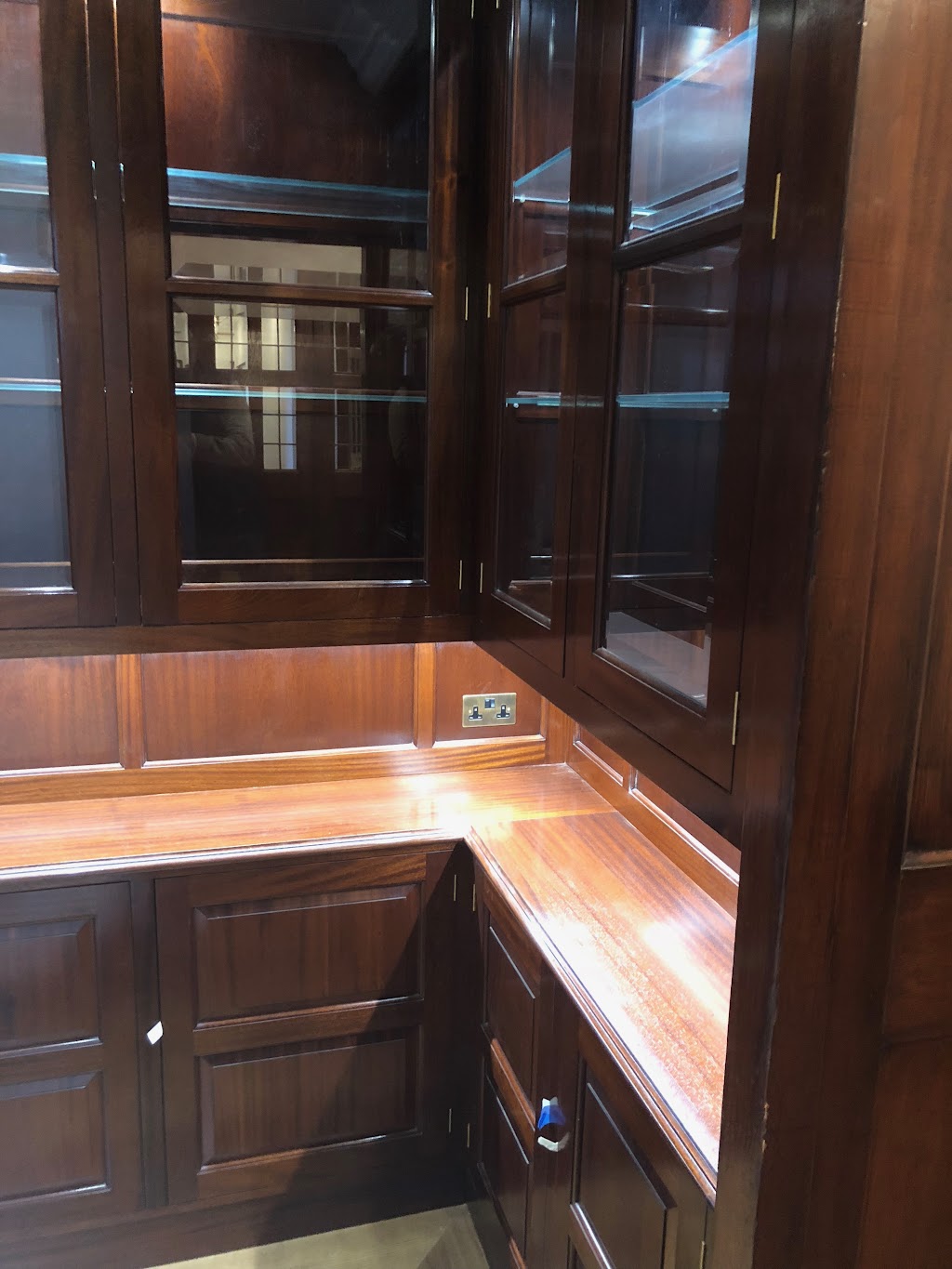
Most of the joinery we make starts on someone else’s drawing board. We work with architects and interior designers far more often than directly with homeowners, and over the years we’ve learned that the projects that run smoothly tend to share a few habits. None of them are complicated. So here, plainly, is how to get the best out of a maker like us.
Bring your joiner in earlier than feels necessary
The most common thing we hear is “I wish we’d had you in sooner.” By the time a scheme is fully detailed, a lot of decisions have quietly been made — wall build-ups, service runs, ceiling heights — that affect what’s actually buildable. Involving us at concept or early developed-design stage costs you nothing and usually saves a round of revisions. We can flag where a detail will be expensive, where a junction won’t resolve, and where a small change in setting-out makes the whole piece sit better.
A good brief is about intent, not just dimensions
We can read a drawing. What we can’t read is the bit in your head — how crisp you want a shadow gap, whether a run of cabinetry should read as furniture or as architecture, how the client actually lives. Tell us the intent and a reference image or two, and we’ll detail towards it. The more you tell us about tolerances that matter to you, the fewer surprises later.
Survey before you finalise
Buildings are rarely square, and period buildings never are. We take a measured survey and produce a full set of 3D CAD drawings before anything is cut, scribing every piece to the space. If we can survey once the structural and first-fix work is done — but before plaster — we can resolve service positions and fixings cleanly rather than chasing them on site.
Lead times, honestly
Quality joinery takes time, and it’s worth protecting that time in your programme. As a rough guide, a single statement piece might be six weeks from sign-off; a whole-house package can run to several months including survey, drawings, manufacture and installation. The making is only part of it — hand-finishing and a controlled paint or polish process can’t be rushed without it showing. Build that into the schedule early and the install becomes the easy part.
Let us look after the installation
Our site team installs our work wherever possible. It’s not territorial — it’s that the person fitting a scribed panel to an out-of-true wall should be someone who understands how it was made. It protects the finish, keeps the programme tight, and means one point of responsibility from first drawing to final fit.
On budget
We’d always rather have an honest conversation about budget early than value-engineer the soul out of a piece late. Tell us the figure you’re working to and we’ll tell you, candidly, what’s achievable and where the money is best spent. Often it’s not where people expect — a restrained scheme made beautifully will always read better than an ambitious one made to a price.
If you’ve a project in mind, we’re always happy to look at early drawings and talk it through. You can see recent work in our case studies, read more about how we work with design teams, or simply get in touch.
If this is the sort of work you have in mind, there is more on how we approach bespoke studies, libraries and home office furniture — all of it drawn, made, hand-finished and fitted by our own people from the workshop at Mickfield in Suffolk.
If you are still deciding who to work with, our note on choosing a bespoke joinery workshop in Suffolk sets out the questions worth asking before anything is drawn.