
Quick answer: Precision machinery does not replace the cabinet maker — it frees them. At Reeve & Co, technology like CAD and CNC handles the exact, repetitive work to a tolerance the hand cannot match across volume, which lets our makers spend their time where it actually shows: on the joints, surfaces and fit you touch. The result is joinery that is both more accurate and more refined than the hand or the machine could achieve alone.
There is a common worry among people commissioning bespoke work for the first time: if a machine is involved, is it really handmade? It is a fair question, and the honest answer is one we are happy to give — because the way we combine the two is precisely what makes our work better.
The false choice between craft and technology
The finest workshops in the country have never seen this as either/or. Machinery has been part of cabinet making for over a century; what has changed is its precision. Today a well-set-up workshop can cut, profile and repeat components to fractions of a millimetre — and that accuracy is a gift to craftsmanship, not a threat to it.
Think of it this way. When a machine takes care of dimensioning a long run of cabinetry so every face frame is identical, the maker is freed from the slow, repetitive groundwork and can pour their hours into the parts that need a craftsman’s eye and hand: the fit of a drawer, the closing of a mitre, the way a panel sits flush in its frame, the final preparation before finishing. The machine raises the floor; the maker raises the ceiling.
How it works in our Suffolk workshop
Every Reeve & Co commission follows the same path, and technology and craft each have their place along it:
- Design in CAD. We draw every project in 2D and 3D CAD, so the detail — junctions, reveals, mouldings — is resolved and approved on screen before anything is cut. What you sign off is what you receive.
- Precision machining. From the approved drawings, components are machined to exact, repeatable tolerances, so a wall of panelling or a whole-house package reads as one considered piece.
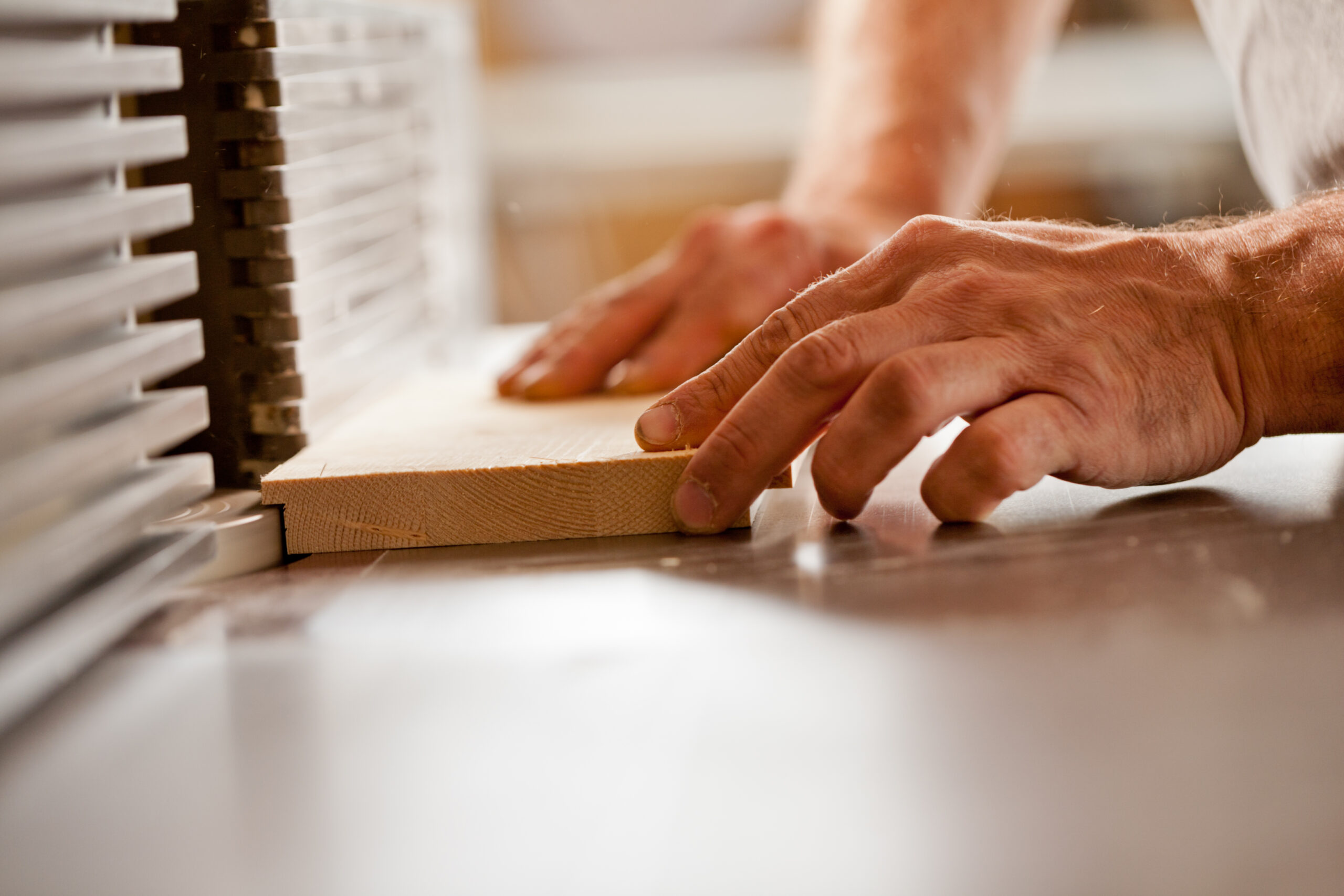
- In-house profiling. Our Felder spindle moulder lets us produce bespoke mouldings and match historic profiles in-house — invaluable in period and listed homes.
- The bench. The piece is then assembled, fitted and finished by hand by makers who read the timber and adjust to it. This is the craftsmanship no machine can automate.
- Finishing. Painted and lacquered work is hand-finished in our own spray booth, under controlled conditions, to a furniture-grade standard.
Why this matters for you
For a private client, it means a piece that is both exact and beautifully made — fitted properly, finished deeply, and built to last. For an architect or designer, it means the detail you drew is the detail that arrives on site, because it travelled from a single CAD model to the machine to the bench without being re-drawn or re-interpreted along the way. Precision and craft, pulling in the same direction.
It is also, quietly, more sustainable. Work made accurately the first time wastes less material and lasts longer — and our workshop runs on solar generation with offcuts feeding our biomass heating, so waste from one job helps make the next.
The point of the machine is more time for the hand
The best bespoke joinery has never been about rejecting technology. It is about using it with judgement — letting precision tools do what they do best, so skilled people can do what only they can. That is how we hold a furniture-grade standard on projects far larger than a single piece of furniture, and it is why we think the future of fine joinery is not hand or machine, but both.
Frequently asked questions
Does using CNC machinery make a kitchen less bespoke?
No. Every piece is still designed from scratch to your exact project. The machine simply executes the maker’s drawing more precisely than hand-cutting alone could, and frees the maker for the detailed work that needs a craftsman.
Is the work still handmade?
Yes. Assembly, fitting and finishing are all done by hand at the bench by our cabinet makers. Machining handles the precise groundwork; the craftsmanship is human.
Can you match existing or period mouldings?
Yes. With our spindle moulder we reproduce bespoke and historic profiles in-house, so new joinery matches original fabric in period and listed interiors.
Where is the work made?
Everything is designed, machined, assembled and finished in our Suffolk workshop at Mickfield, then installed by our site team.
Want to see how your project would be made?
We’re always glad to talk through it — and to show you the difference precision makes. Call 01449 710 500, email sales@reeveandco.com, or start a conversation.
If this is the sort of work you have in mind, there is more on how we approach bespoke studies, libraries and home office furniture and timber wall panelling — all of it drawn, made, hand-finished and fitted by our own people from the workshop at Mickfield in Suffolk.