
Gun Cabinets and Gun Rooms in Europe
English cabinetmaking for European sporting estates and country houses. Made in Suffolk, delivered and installed on the Continent, or shipped for local fitting.
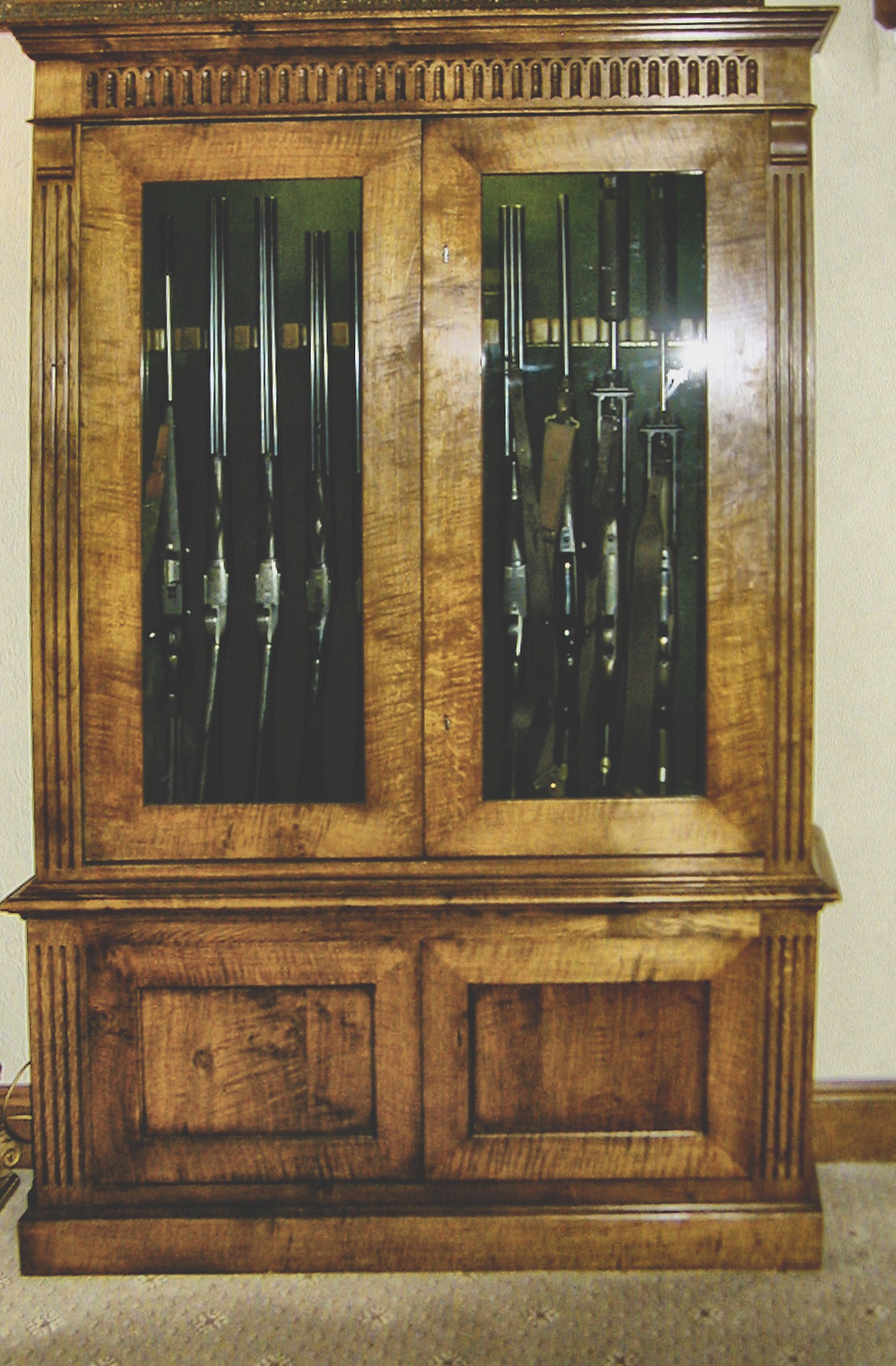
An English cabinet for a European collection
Driven shooting on the Continent has a long and serious tradition, and a great many European collections contain English guns. Where the guns came from England, there is a natural logic to the case coming from England too.
What we make is furniture first. Quarter-sawn oak showing medullary ray, walnut book-matched across a pair of doors, mahogany under French polish, mouldings and cornices drawn to the proportions of the room. It is a particular kind of cabinetmaking, and it is recognisably English in a way a client on the Continent is generally buying deliberately rather than by accident.
Behind the timber the construction is the same everywhere: steel over 2mm throughout the lined carcass, laminated anti-bandit glass from 21.5mm where doors are glazed, folded steel doors with anti-cut pins, and five-lever mortice locks to BS 3621.
Storage rules vary, and we do not pretend otherwise
Firearms law in Europe is national law. It varies considerably between countries, and in some it varies within them. There is no single European storage standard we could build to even if we wanted to.
So we are plain about it: we are English cabinetmakers. We do not advise on the requirements of any country outside the United Kingdom, and nothing we make is offered as compliant with a national standard we have not tested against.
What we do instead is publish exactly what we build, so you or your adviser can check it against whatever applies where you are. If your national requirement or your insurer asks for something specific, tell us at the drawing stage and we will say honestly whether we can meet it.
There is a second route that suits a good many European clients: our cabinetmaking built around a security unit sourced locally, so the certification is the one your insurer recognises and the furniture is English. Two rules apply as they do at home — the unit stays fixed to the structure of the building, and our joinery never obstructs its locking or its fixings.
Delivering and installing on the Continent
Where it is practical we deliver and install ourselves, exactly as we do in the UK. It is a longer journey and it is priced accordingly, but the advantage is real: the people who made the piece are the people who fit it, and any adjustment on the day is made by someone who knows how it was built.
Where that is not practical, we ship. In that case you get full setting-out drawings and fixing details for a local joiner, and we stay available while it goes in. We would always rather fit it ourselves, but where we cannot, we make sure whoever does has everything they need.
Larger runs are designed to break down for transport from the first drawing, so joints fall where they can be reassembled cleanly rather than being cut about at the last minute. Crating is made to suit the piece, everything is documented, and we work with freight partners who handle furniture rather than general cargo.
Climate, and why it belongs in the specification
European houses cover a very wide climatic range, from Alpine chalets that are unheated for months to Mediterranean properties that are hot and dry for half the year. Both are harder on timber and on blued steel than an English winter.
Solid timber moves with humidity. That is not a defect, it is what timber does, and good cabinetmaking accommodates it — panels held so they can move, joints cut to allow for it, and finishes chosen to suit. The difference between a cabinet that behaves and one that opens a joint in its first summer is decided at the drawing stage.
Ventilation matters for the guns as much as for the furniture. A sealed, unheated room is very good at putting rust on blued steel. For a valuable collection in a property that stands empty for part of the year, it is worth discussing active humidity control before anything is made rather than after.
Tell us where the piece is going and what the building does through the year. It changes what we specify.
What travels
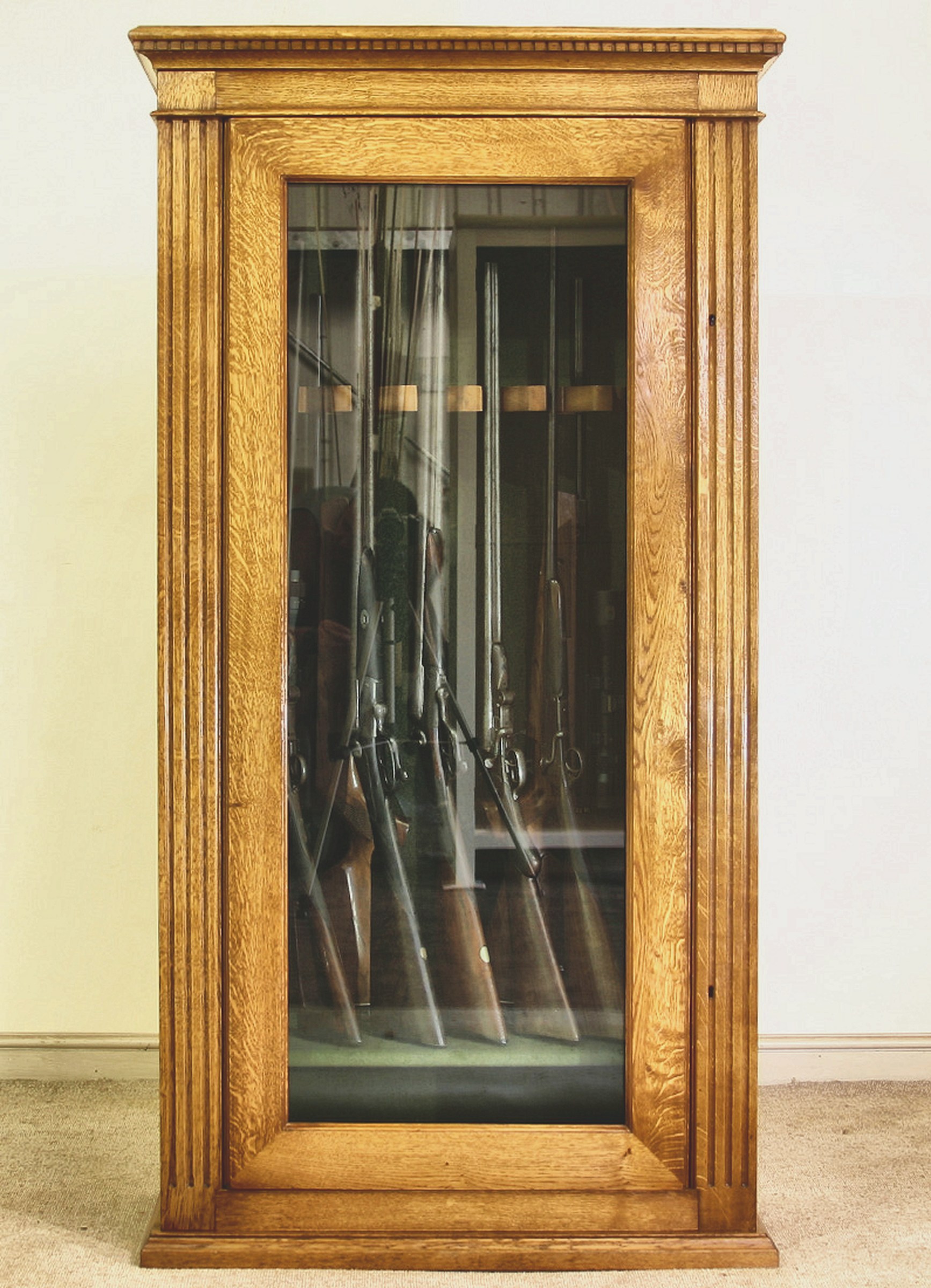
Glazed cabinets
Dentil cornices and fluted pilasters, in quarter-sawn oak.
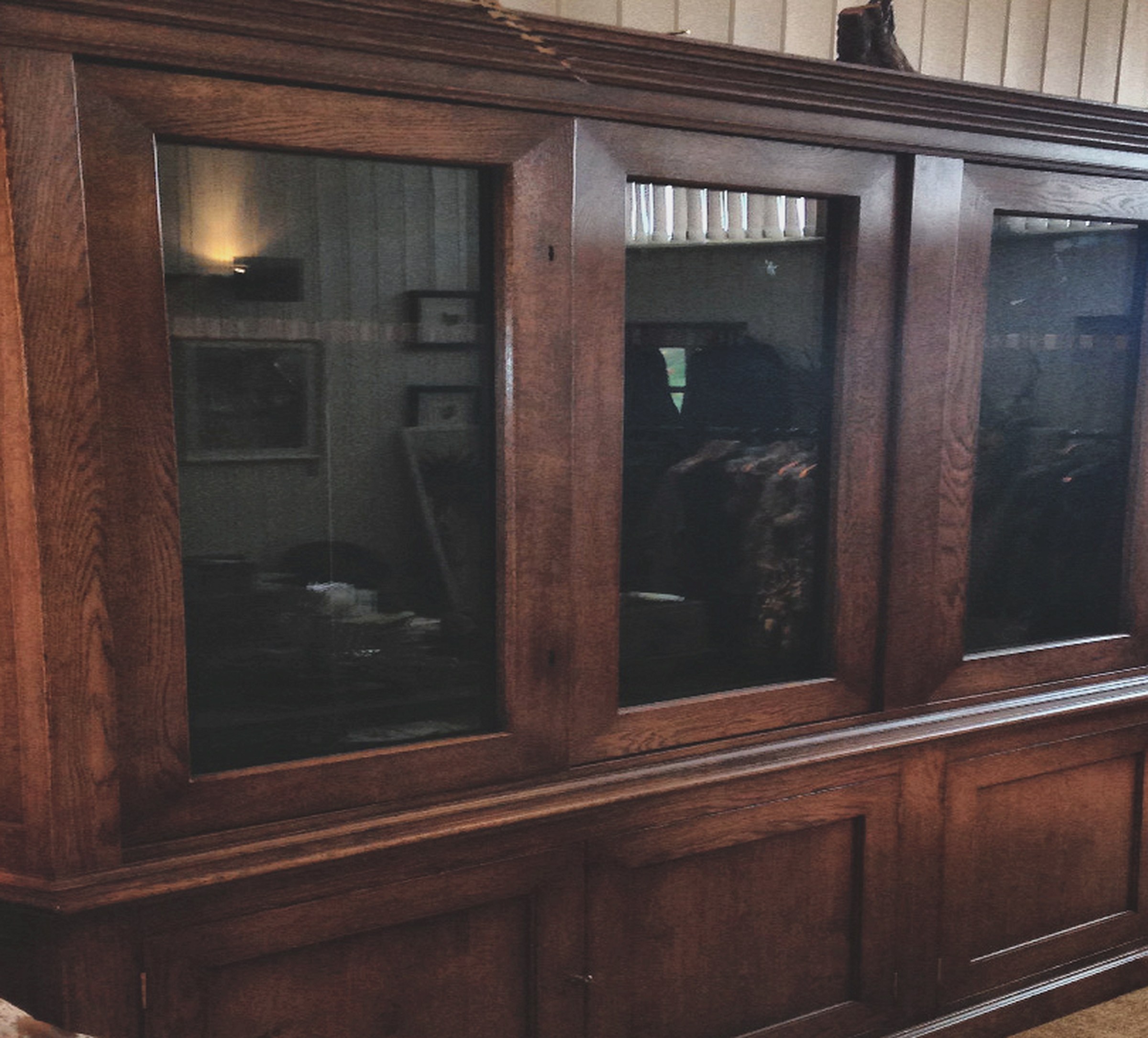
Fitted runs
Designed to break down for transport and reassemble cleanly.
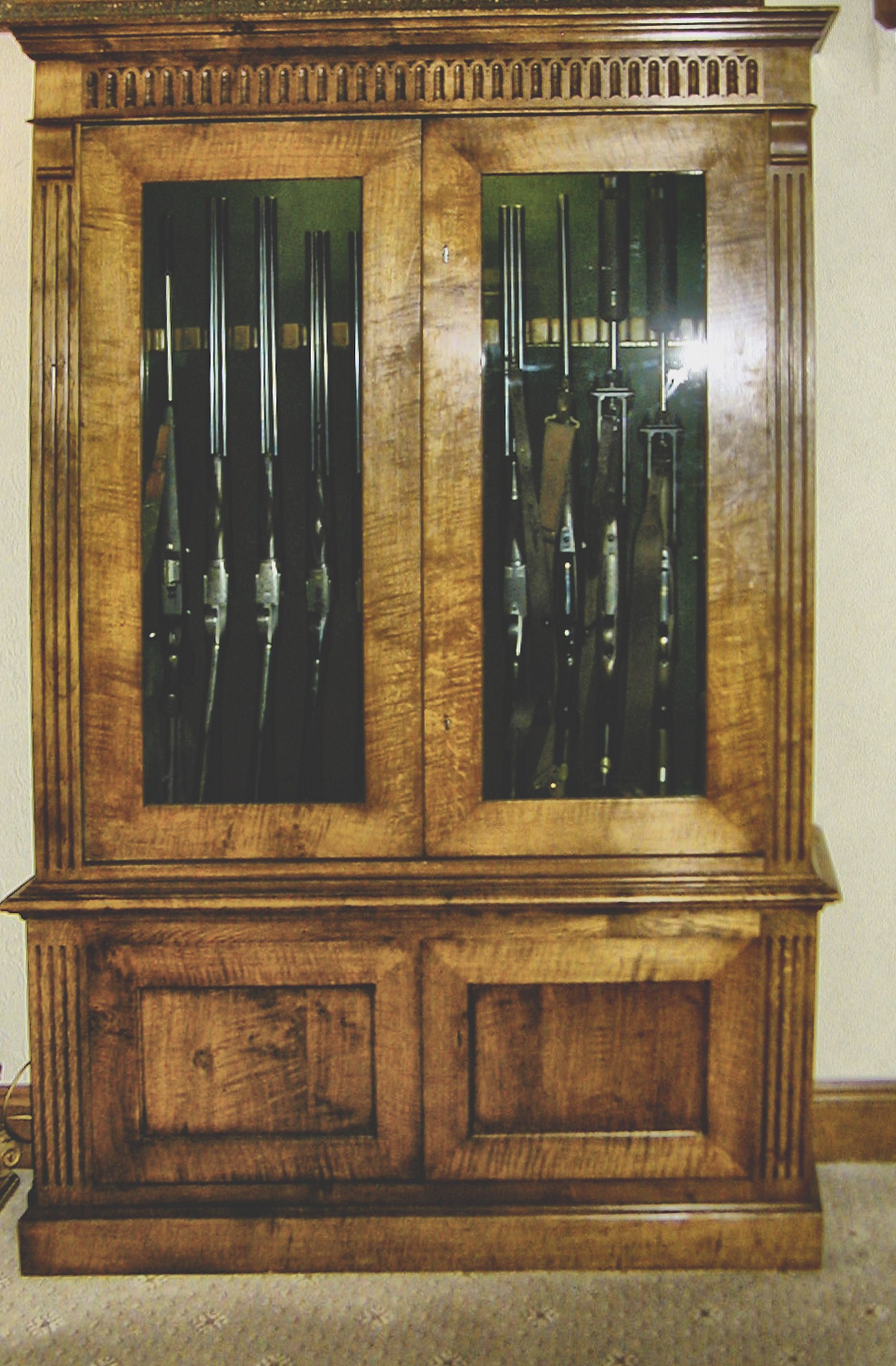
Antiqued finishes
So a new piece sits with older furniture rather than against it.
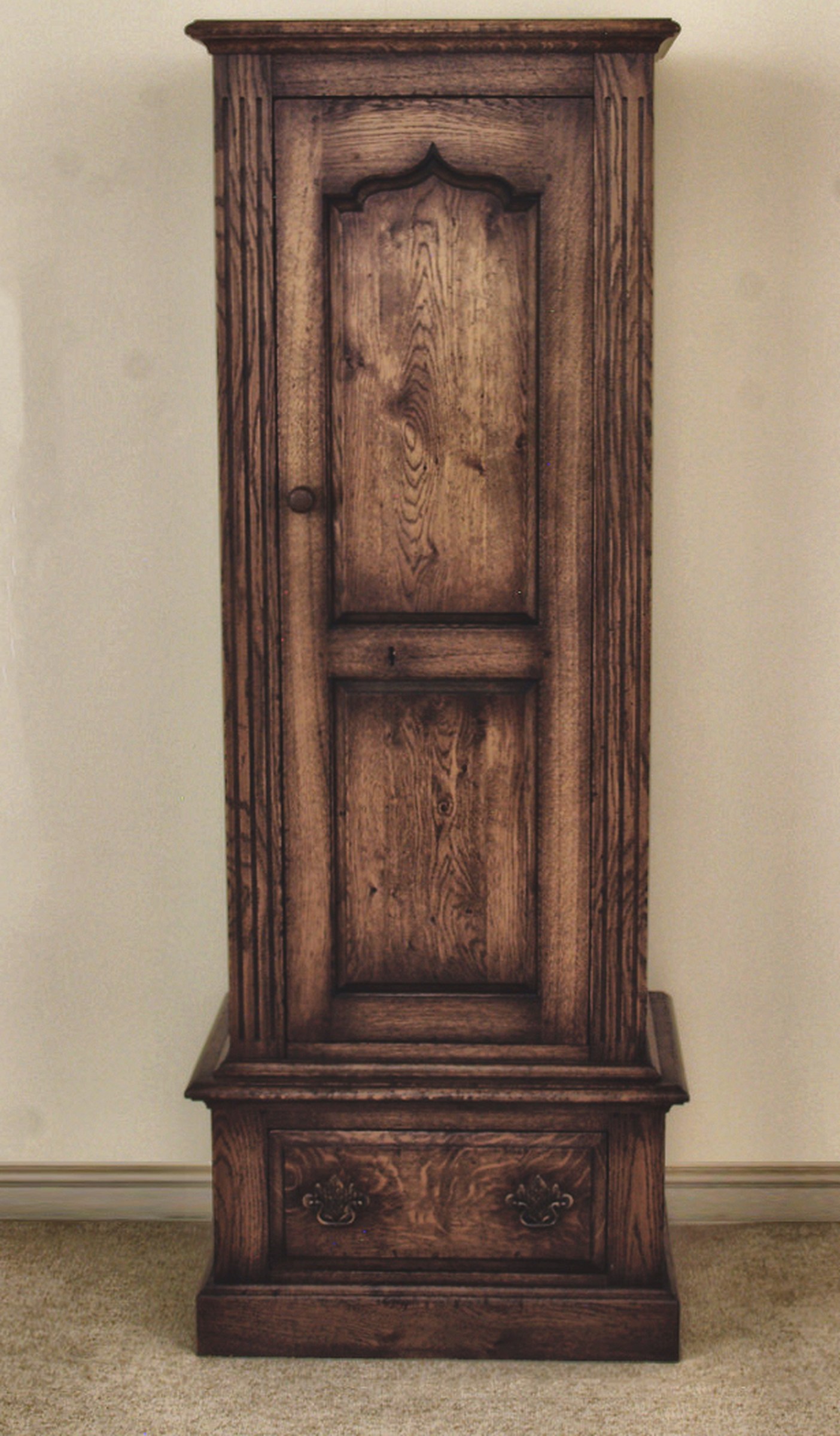
Solid timber
Fielded and arched panels in the English tradition.
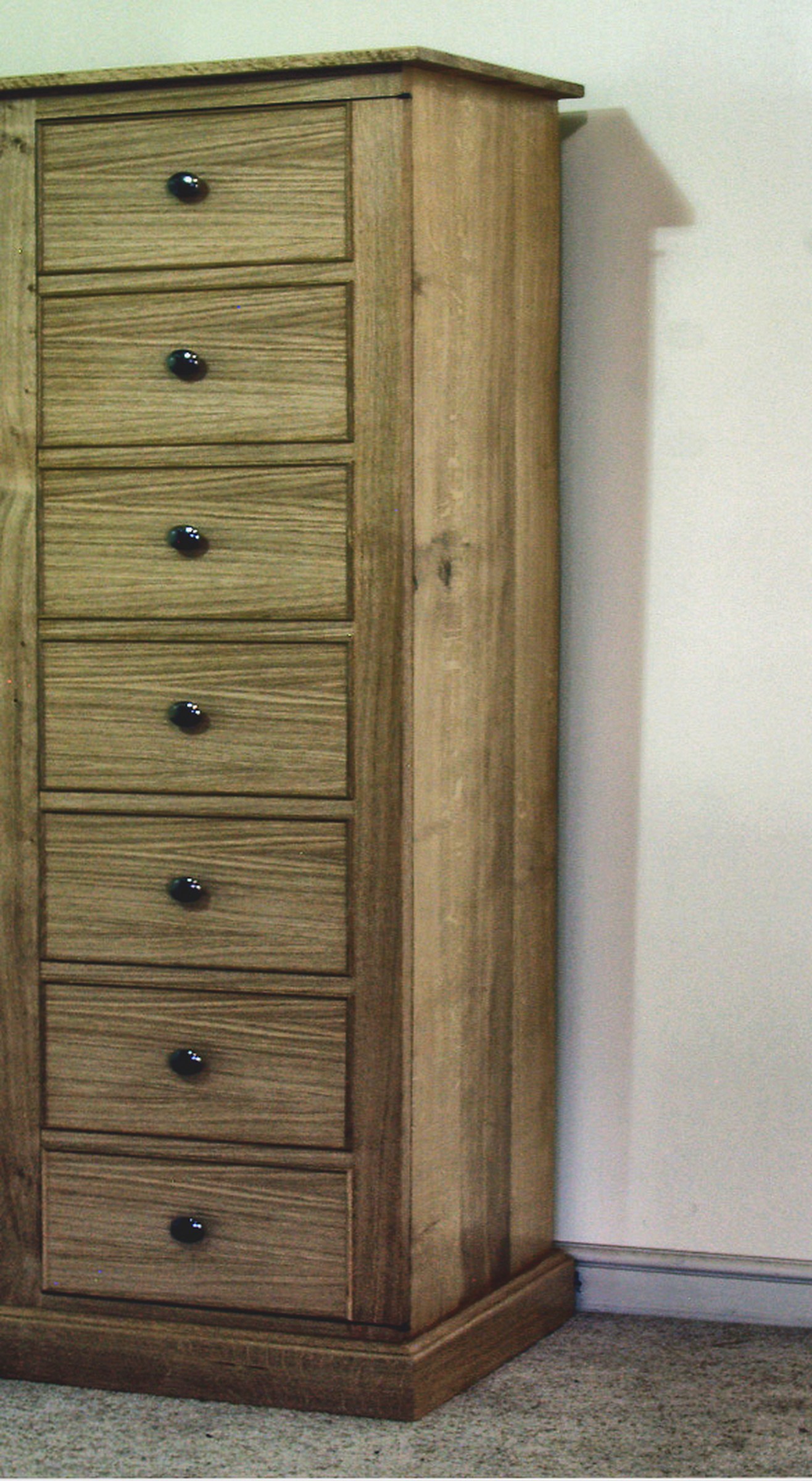
Wellington chests
Cartridge and accessory storage, matched to the cabinet.
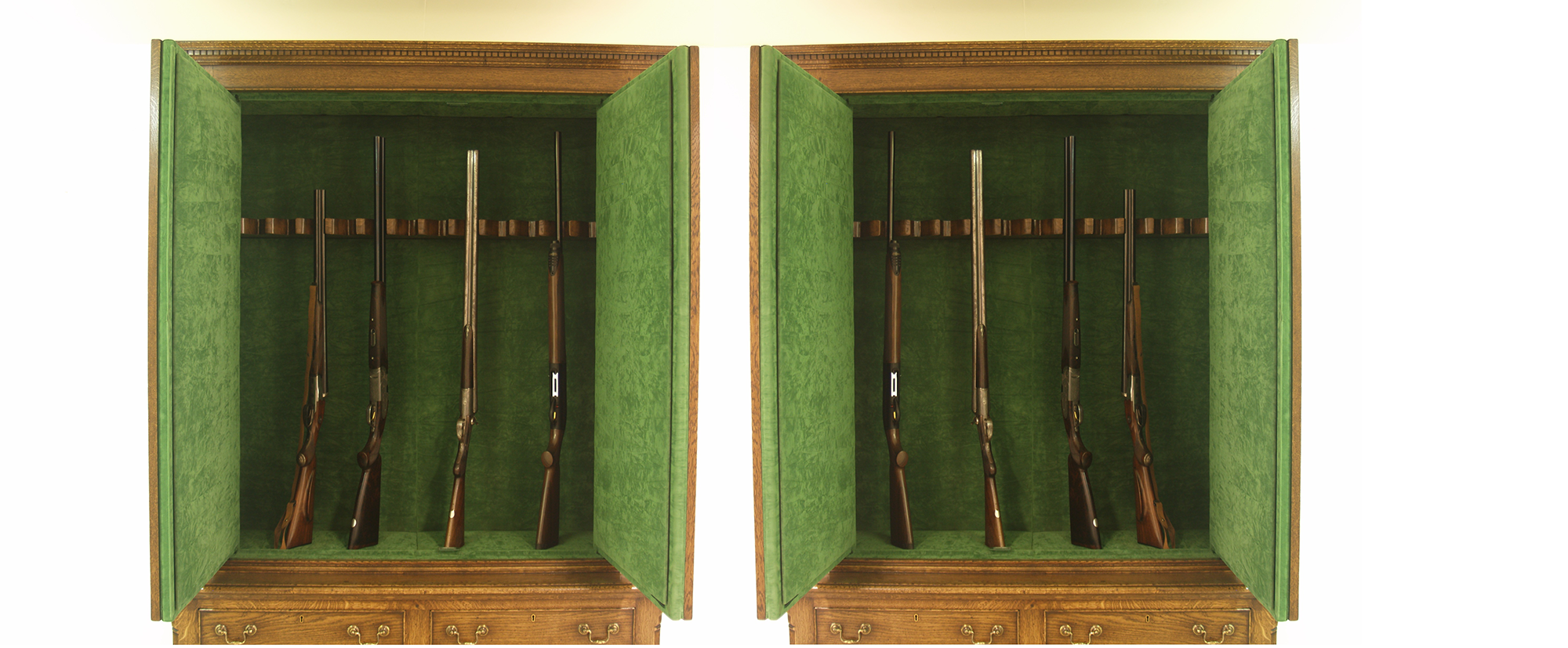
Interiors
Racks drawn around the collection, whatever it contains.
Questions we are asked
Do you deliver and install in Europe?
Where practical, yes, with our own team, exactly as we do in the UK. Where it is not, we ship and provide setting-out and fixing details for a local joiner, and stay available while it goes in.
Will it meet the rules in my country?
We do not advise on requirements outside the UK and we will not claim compliance with standards we have not tested against. We publish exactly what we build so you or your adviser can check it. Tell us what is required at the drawing stage and we will answer honestly.
Can you build around a locally certified unit?
Yes, and for many European clients that is the right answer. You get certification your insurer recognises, with English cabinetmaking around it. The unit stays fixed to the structure, and our joinery never obstructs its locking or fixings.
How is shipping quoted?
Separately and visibly, so you can see what the piece costs and what the logistics cost. It depends on destination, size and whether we travel.
What about humidity and movement?
It is part of the specification rather than an afterthought. Tell us where the piece is going and what the building does through the year — unheated in winter, hot and dry in summer — and we will specify accordingly.
How long does it take?
Longer than a domestic commission, mostly at the drawing stage rather than in the workshop. Allow a few months from first contact, and more for a fitted run.
All gun cabinets
What we make, what it costs and how a commission runs.
Fitted gun rooms
Steel lining, timber cladding and a clad firearms door. From £20,000.
What the rules actually say
No law requires a gun cabinet. What the Firearms Rules do require.
Send us your gun list
Send us your gun list and a photograph of the room, and we will come back with a drawing and a price. From £7,000 plus VAT, delivered and installed.
Start a commissionFurther reading: gun room security, and what the rules actually say. Responsibility for the security condition on your certificate rests with you as the certificate holder, and the adequacy of any storage arrangement is a matter for your firearms licensing department.