
Fitted Gun Rooms
Purpose-built gun rooms for country houses, shoots and private collections — the structure dealt with properly, then panelled, lit and finished like the rest of the house. From £20,000.
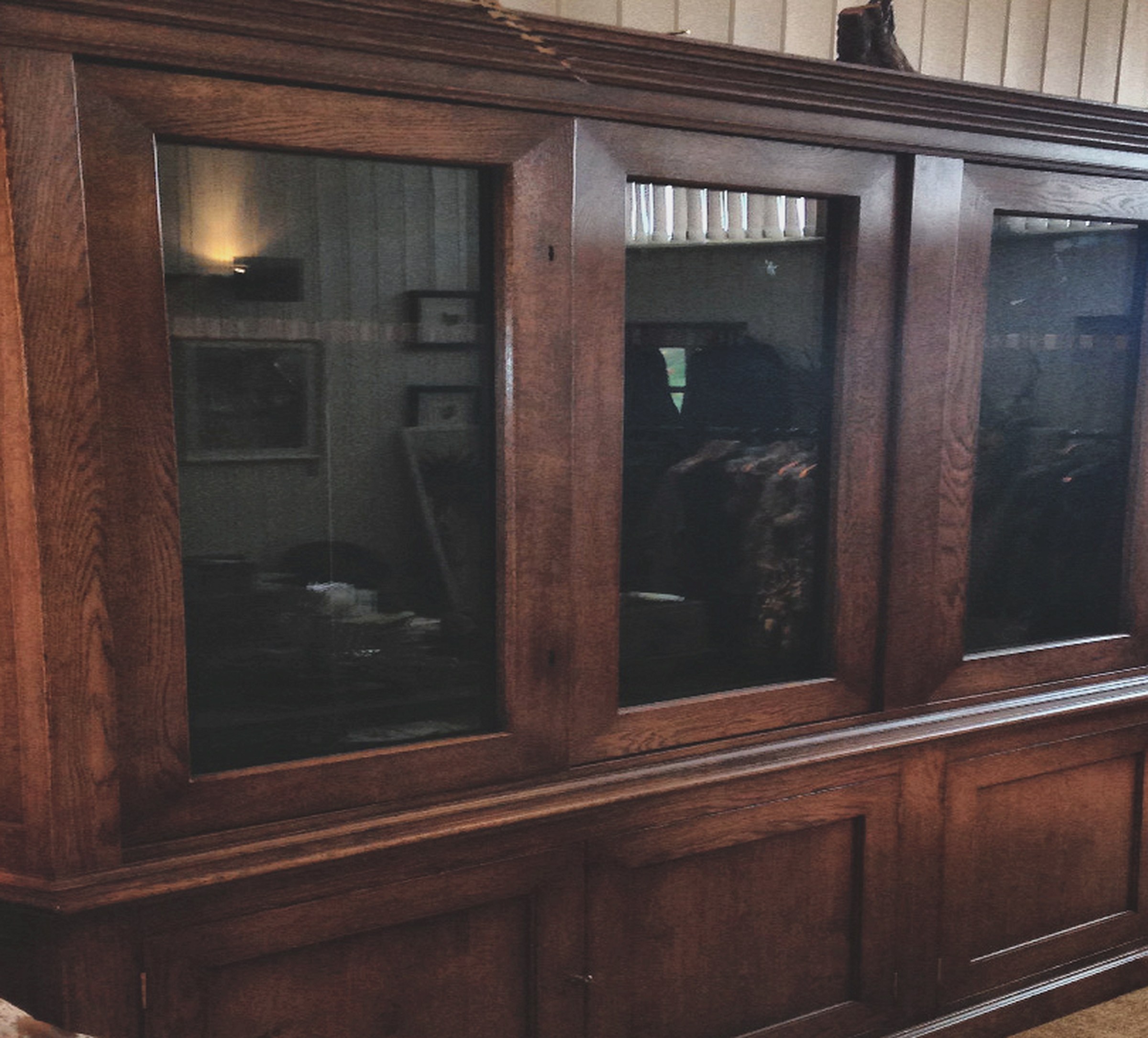
A room made secure, then made beautiful
A gun room is not a cabinet with more doors. It is a room, and that changes the problem entirely.
With a cabinet, the security is the object: a steel box, bolted down, doing its work regardless of the wall behind it. With a room, the security is the fabric of the building — the walls, the door and its frame, the ceiling above, any window, and how they all meet. You can put the finest joinery in England inside a room whose walls are plasterboard on studwork, and you will have achieved nothing except a very expensive cupboard.
That is why the security goes in before the cabinetmaking. It is also why the first conversation is usually about what the walls are made of, what is above the ceiling and how the door is hung, rather than about timber and finishes.
Once that is settled, a gun room is one of the most rewarding rooms in a house to make. It is small, it is private, it is used by somebody who cares about what is in it, and it can carry a level of detail that would be excessive anywhere else.
Steel first, then timber
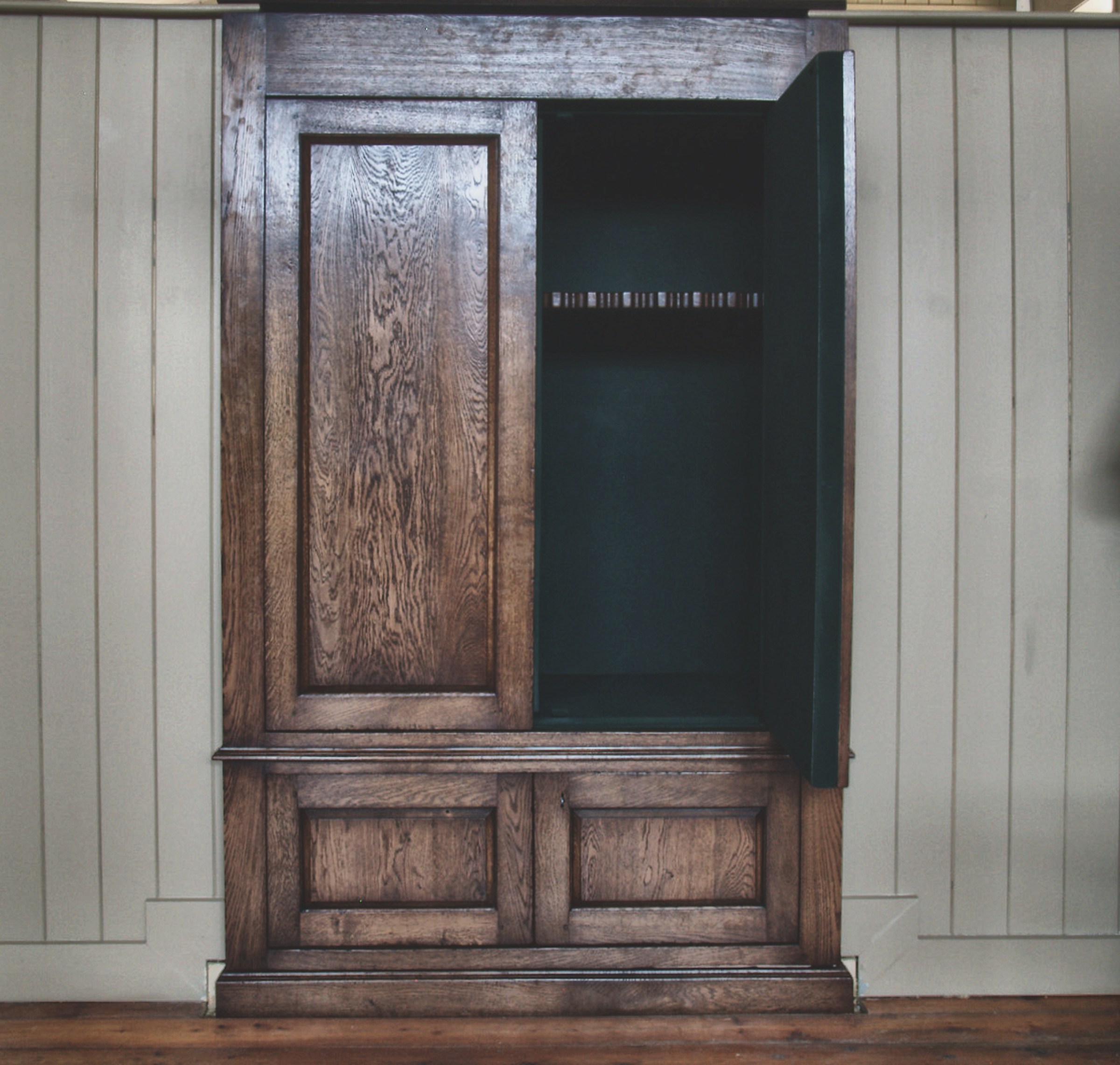
What we actually do
We line the room in steel, clad it in timber, fit a steel firearms door clad to match, and then fit all the joinery and racking inside it. That is the whole job, and it is worth being precise about it because it is unusual.
Steel goes to the walls first. Timber cladding goes over the steel, so what you end up looking at is a panelled room rather than a strongroom — the security is behind the finish, not instead of it. The door is a steel firearms door, hung properly, and then clad in timber so that from the landing it reads as a door in a house rather than as a shutter on a vault.
Then the joinery: gun racks, cabinetry, ammunition storage, cleaning bench, and storage for cases, scopes and kit, all drawn around the collection the room has to hold.
We do not do building work. We are not knocking walls about, moving openings or altering the structure. The room needs to exist before we arrive. What we do is turn a room that already exists into a secure one, from the inside.
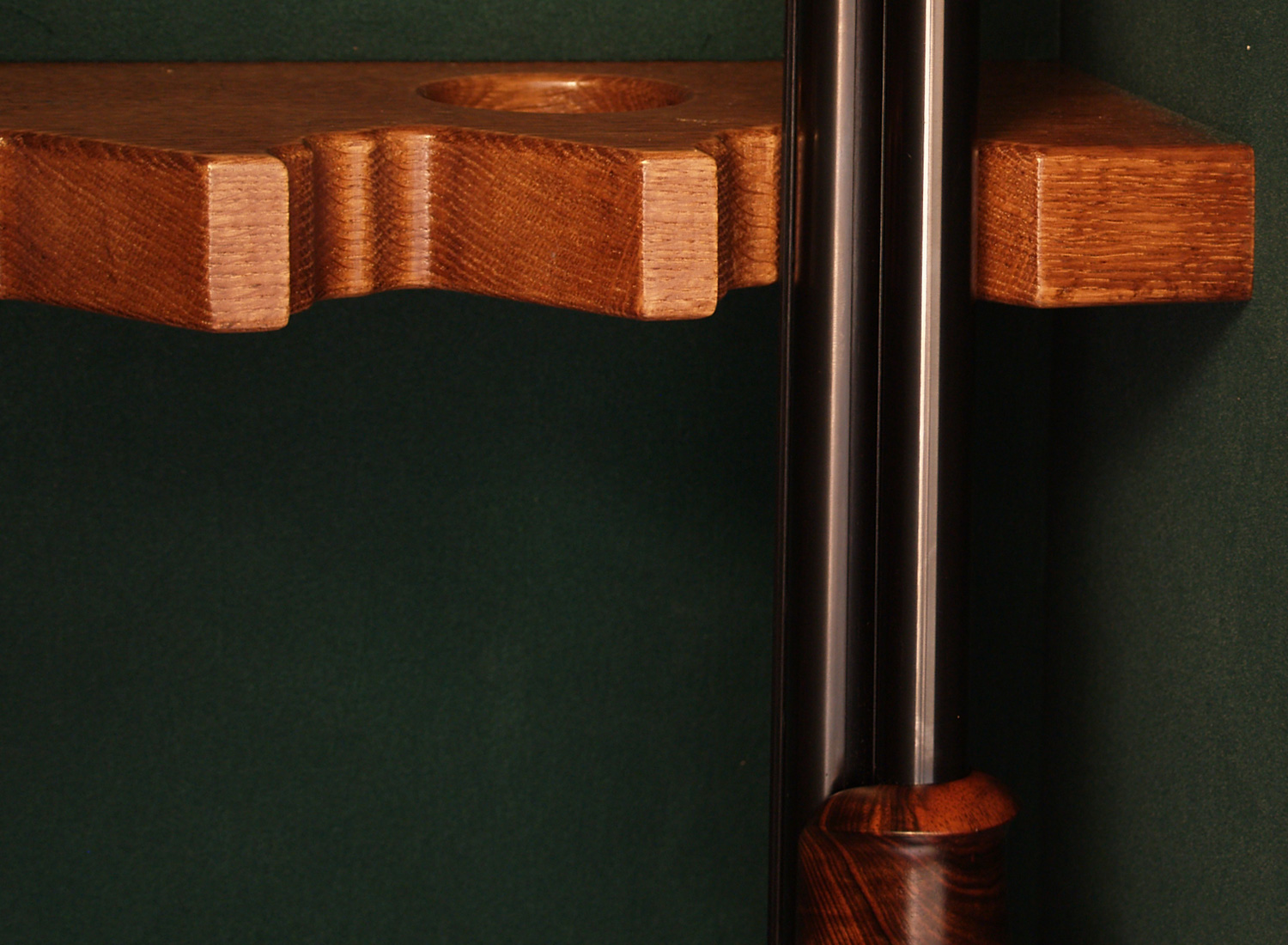
Why a stud wall is not a problem
The usual worry is the walls. Timber studwork with plasterboard either side is not, on its own, secure — and a great many of the rooms people want to use are exactly that.
Steel lining is the answer to it. Rather than sending in a builder to rebuild the wall, we line the inside face in steel and clad over it. The room keeps its dimensions, the structure is untouched, and the wall behind the panelling is no longer the weak point. It is quicker, cleaner and considerably less disruptive than construction work, and it is why a gun room can go into a house that is already finished.
The same logic applies to the door. A steel firearms door, hung in a properly fixed frame and then clad in timber, gives you the security of a steel door and the appearance of a joinery one. You are not choosing between the two.
What we will not do is pretend panelling alone achieves any of this. Timber over an unlined stud wall is decoration. It is the steel underneath it that does the work, and that is the part nobody sees.
Rooms and fitted runs
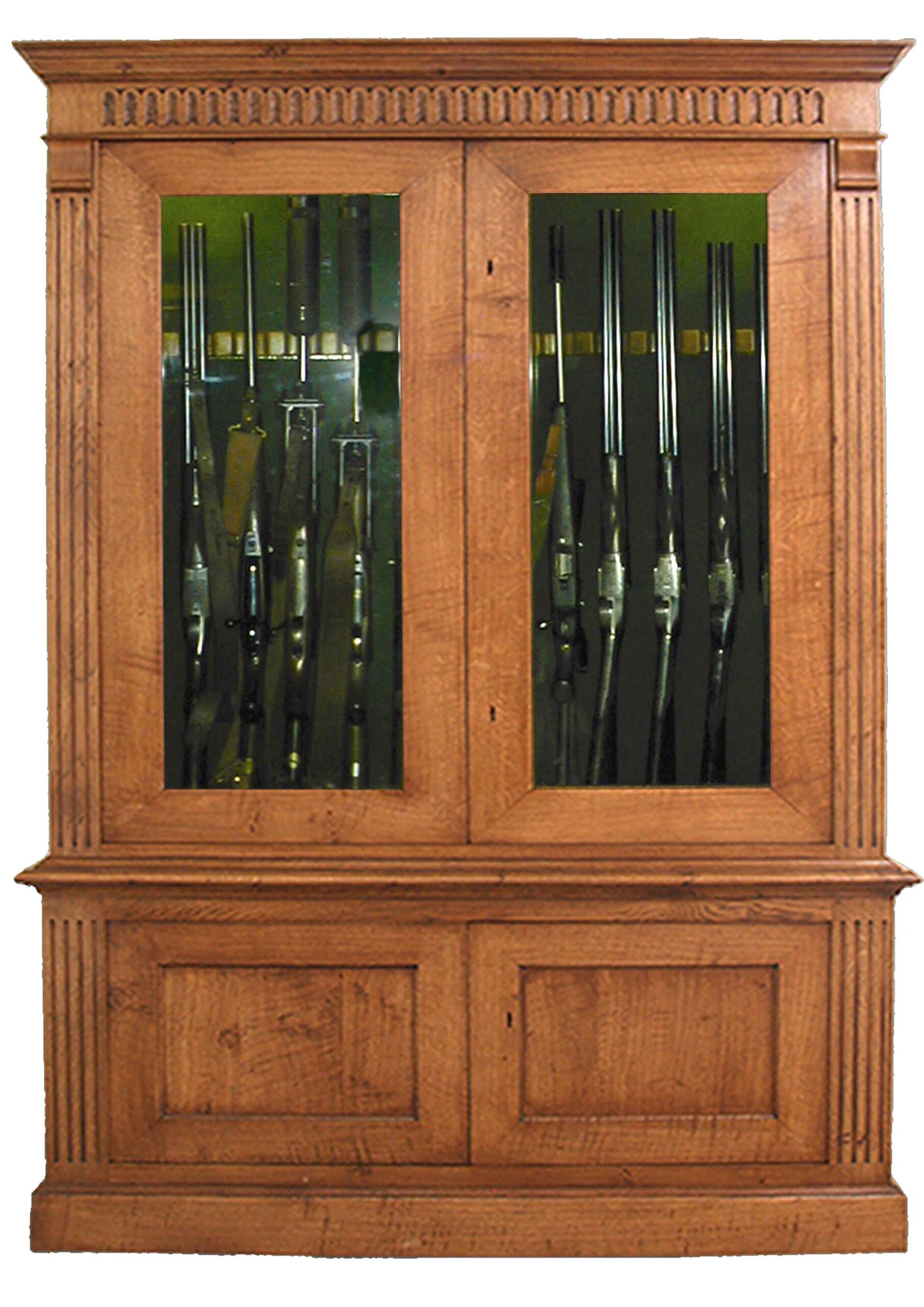
Fitted, not free-standing
Runs built into the room so they read as architecture rather than as furniture placed against a wall.
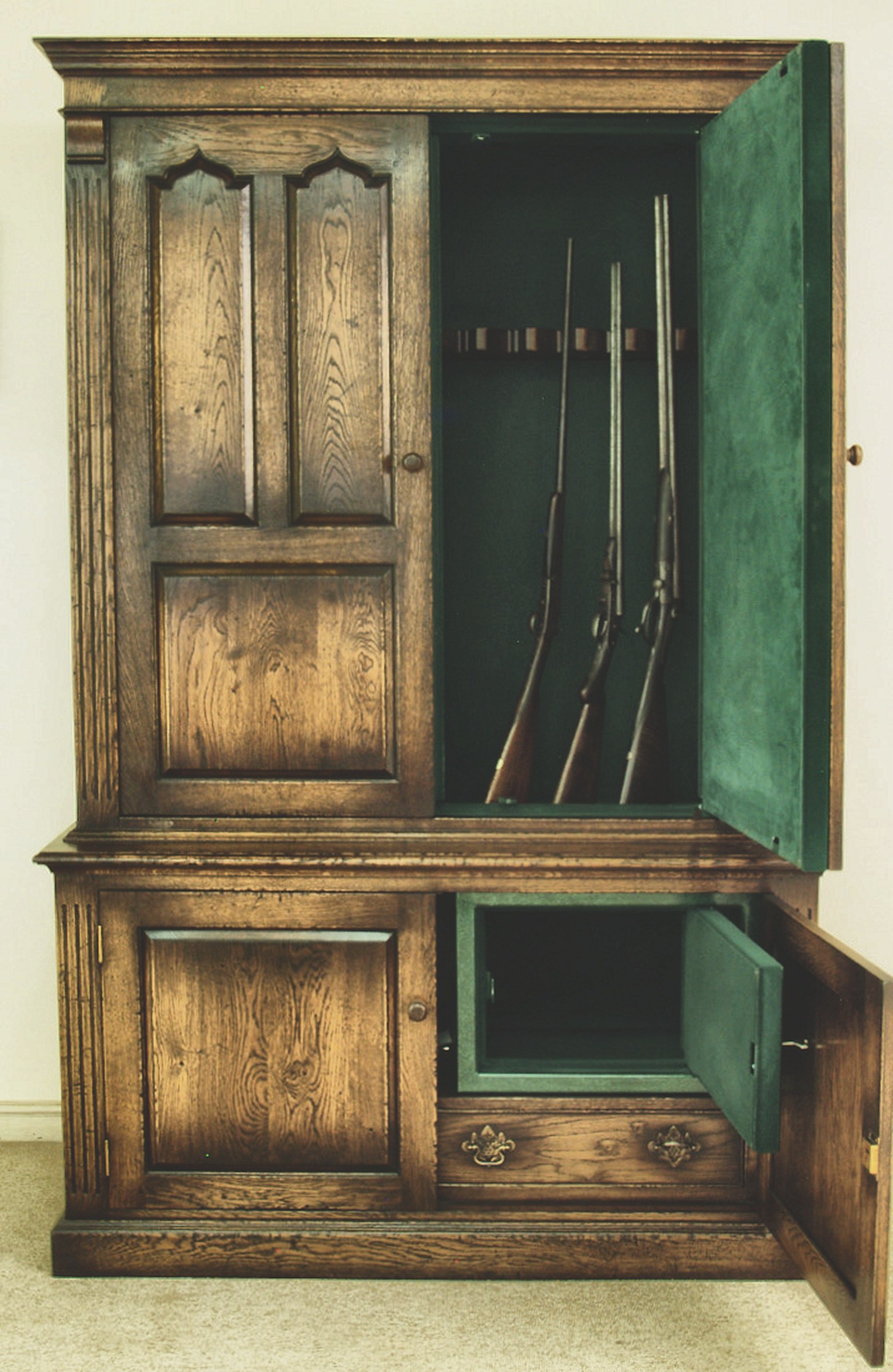
Ammunition held separately
A separate lockable compartment with its own lock, where the certificate calls for it.
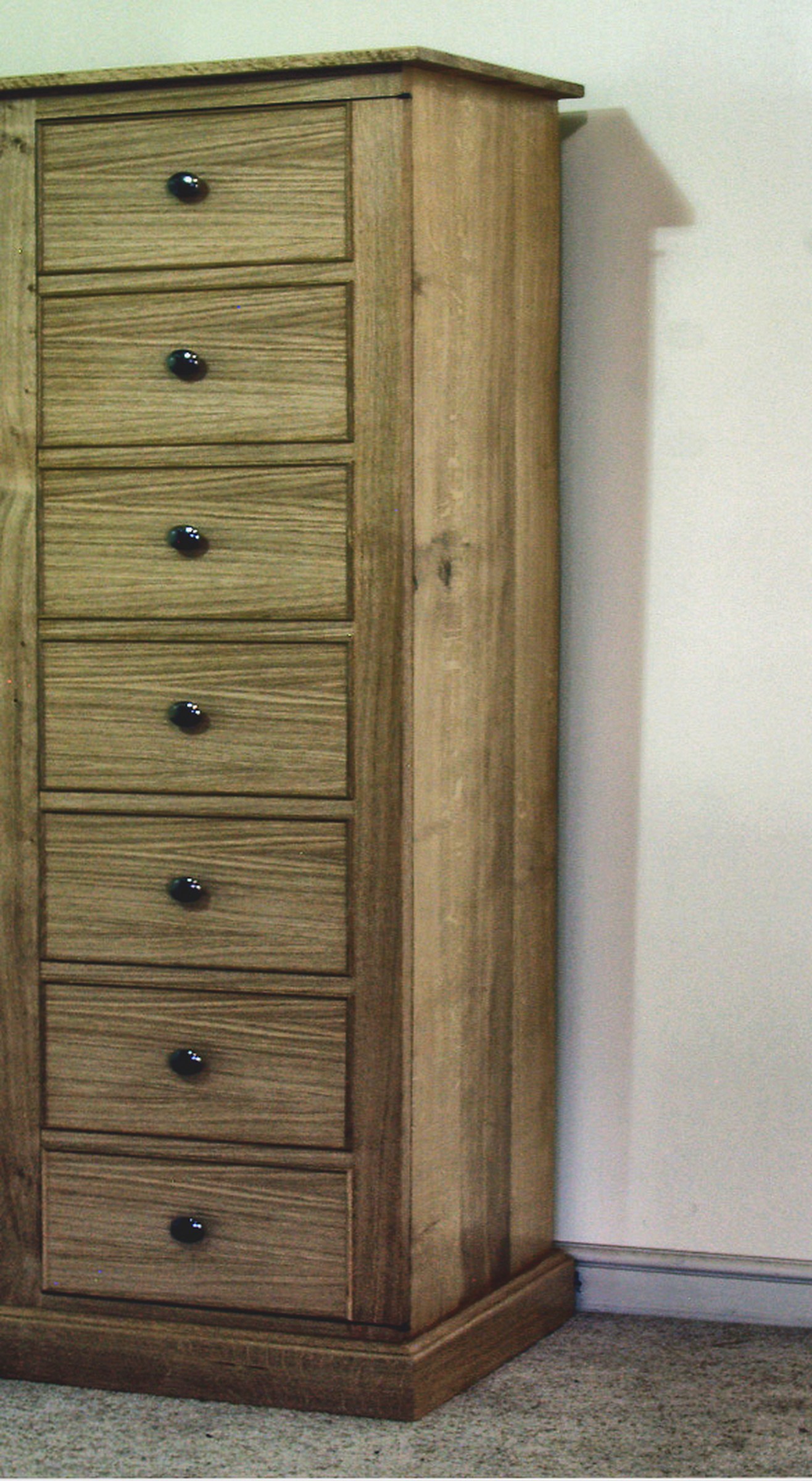
Drawers for everything else
Cartridges, chokes, scopes, cases and cleaning kit, in drawers made to match the room.

Storage that earns its place
Where a gun room doubles as a study, the cabinetry is drawn to do both jobs properly.
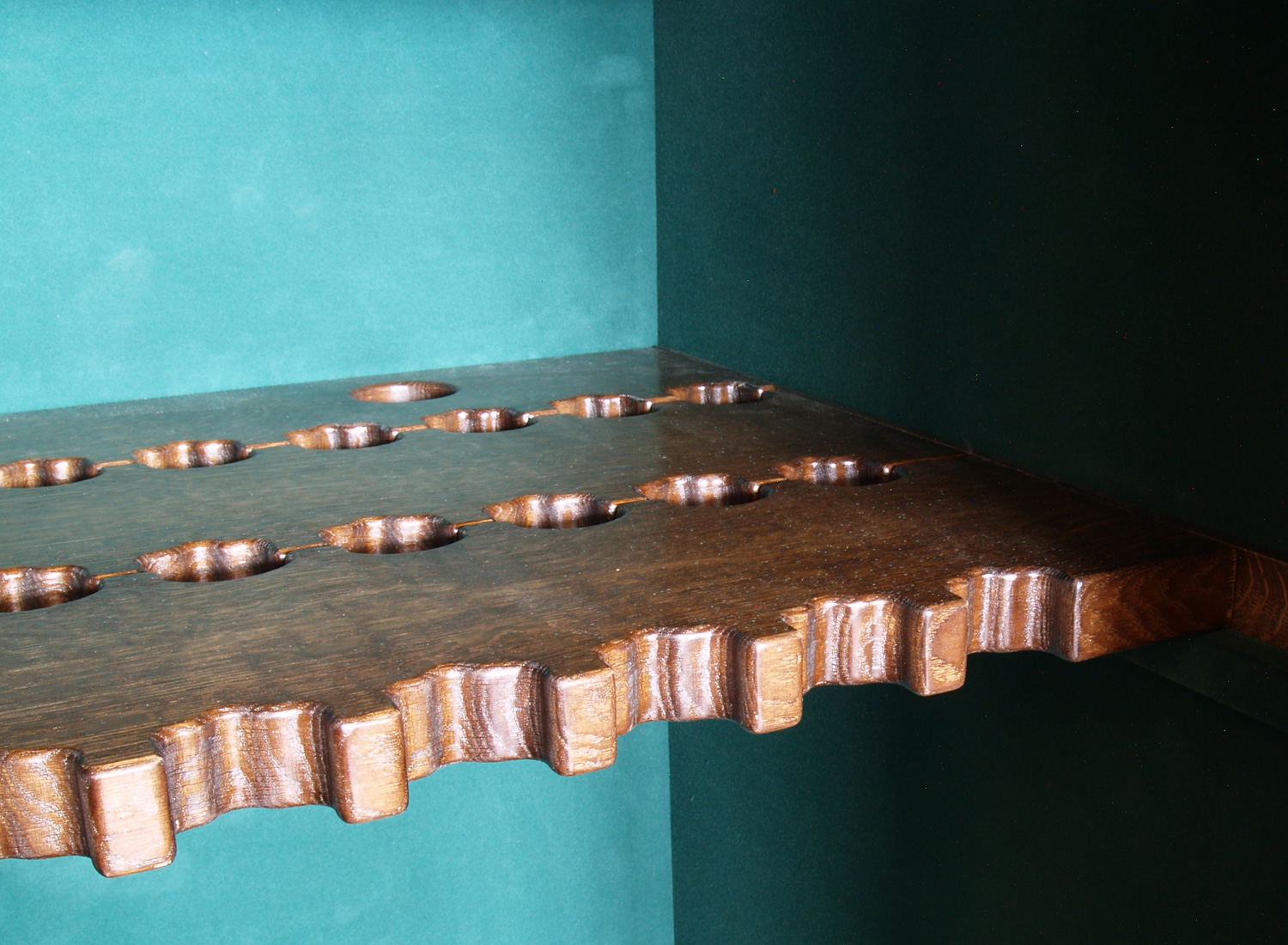
Depth where you need it
Deeper carcasses for longer guns, cases and kit that will not fit a standard cabinet.
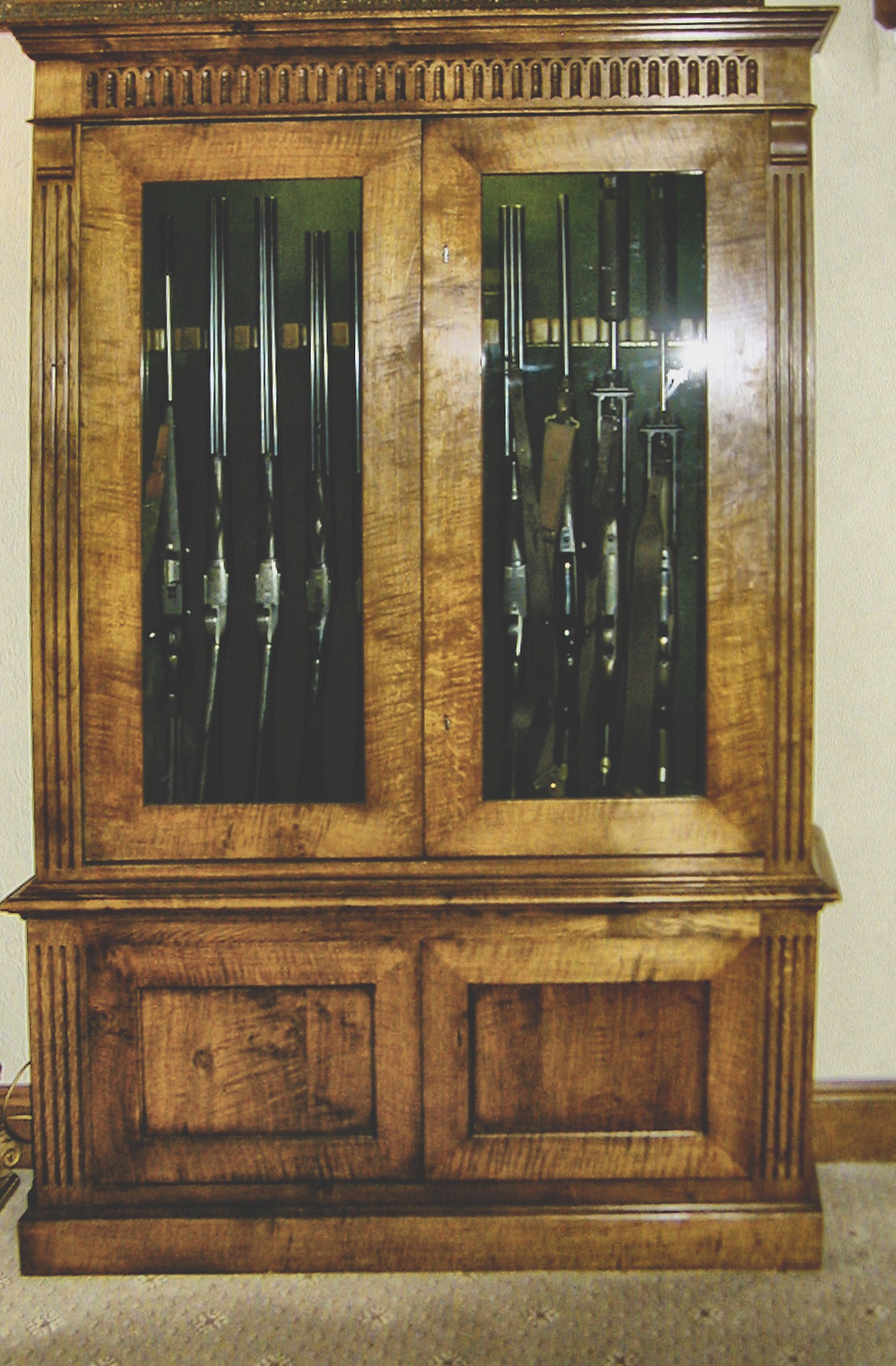
Finished to sit with the house
Antiqued and polished so a new room does not look conspicuously new.
Dividing the risk, not concentrating it
There is an assumption that a bigger collection means one bigger room, and it is worth questioning early.
For larger collections the Home Office guidance leans the other way: at the highest security level the instinct is to divide the risk — separate storage in different parts of the house — rather than to put everything behind one door. A single large gun room is not automatically what a firearms enquiry officer will prefer, and for some collections it is exactly what they will not.
In practice that often produces a better result anyway. The guns in regular use live in the room where they are cleaned and where the boots are. The rest — the pairs that come out twice a year, the inherited pieces, the ones that are really furniture — live somewhere else entirely, often in a cabinet that looks like a bookcase.
It is worth having that conversation before the drawings are done rather than after, because it changes the brief substantially.
We do not self-certify security
Where a certified component is the right answer — a rated cabinet, a certified door assembly, driven boltwork, an alarm — we buy it in, install it correctly, and pass the manufacturer’s certification through with their name on it rather than our own. We are cabinetmakers, and we are not going to pretend that a signature from us means what a test house’s means.
What we take responsibility for is the joinery, the fit, and the coordination: making sure the steel frame, the door, the alarm installer and the decorator all arrive in the right order and that nothing anybody does undoes what somebody else did.
Before manufacture we agree the specification in writing with your firearms enquiry officer. On completion you get a signed specification sheet — steel thicknesses, mesh specification and centres, lock models and their BS numbers, hinge and bolt details, frame section and anchor spacing — so the FEO can verify what has been built rather than take anyone’s word for it, and so you have a document for your insurer.
How a gun room comes together
The room and the gun list
Send us photographs of the room and the collection it has to hold. We will tell you early whether the space is workable and roughly what it will cost.
Survey
We measure the room and check what we are lining — wall construction, the door opening, the ceiling above and any window — before drawing anything.
Drawings and specification
Full drawings with the specification written on them, covering the steel lining, the door and the joinery.
Agreement with your FEO
We put the specification in front of your firearms enquiry officer and adjust it if they want something different.
Steel, then timber, then joinery
Steel lining to the walls, timber cladding over it, the firearms door fitted and clad — then the racking and cabinetry. Always in that order.
Finish and handover
Finishing on site where the room requires it, then the signed specification sheet on completion.
Cost, programme and coverage
Fitted gun rooms start at around £20,000, and it is worth being clear about why a room costs several times what a cabinet does. A cabinet is one object. A room is four pieces of work in sequence.
The walls are lined in steel. The steel is clad in timber. A steel firearms door is fitted and then clad in timber to match. Then all the joinery goes in — gun racks, cabinetry, ammunition storage and the rest, drawn around the collection. Each stage has to be done in the right order, because none of them can be retrofitted neatly once the one after it is finished.
The range above £20,000 is driven mostly by size and by how much joinery the room carries. A modest room with racking and a bench is at the lower end; a large room with full panelling, a cleaning bench, drawer banks and cabinetry for cases and scopes is a good deal more.
We do not do building work, and we do not price any. The room needs to exist. If it needs walls moving, a window blocking or an opening formed, that is your builder’s job and it happens before we arrive — which is usually cheaper for you than having a joinery firm subcontract it.
Programme is typically a few months from drawings to handover. As with everything in this trade it is seasonal — enquiries arrive in spring for rooms wanted by the autumn, and the workshop fills accordingly.
We are at Mickfield in Suffolk, which puts East Anglia, London and the Home Counties within easy reach, and we work across the UK. For a room, we will always come and look at it.
Questions we are asked most
Is a gun room better than a cabinet?
Not automatically. The Home Office guidance treats a purpose-built gun room as a legitimate alternative to a cabinet, not as a superior one — and for larger collections the instinct is often to divide storage rather than concentrate it. A room earns its place when you want somewhere to clean, change and keep kit as well as guns.
Can a gun room go upstairs?
Usually yes. Because we line the room rather than rebuild it, the structure is not being altered and the room keeps its floor. What we do check at survey is the ceiling where a loft sits above, and any window, because both form part of the envelope we are securing.
Will it look like a strongroom?
No — that is the point of cladding. The steel does the work and the timber is what you see. The walls are panelled and the firearms door is clad to match the joinery, so from the landing it reads as a room in a house rather than as a vault. Nobody walking past it would know what it is.
Do you do the building work?
No, and we are clear about that from the outset. We do not knock walls about, move openings or alter the structure. The room needs to exist before we arrive. What we do is line it in steel, clad that in timber, fit and clad the firearms door, and fit all the joinery inside it. If the room itself needs building or altering, that is your builder’s job and it is cheaper for you done directly than subcontracted through us.
What about humidity and temperature?
It matters more than most people expect — a sealed, unheated room is very good at putting rust on blued steel. Ventilation is part of the specification rather than an afterthought, and for valuable collections it is worth discussing active humidity control at the drawing stage.
Can you work with our architect or builder?
Yes, and for a room we would prefer to. Most of what goes wrong in this category goes wrong because the joiner arrived after the walls were closed up. We are used to working to a main contractor’s programme and to issuing drawings and specifications that others can build to.
Bespoke gun cabinets
The full specification — steel, anti-bandit glass, locks and fixings. From £7,000 plus VAT.
Concealed gun storage
Joinery built around a cabinet you already own, so nothing announces itself.
All gun work
Cabinets, fitted rooms and concealed storage in one place.
Send us the room and the gun list
Send photographs of the room and your gun list, and we will tell you which parts of the standard apply to you and which do not — then come and look at it properly.
Start a commissionFurther reading: gun room security, and what the rules actually say. Responsibility for the security condition on your certificate rests with you as the certificate holder, and the adequacy of any storage arrangement is a matter for your local police firearms licensing department. Information on this page is general guidance and is not legal advice.