
Concealed Gun Storage
Bespoke joinery built around a gun cabinet you already own, so the room reads as a library, a boot room or a run of wardrobes — and nothing in it announces what it holds.
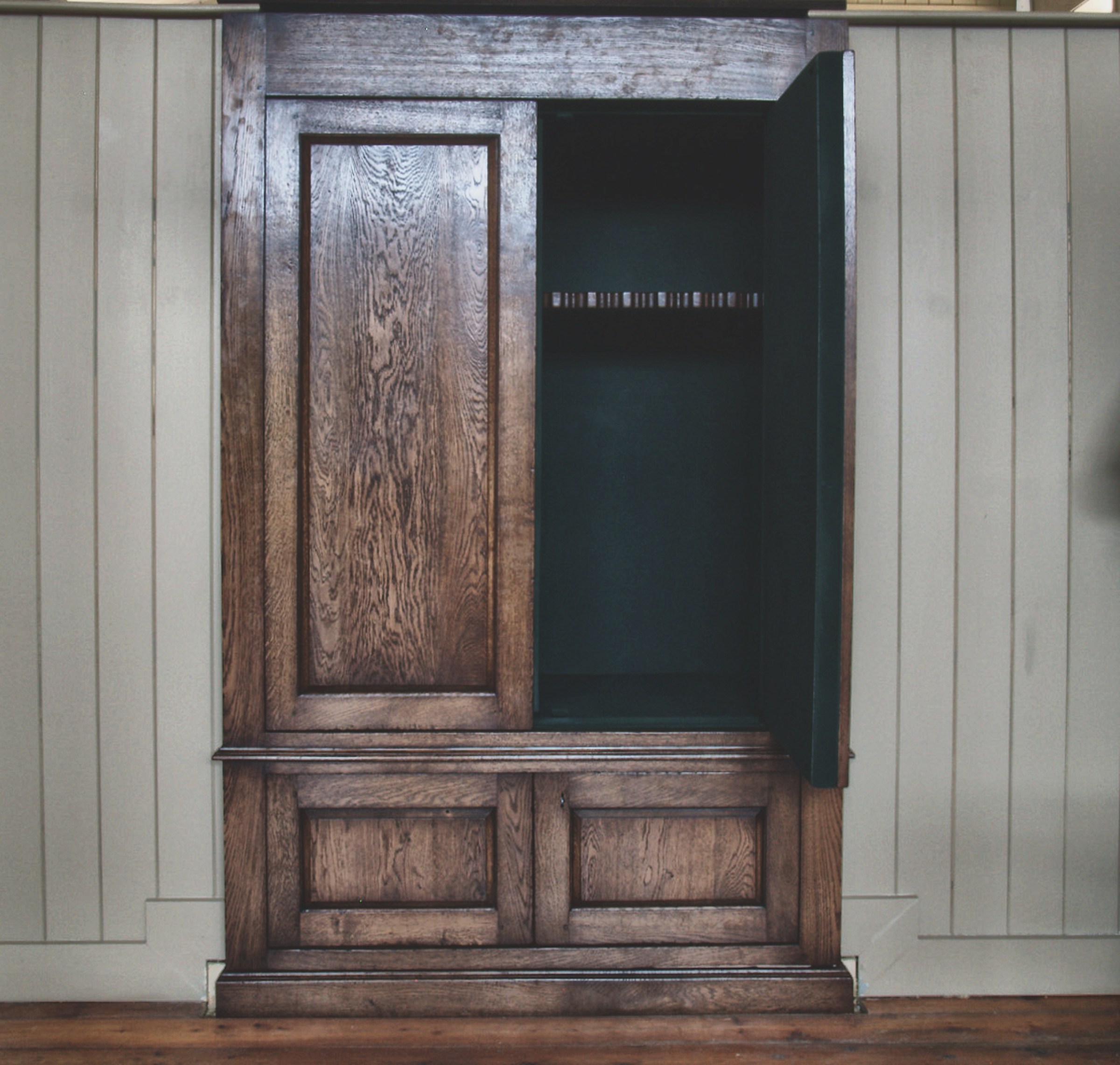
Make it not look like a gun cabinet
The most common request we get is also the simplest to state and the most interesting to solve. People do not object to their cabinet. They object to looking at it.
There is a good reason for that beyond taste. A steel cabinet is a sign. It tells anyone standing in the room — a visitor, a tradesman, a cleaner, a child’s friend — that there are guns in the house and exactly where they are. Most owners would rather that information were not on display in their own hallway.
If you already own a cabinet that does its job perfectly well, there is rarely a good argument for replacing it. What we do instead is build the joinery around it, so that the wall reads as bookshelves, panelling, a boot room run or a bank of wardrobes, and the cabinet becomes part of the architecture rather than an object standing in front of it.
It is the least expensive way into fitted gun storage and usually the quickest. In our experience it is also how a good many gun rooms start — the joinery goes in, the room stops looking like a compromise, and two years later we are back doing the rest of it.
Four ways we do it
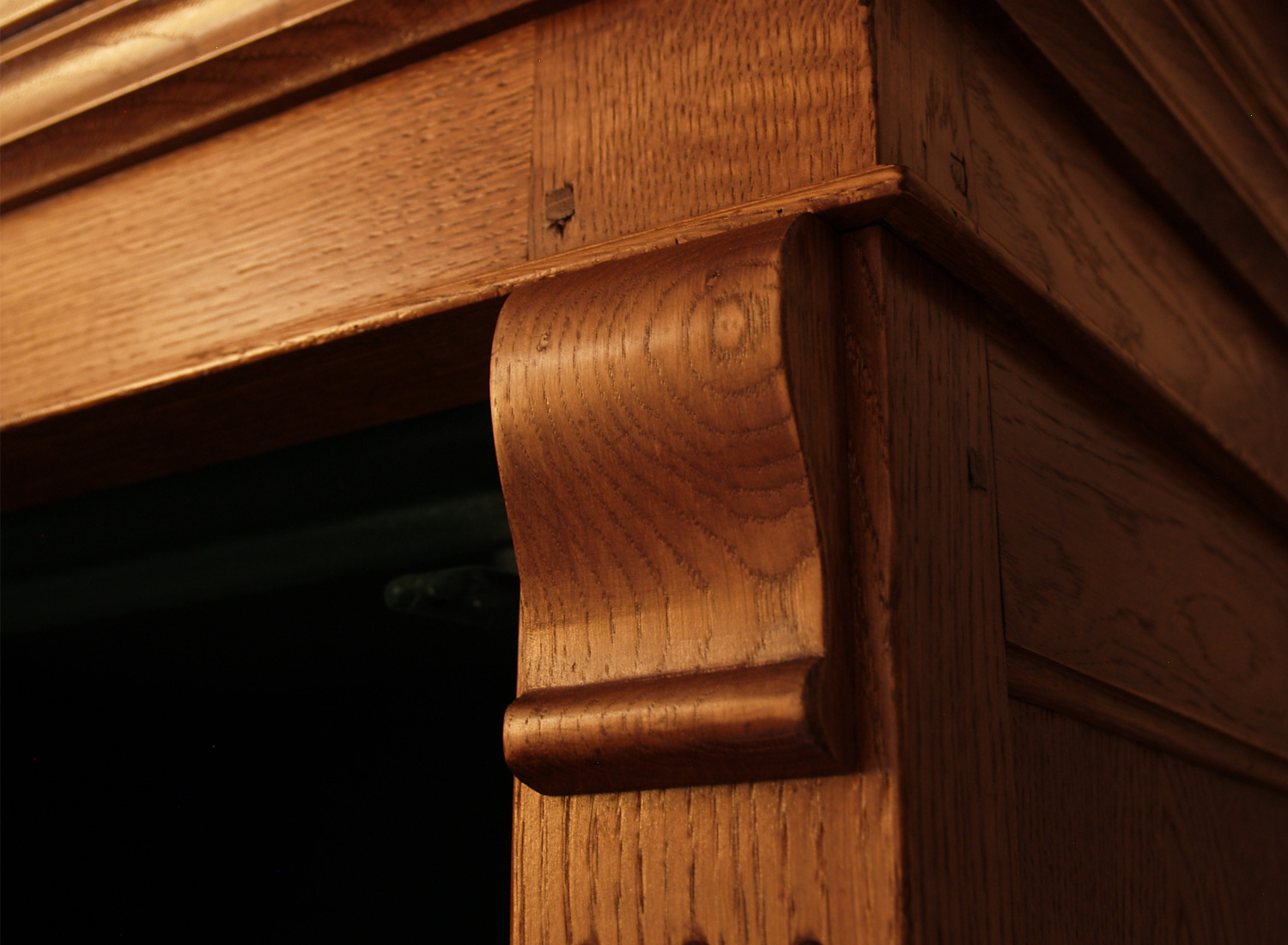
A timber case around the steel
The simplest version, and often the best value. A hardwood or painted case is built around the existing cabinet, with a door that matches the room, so what you see is a cupboard and what is inside it is your steel unit, untouched and still bolted where it was.
Cornices, plinths and mouldings are matched to whatever is already in the room, which is what stops it reading as an add-on. The case is scribed to the wall and the floor so there are no gaps announcing that something was fitted around something else.
Because the steel unit is not modified in any way, this is also the least disruptive option and the easiest to explain to a firearms enquiry officer: nothing about the security arrangement has changed.
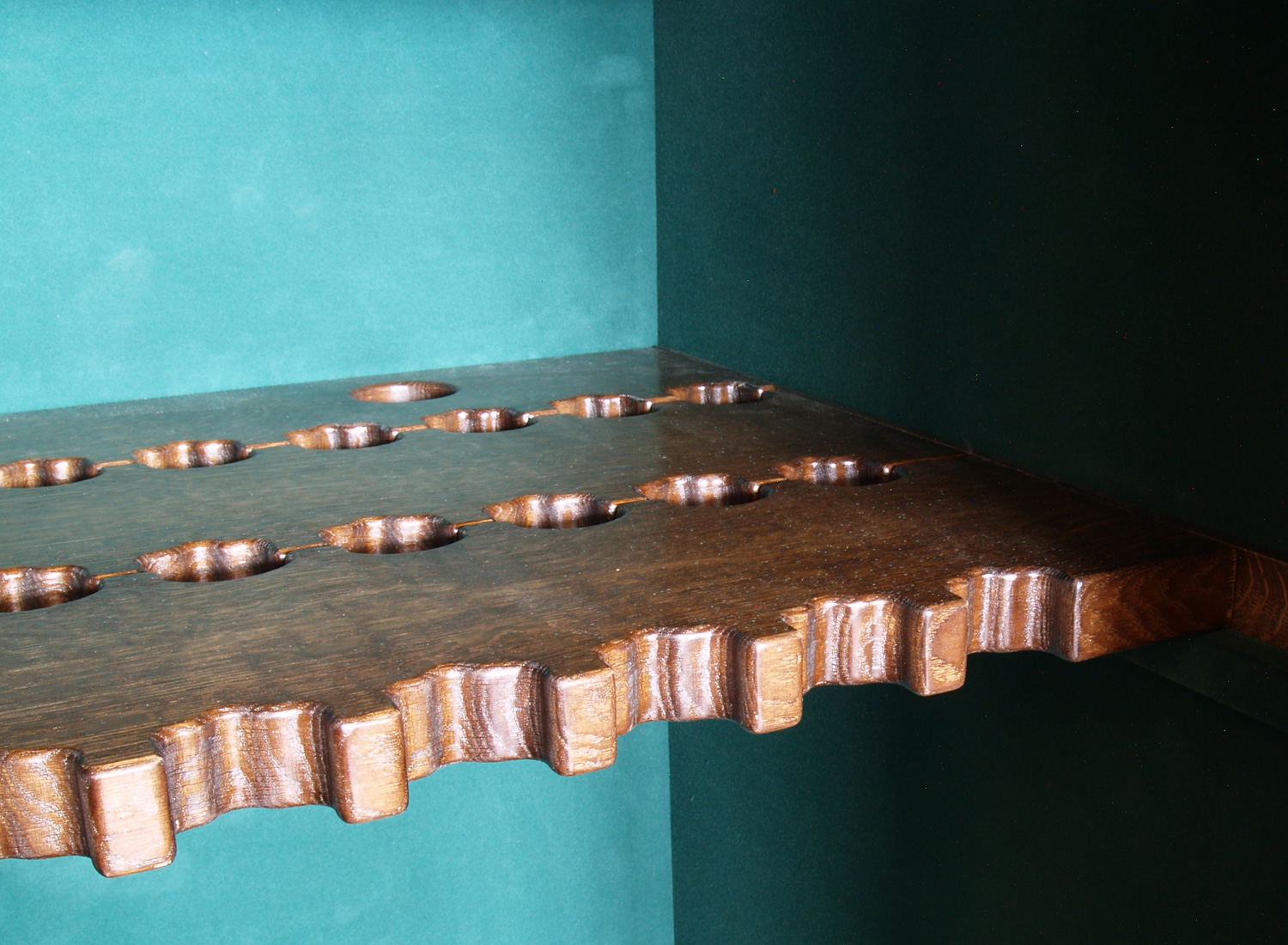
Deeper than it looks
In a boot room, a utility or a back hall, the answer is often to give one cupboard in a run more depth than its neighbours and put the cabinet inside it. From the room, it is one door among several. Open it and it is a coat cupboard. Behind the coats is the rest of the depth.
This works particularly well where a run of joinery is being made anyway, because the additional cost of one deeper carcass is small. It also keeps everything in the part of the house where guns are actually handled, which matters more day to day than where they look best.
The constraint is structure: the deeper carcass still has to sit against a wall that will take the cabinet’s fixings, so the position is decided by the masonry rather than by the elevation.
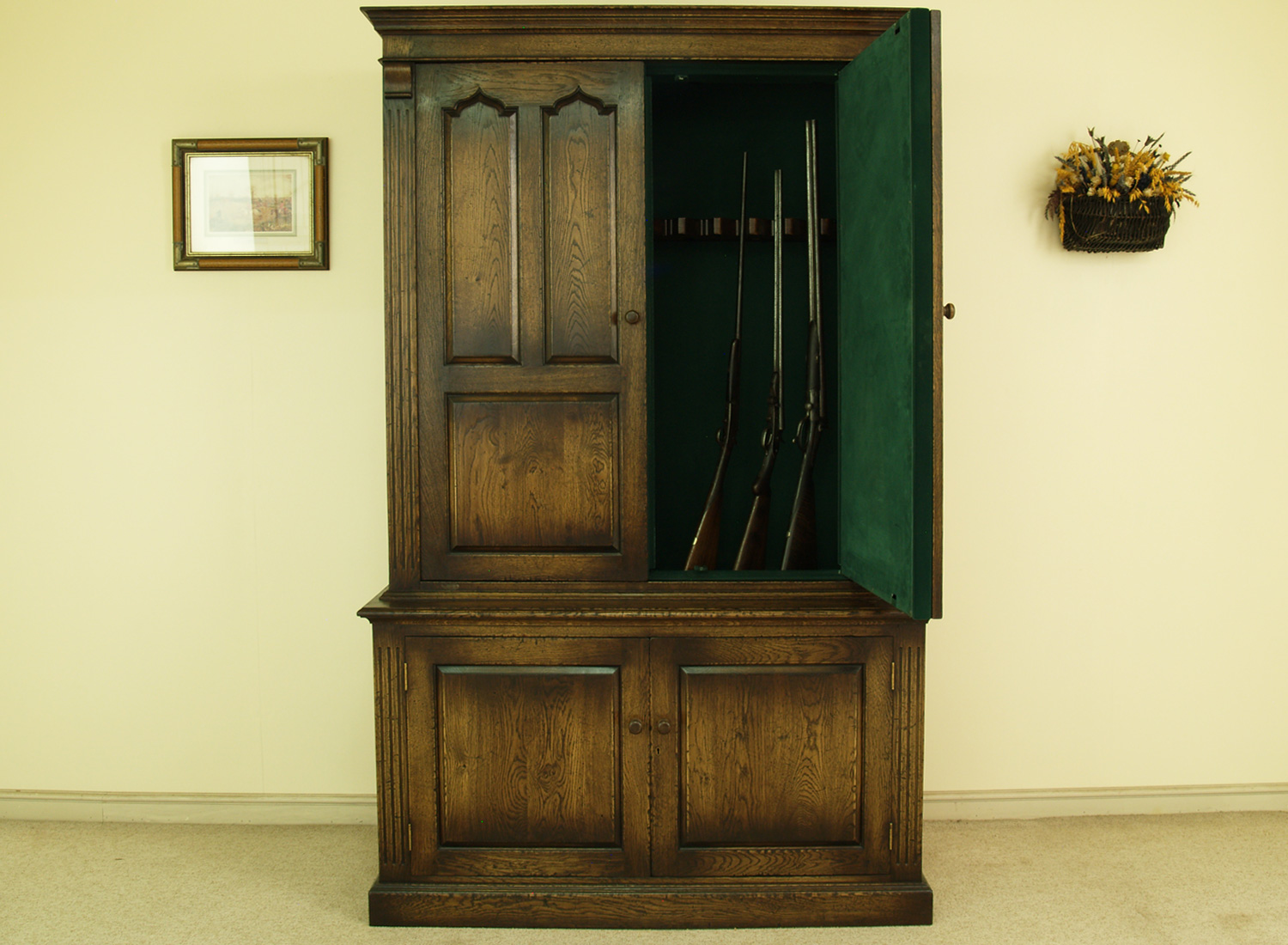
A bay in a run of shelving
In a study or library, one bay of a bookcase run is built as a door. Closed, the shelves and their contents read as continuous; the break falls on a stile where the eye expects a joint anyway.
This is the version that takes the most drawing. Shelf lines have to run through, the door has to carry its books without dropping, and the hardware has to be strong enough for the weight while staying invisible. Done properly nobody notices. Done carelessly it is obvious from across the room, which defeats the purpose entirely.
It suits collections that are not accessed daily — the pairs that come out for driven days rather than the gun that goes out after pigeons on a Tuesday evening.
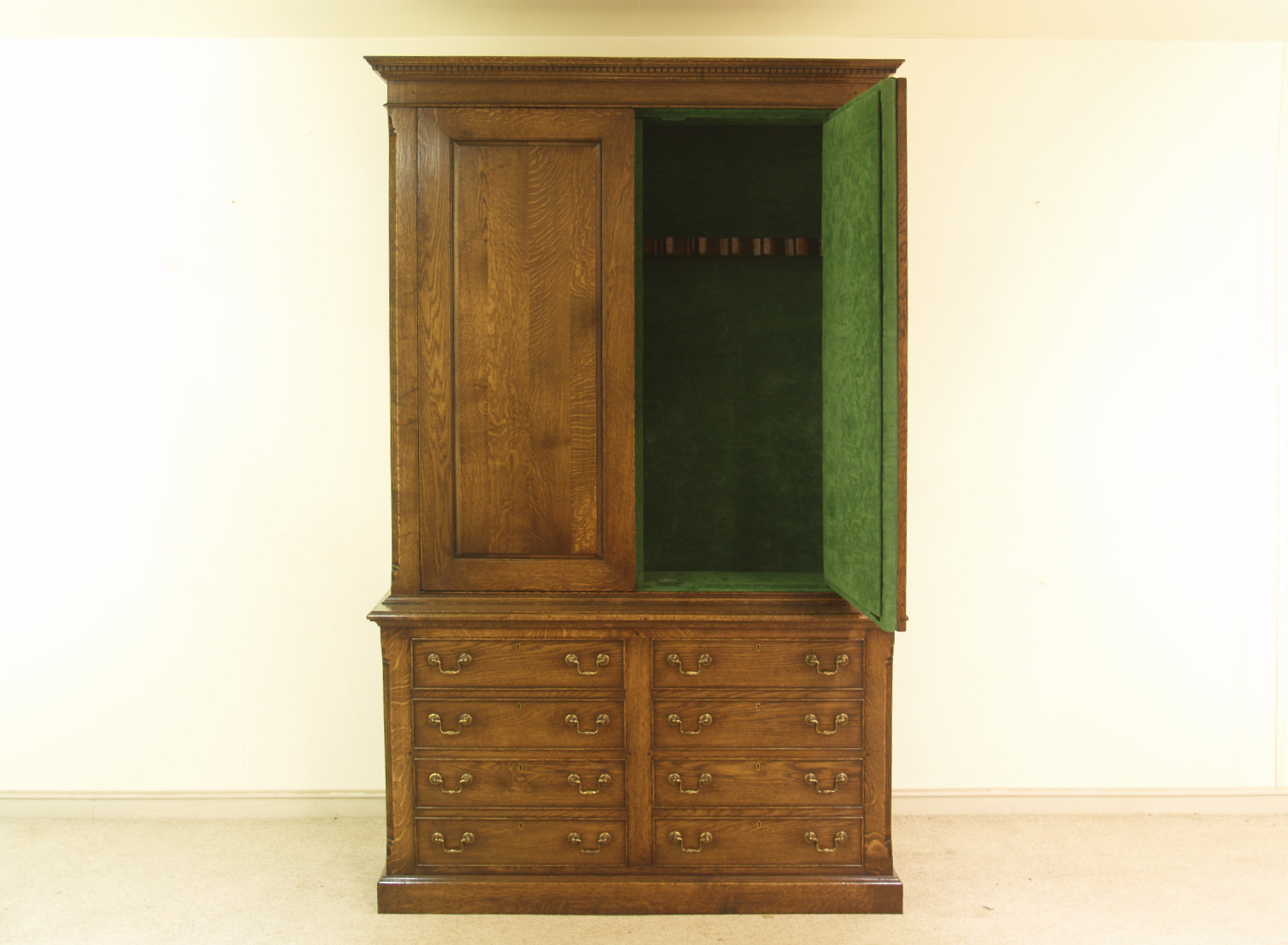
Panelling with a door in it
Where a room is being panelled anyway, the cabinet can sit behind a panel that is indistinguishable from its neighbours. The joints fall where the panelling’s own rhythm puts them, so there is nothing to give it away.
This is the most satisfying version to make and the most expensive, because the panelling has to be set out around the opening from the very first drawing. It is not something that can be added to panelling that already exists without it showing.
If you are panelling a study, a hall or a dressing room in the next year or two and you shoot, it is worth deciding now rather than later — the cost of allowing for it during the design is a fraction of the cost of retrofitting it.
Concealed work
A case around the steel
Your cabinet, untouched and still bolted down, inside joinery that matches the room.
Set into panelling
Built into a painted panelled wall so the run reads as architecture.
One deeper door in a run
A boot room cupboard given the depth to take a cabinet behind coats.
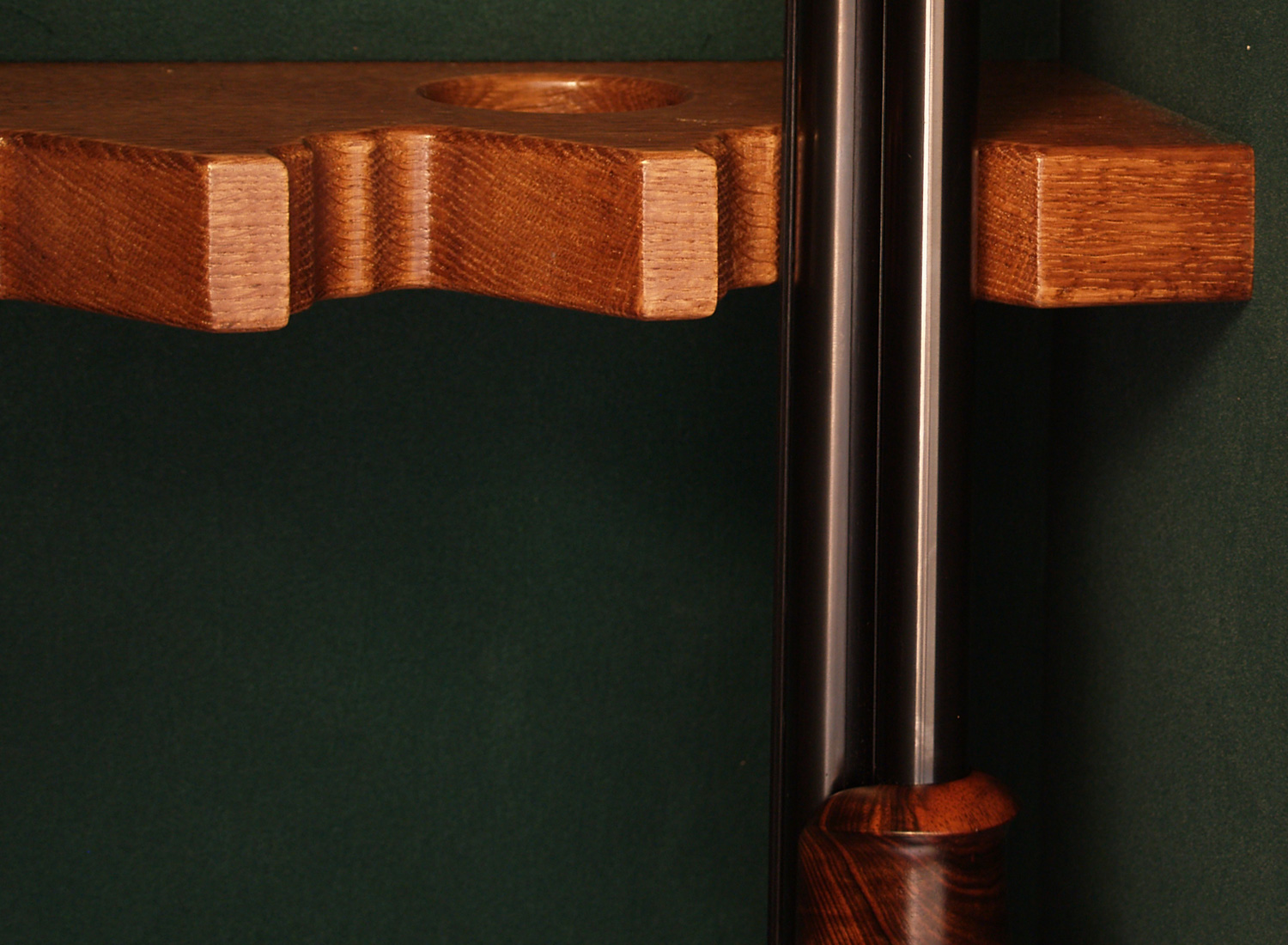
Ordinary outside, proper inside
Concealment changes the outside. The inside is still drawn around the collection.

Doubling as a study
Where the room has to work as an office too, the cabinetry is drawn to do both.
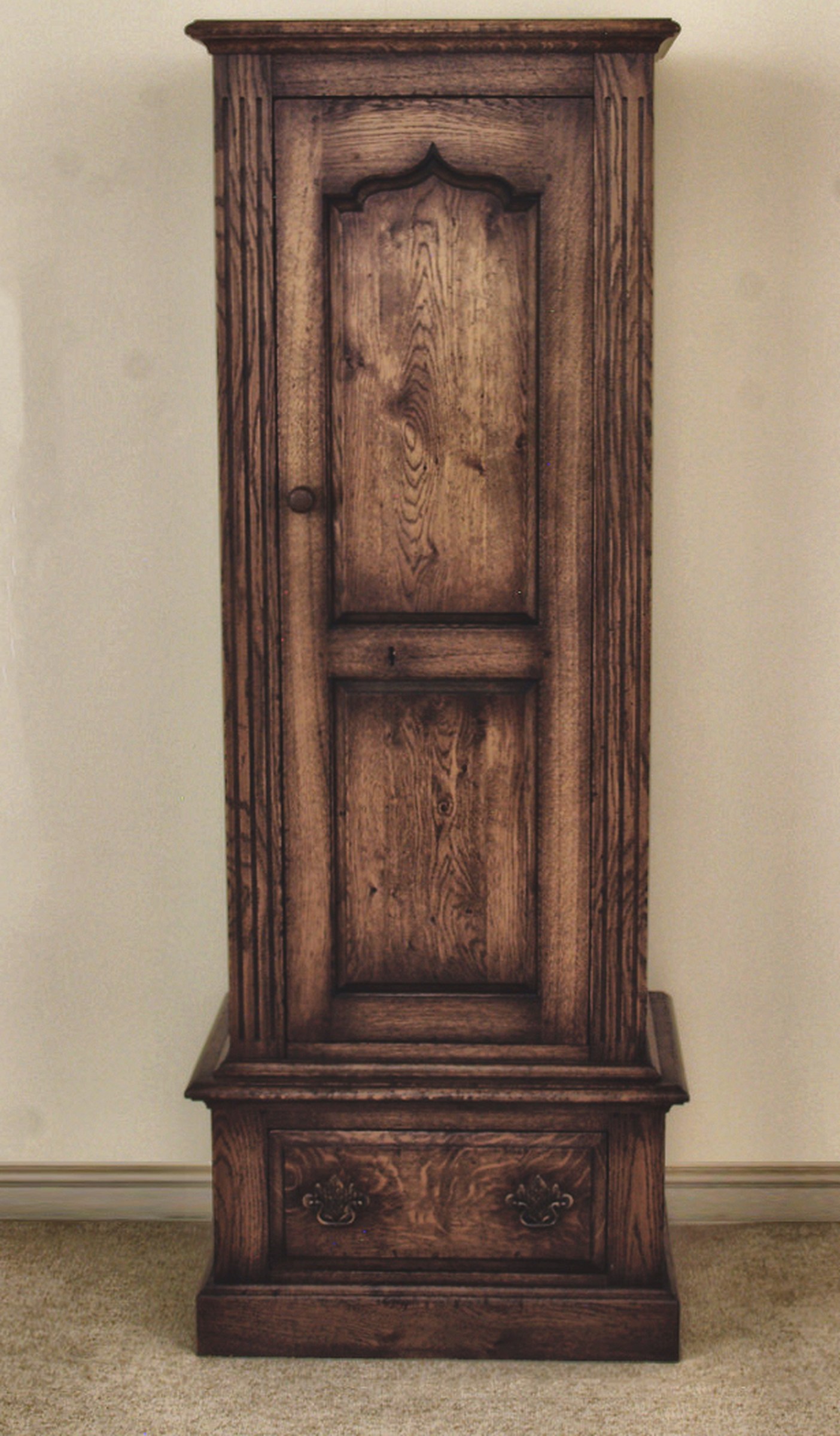
Or simply understated
Where concealment is not needed, a solid timber front says nothing about what is inside.
What concealment is, and what it is not
Concealment is worth having. The overwhelming majority of domestic burglaries are opportunist, carried out quickly by someone who takes what they can see. A cabinet that is never found is a cabinet that is never attacked, and there is real value in that.
But it has no standing in itself, and we are not going to tell you otherwise. Concealment is not a substitute for the security of the storage. Your arrangement still has to satisfy your firearms enquiry officer on its own merits — the cabinet, its fixings and its locking — exactly as it would if it stood in the open.
Nor should concealment be treated as a reason to do less. If anything the opposite: a cabinet nobody can see is one nobody checks, so the fixings and the locking want to be right first time.
The honest summary is that concealment is a benefit on top of proper security, never instead of it. Any maker who implies otherwise is selling you something they cannot deliver.
Working with the cabinet you already own
Before we draw anything we need to know exactly what we are building around. That means the make and model of the cabinet, its external dimensions including any handle or lock projection, how it is currently fixed, and which way the door swings and how far it needs to open.
The last of those catches people out. A cabinet door that opens to ninety degrees inside a case needs clearance for the door and for your arm, and if the case is scribed tight to a return wall that clearance disappears. It is the commonest reason a concealed installation ends up frustrating to use.
We also need to know what the wall is. If the cabinet is currently fixed into masonry, we work around the existing anchors wherever possible. If it is fixed into studwork or plasterboard, that is worth putting right while the joinery is off — it is the cheapest opportunity you will ever get to do it.
Where a client is buying a cabinet at the same time as commissioning the joinery, we will happily specify one, or make the whole thing ourselves to the specification on our cabinets page.
Questions we are asked most
Does hiding a cabinet affect my certificate?
Concealment is neither required nor prohibited. What matters is that the storage itself remains adequate — properly fixed, properly locked, and unchanged by the joinery around it. Your firearms enquiry officer assesses the arrangement on its merits, so we make sure nothing we build interferes with the cabinet’s fixings or locking.
Do I need to tell my FEO about the joinery?
We would always mention it, and we are happy to set out what we are proposing in writing so there is no ambiguity at the next visit. Nothing we do alters the cabinet, but an FEO would far rather know in advance than discover a cupboard they were not expecting.
Can you move my existing cabinet?
Sometimes it is the right answer, particularly if it is currently fixed into a wall that will not really take it. Moving it means re-anchoring properly into masonry, and we would treat that as part of the work rather than something to do quietly on installation day.
Will it slow me down getting to a gun?
It should not. A door that is awkward to open is a design failure, not a feature of concealment. We set out clearances so the cabinet opens fully and you can get a gun in and out one-handed. If concealment would compromise that, we will tell you and suggest a different approach.
Is a hidden cabinet safer from children?
Concealment helps, but the lock is what matters and the key is what matters most. Nothing about a concealed installation changes the basic obligation to keep firearms inaccessible to anyone who should not have them, and keys should never be kept anywhere near the cabinet.
How much does it cost?
A simple timber case around an existing cabinet is the least expensive way in. A run of shelving with a working bay, or panelling with a concealed door set out from scratch, is a bigger piece of joinery and priced as such. We will give you a range from photographs and dimensions before anyone visits.
Bespoke gun cabinets
If you would rather start again — the full specification, from £7,000 plus VAT.
Fitted gun rooms
A whole room made secure, then panelled, lit and finished properly.
All gun work
Cabinets, fitted rooms and concealed storage in one place.
Send us a photograph of the room
Tell us what cabinet you already have and send a photograph of where it lives. We will come back with a drawing and a price.
Start a commissionFurther reading: gun room security, and what the rules actually say. Responsibility for the security condition on your certificate rests with you as the certificate holder, and the adequacy of any storage arrangement is a matter for your local police firearms licensing department. Information on this page is general guidance and is not legal advice.