
Bespoke shaker kitchens from Reeve & Co — handmade in our Suffolk workshop for high-end homes across London, the Home Counties and East Anglia.
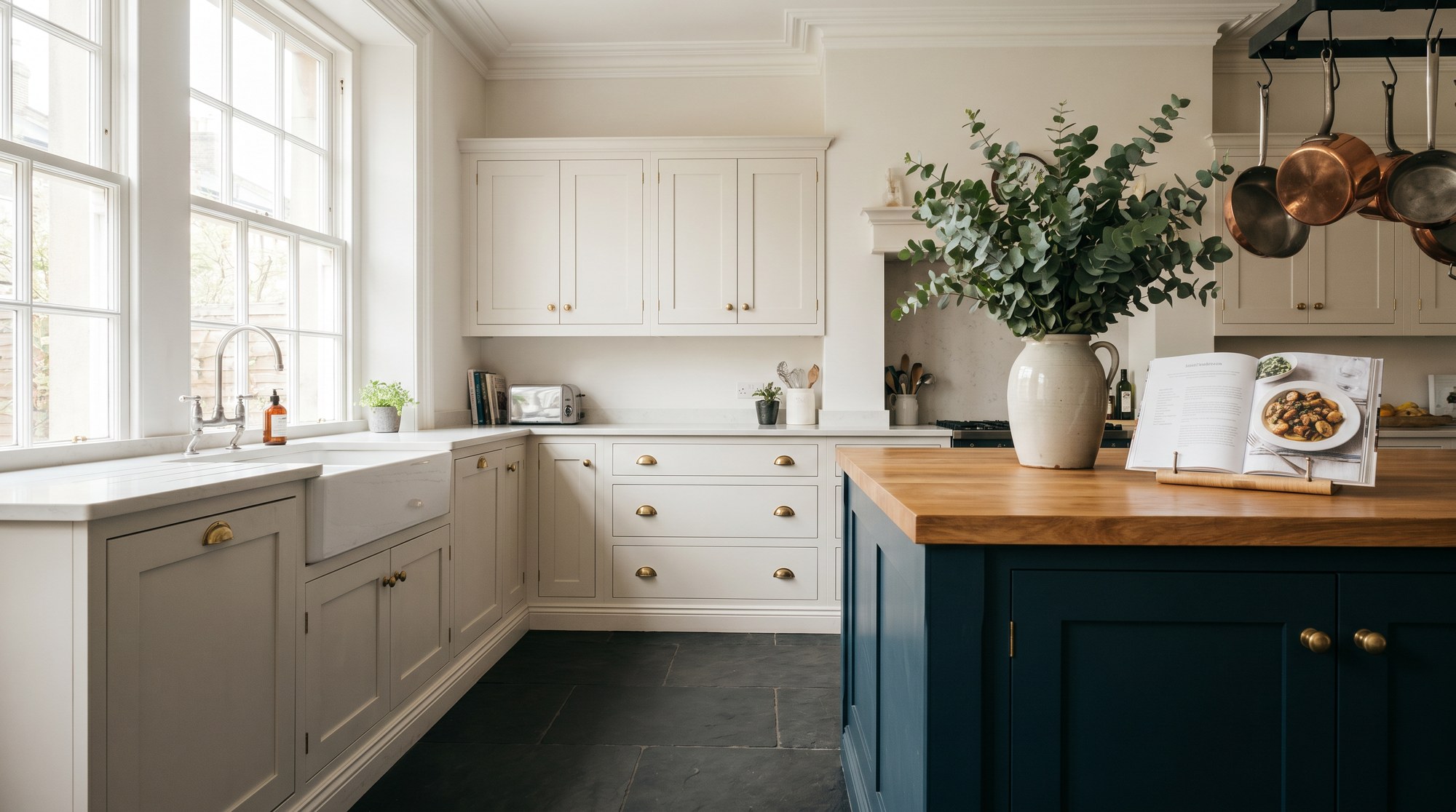
In-frame, hand-painted, properly made
The Shaker Kitchen
A bespoke Shaker kitchen should feel calm, useful and permanent. We draw each kitchen for the room, then make the cabinetry in our Suffolk workshop with proper in-frame doors, considered proportions, hand-painted finishes and the level of detail expected in high-end residential joinery.
A Shaker kitchen with proper joinery behind it
The word Shaker is used widely, but the difference is in the construction. A Reeve & Co Shaker kitchen is not a catalogue door placed into a standard carcass. The rails, stiles, frames, plinths, end panels, larders and island details are all drawn together, so the kitchen sits naturally within the architecture.
That matters in older Suffolk, Essex, Norfolk and Cambridge houses where walls are not always straight and rooms often have beams, chimneys, old floors, deep reveals or listed fabric to respect. It also matters in new houses where a kitchen needs to feel built-in rather than inserted.
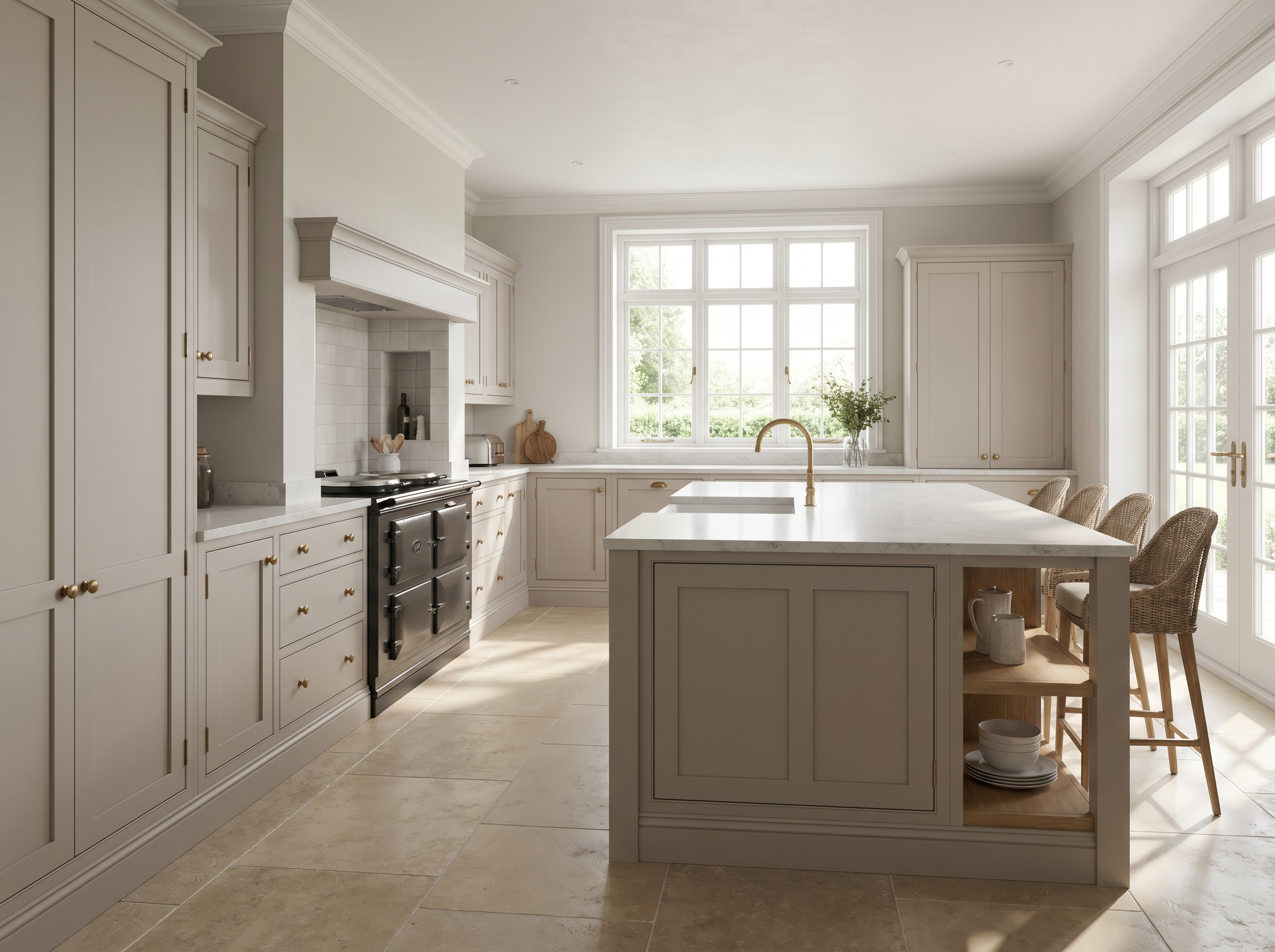
Whole-room design
Cabinetry, island, appliances, sink wall and pantry storage are drawn as one balanced room, not as separate runs of units.
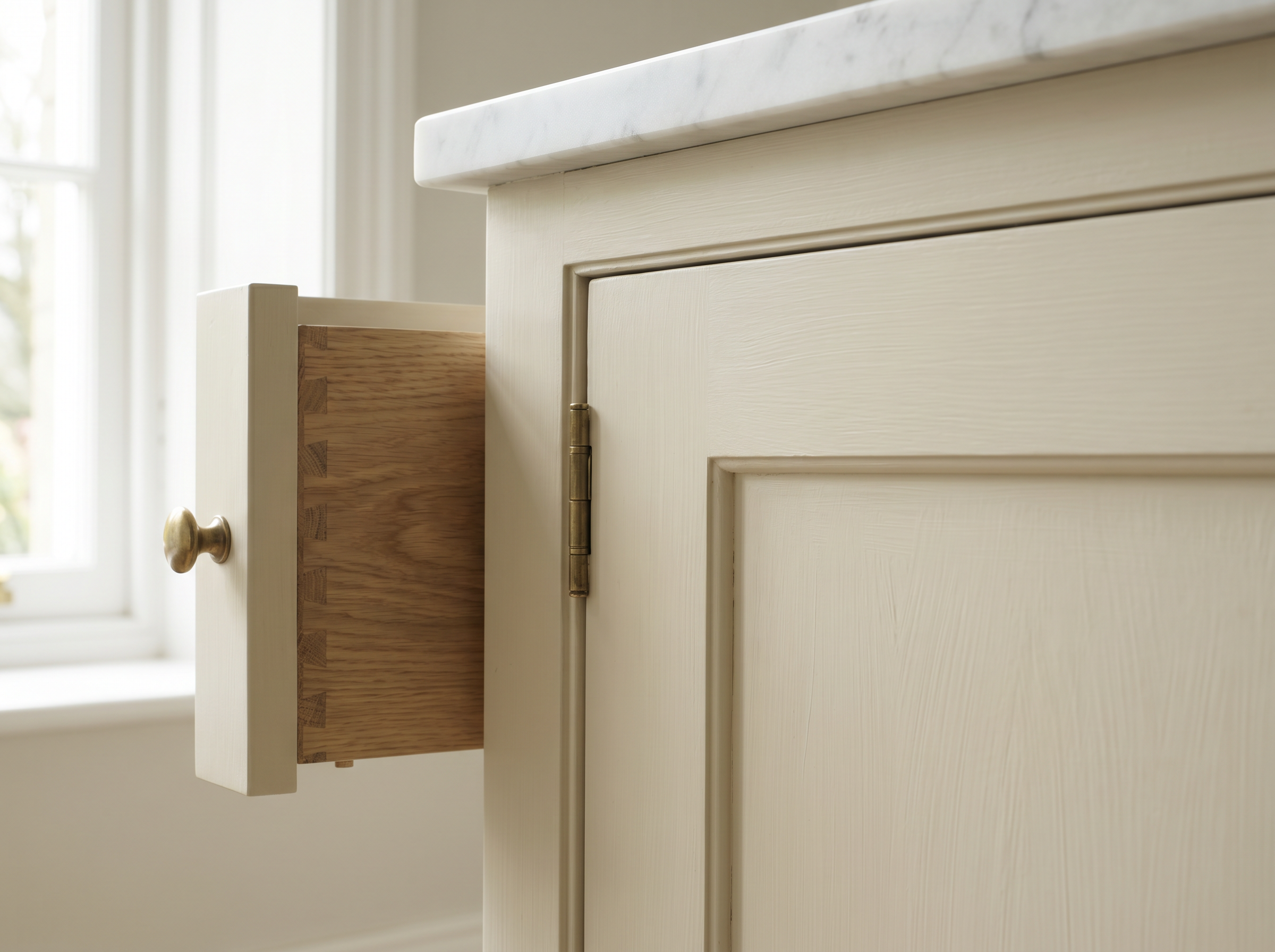
Joinery detail
Small details such as frame width, hinge position, cornice depth and drawer proportion are what make a Shaker kitchen feel expensive without shouting.
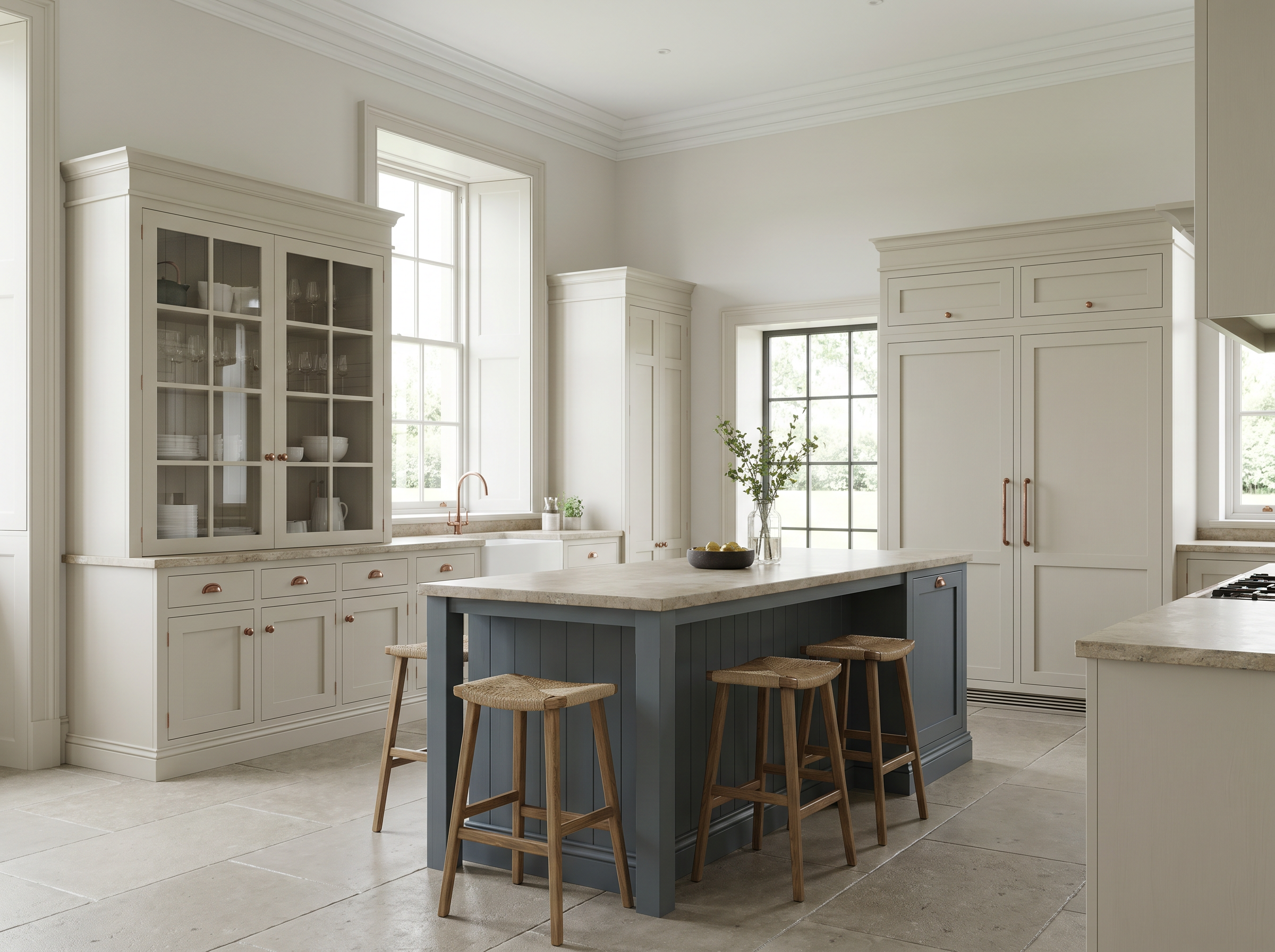
For country houses
The style works especially well in farmhouses, rectories, listed buildings and larger homes where a kitchen must feel settled and long-lived.
Materials and finishes
We usually start with painted tulipwood, hardwood details and a stable birch-ply or hardwood carcass, then sample colours, worktops and ironmongery against the light in the room.
Utility, pantry and boot-room links
A Shaker kitchen becomes stronger when the pantry, utility room, boot room and dresser pieces use the same design language without simply repeating the same cabinet everywhere.
How a bespoke Shaker kitchen is commissioned
We begin with the property, the room and the way the household cooks and lives. From there we develop plans, elevations, material samples and a workshop programme. If an architect, interior designer or builder is already involved, we can work within their drawing set and coordinate the cabinetry package with them.
For local kitchen work, we are particularly interested in serious bespoke projects across Suffolk, Essex, Cambridgeshire and Norfolk where the kitchen, pantry, utility and surrounding fitted furniture deserve the same level of attention as our London joinery commissions.
Frequently asked questions
Can a Shaker kitchen be repainted later?
Yes. A proper painted timber kitchen can be refreshed in future, which is one reason it suits long-term family houses.
Is every cabinet made to measure?
Yes. We draw the kitchen around the room and the brief, including awkward walls, chimneys, old floors and unusual ceiling heights.
Can you include a pantry or utility room?
Yes. Larders, pantries, utility rooms and boot rooms are often designed at the same time as the kitchen so the house works as a whole.
Where are the kitchens made?
They are designed in-house and made in our Suffolk workshop, then fitted by people who understand the cabinetry.
Where the Shaker style can be made more personal
The word Shaker is used so widely that it can mean almost anything: a simple door profile, a mass-produced painted kitchen or a fully in-frame room with proper furniture proportions. For us, a Shaker kitchen is a starting language rather than a fixed range. The exact frame width, panel depth, drawer arrangement, cornice, plinth and handle position are all designed for the room.
In a Georgian house, that might mean taller doors, slimmer rails and a more formal dresser elevation. In a farmhouse, it may mean stronger stiles, a working island, a larder cupboard and a painted finish that will soften over time. In a contemporary extension, the same Shaker grammar can be simplified so it feels calm rather than nostalgic.
The important point is that the kitchen does not look as if it has been chosen from a menu. It should feel as though it belongs to the age, scale and habits of the house.
Islands need proportion
A Shaker island should be useful from every side, with seating, preparation space, storage and circulation balanced before the size is fixed.
Colour changes the character
Soft neutrals, deep greens, warm stone colours and stronger heritage colours all work, provided they are sampled against the room and its light.
Internal storage matters
The outside can stay simple while the inside carries trays, oak drawers, pan storage, bin systems, spice pull-outs and breakfast storage.
A kitchen can continue into joinery
Dressers, utility cupboards, boot rooms and dining-room fitted furniture can carry the same proportion without looking repetitive.
Local kitchen work, national joinery standards
For bespoke kitchens our main local focus is Suffolk, Essex, Norfolk and Cambridgeshire, but Reeve & Co also fits high-end kitchens and fitted furniture nationally. We are regularly working in London on residential joinery projects, so the workshop is used to delivering the same level of detail for townhouses, country homes, apartments and larger private houses well beyond East Anglia.
Thinking about a Shaker kitchen?
Send your property location, drawings or photographs if available, and the rooms involved. We will advise on the best next step.
Bespoke shaker kitchens by Reeve & Co
From our Suffolk workshop we design, make and install bespoke shaker kitchens for high-end homes across London, the Home Counties and East Anglia. Every commission is made to measure and finished to a furniture-quality standard. To discuss bespoke shaker kitchens, get in touch or explore our case studies.