
Glazed Gun Cabinets
Gun cabinets with glazed doors, so a collection worth owning is a collection you can see. Laminated anti-bandit glass, 21.5mm as standard and thicker where the height calls for it.
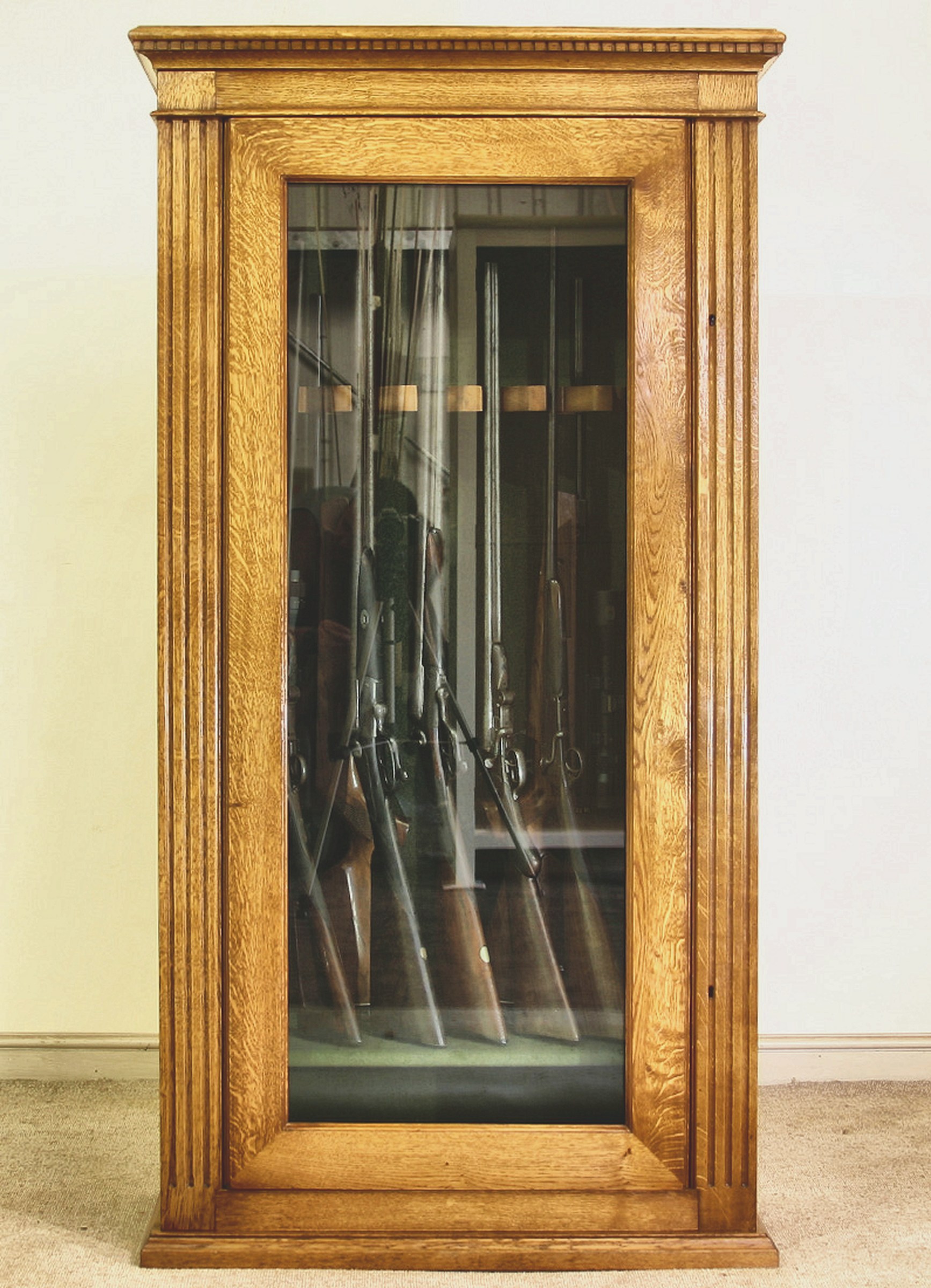
Why glaze a gun cabinet at all
A glazed door changes what a gun cabinet is for. Closed and locked it is still storage, but a collection that has taken thirty years to assemble is usually worth looking at, and a great many of our clients would rather see the guns than a timber panel.
There is a practical argument too. You can see at a glance what is in the cabinet and what is not, which matters more than it sounds when guns move in and out through a season and several people have access to the room.
The counter-argument is visibility of a different kind: a glazed cabinet advertises what is inside it to anybody standing in the room. That is a decision about the room rather than about the cabinet, and it is why we make the same carcass with solid doors for clients who would rather nothing announced itself.
What laminated anti-bandit glass actually does
Laminated glass is two or more sheets bonded to an interlayer. When it is struck it does not fall out of the frame — the fragments stay bonded to the interlayer and the pane stays in the opening. That is the entire point of using it in a door somebody may attack, and it is the difference between a barrier and a hole.
Anti-bandit is a recognised glazing category rather than a marketing adjective, and it describes glass built to resist repeated manual attack rather than a single accidental impact. It is not the same as toughened glass, which is stronger than ordinary glass but shatters into fragments and leaves the opening clear.
We use 21.5mm as standard. Where a door is taller the glass gets thicker, because the resistance of a pane falls as its unsupported area grows — the same specification in a larger sheet is not the same specification in practice.
The weight is considerable, and it changes the joinery. Doors carrying laminated glass are designed around that load from the first drawing: heavier stiles, more hinges, and hinge positions worked out for the finished weight rather than adapted afterwards. A door that drops on its hinges within two years was designed for a lighter piece of glass.
What you see through it
If the guns are going to be visible, the inside of the cabinet becomes part of the furniture rather than a compartment nobody sees.
Interiors are lined — baize is the usual choice — and the barrel rack is set out so that no two guns touch one another. Heights are drawn so that scoped rifles stand with the scopes left mounted. Lighting can be run on a door switch so the collection is lit when the door opens and dark when it is closed.
It is the difference between a rack and a display, and on a glazed cabinet it is most of what you are paying for.
Glazed cabinets
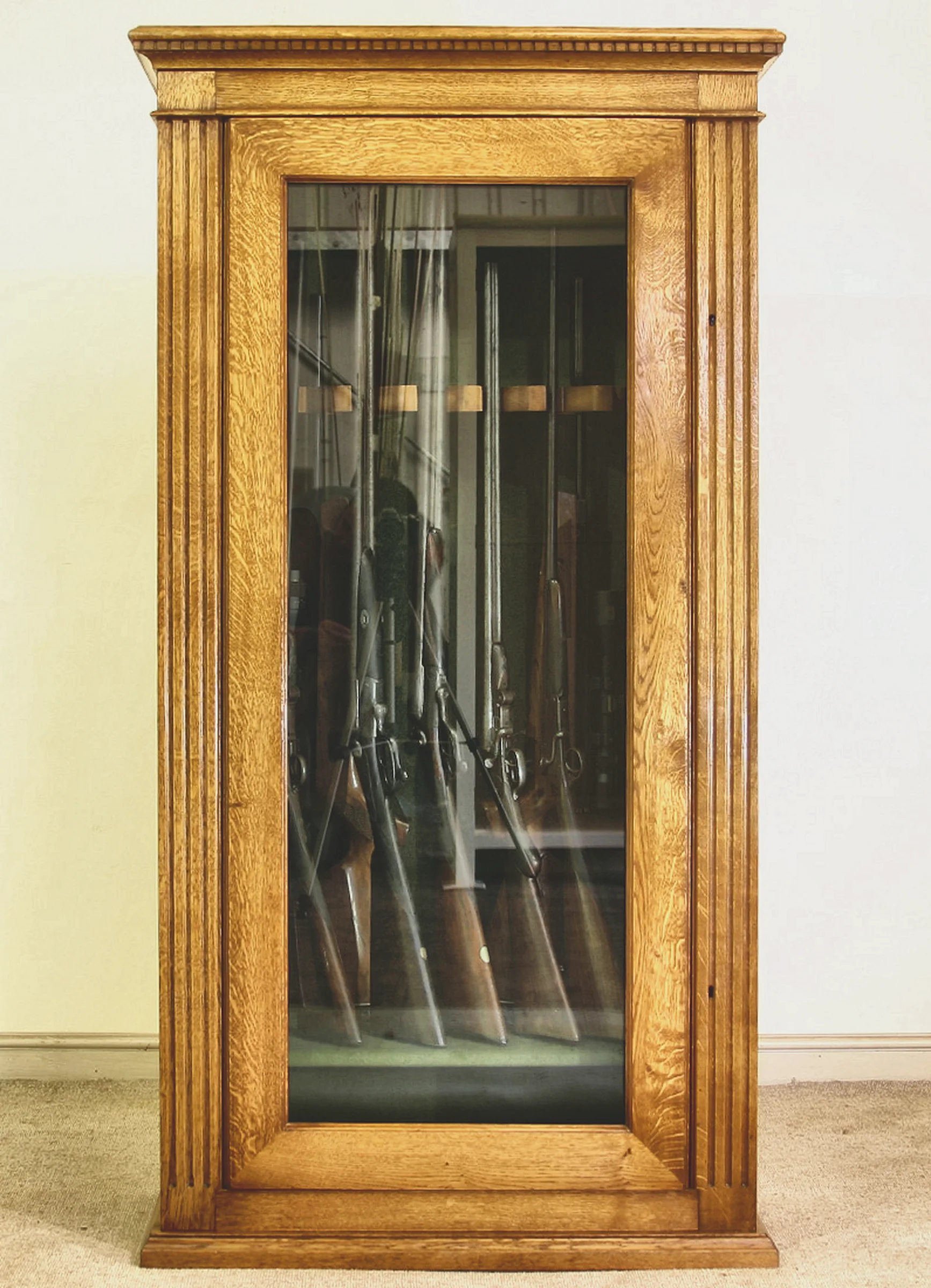
Single glazed door
A single door in solid oak with dentil cornice above and a moulded plinth below.
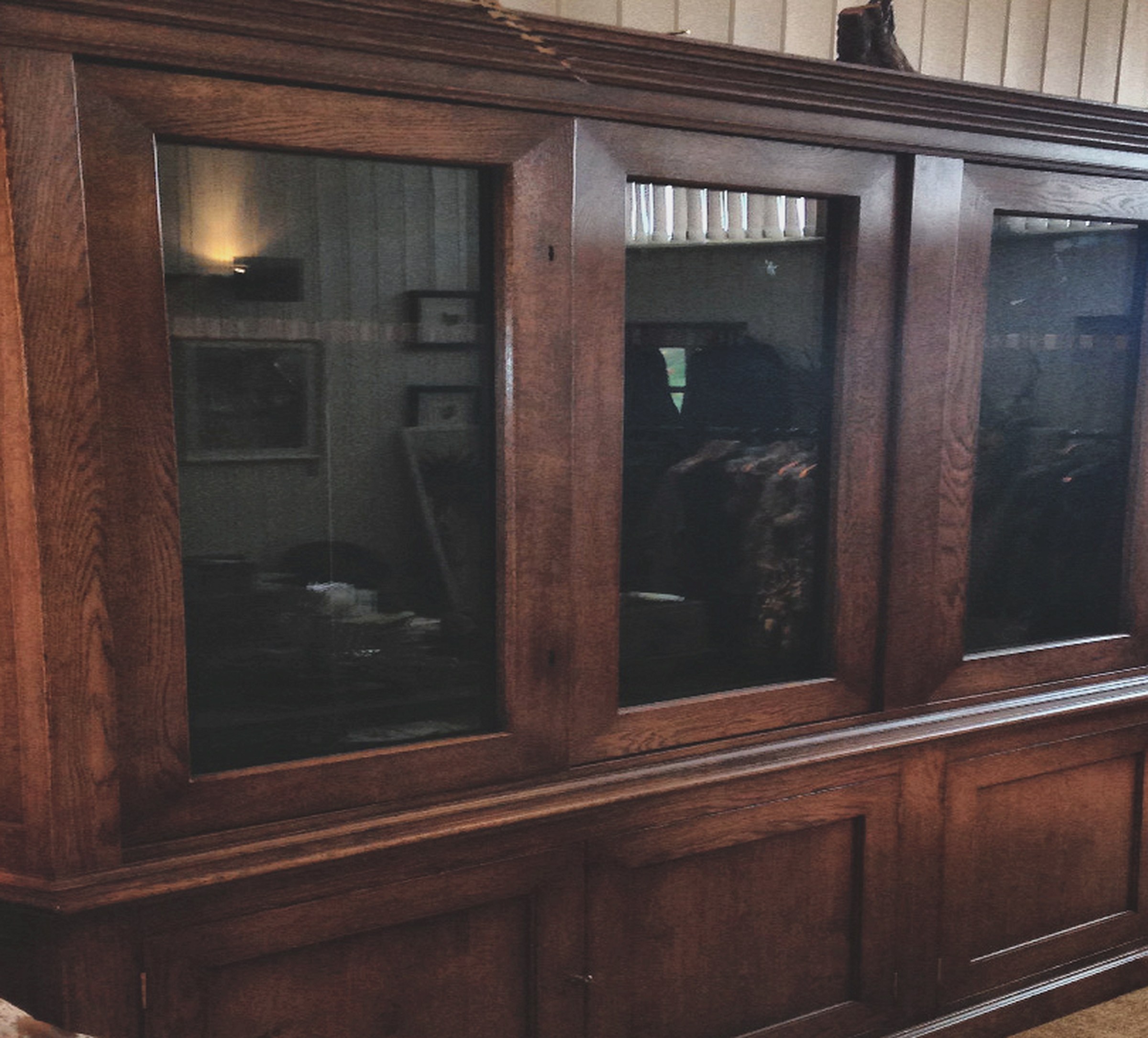
Four-door run
Four glazed doors over a panelled base for a larger collection.
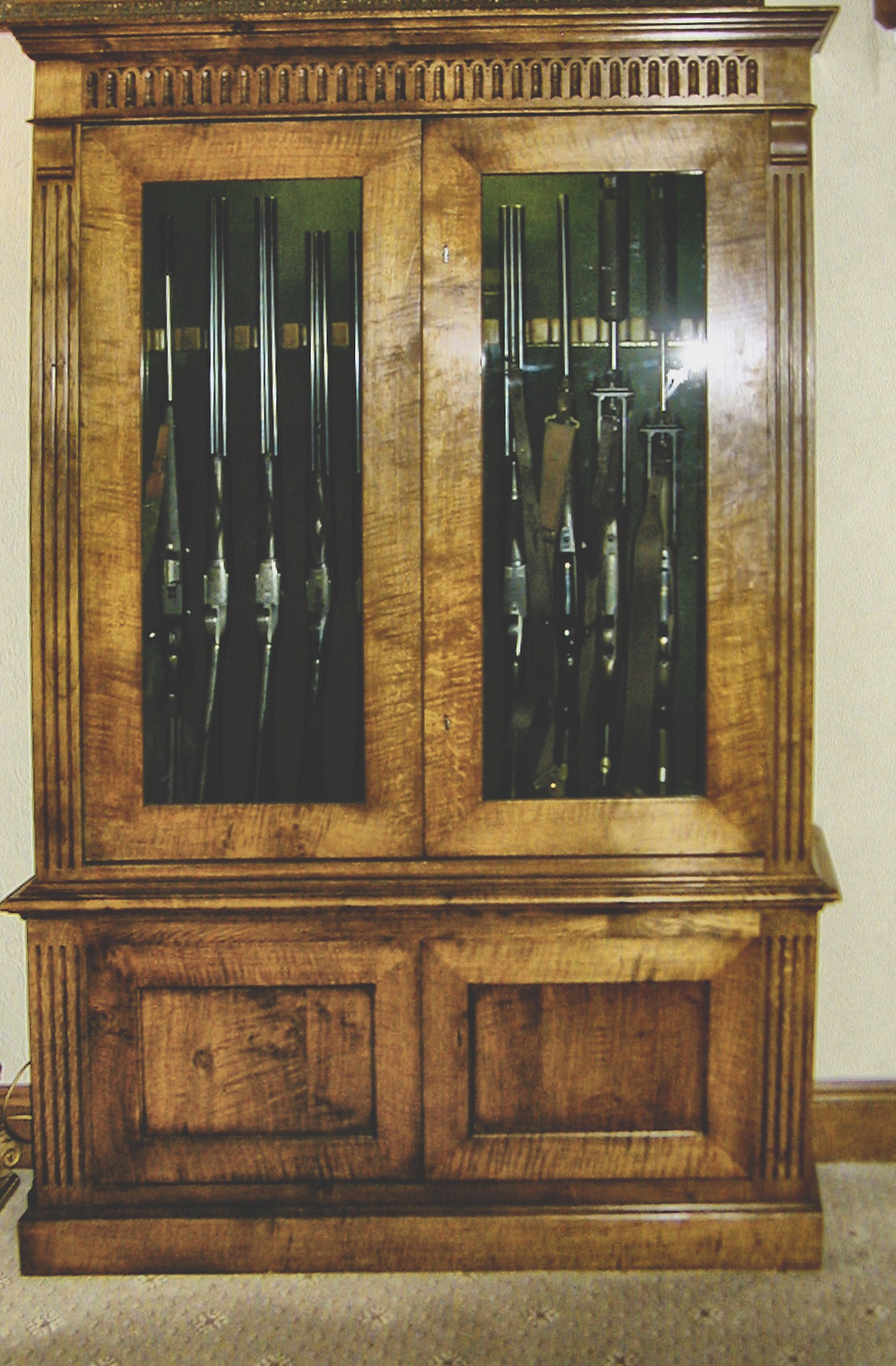
Twin doors, antiqued
Dentil frieze and twin glazed doors, finished to sit with older furniture.
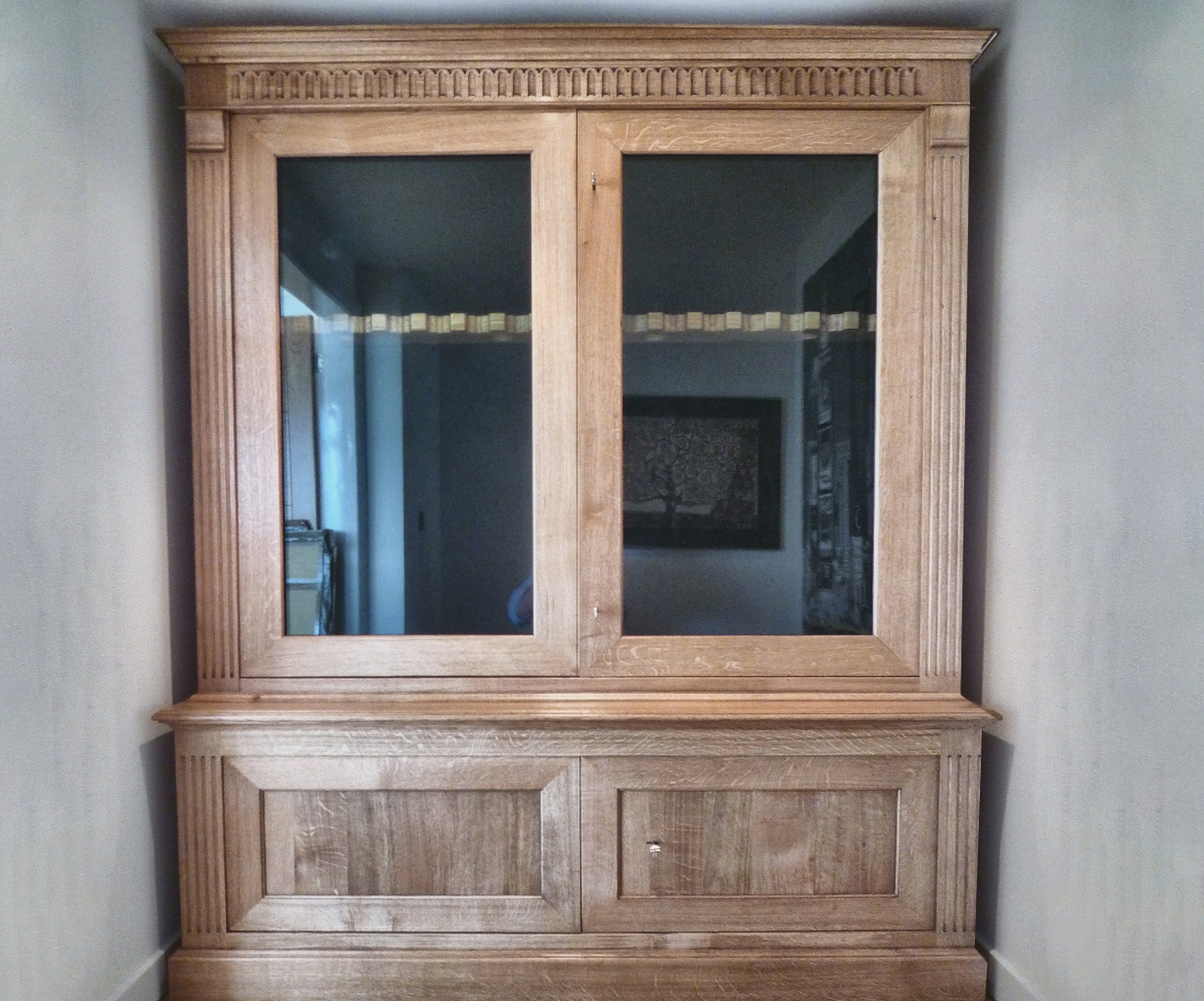
Limed oak
A paler timber and a fitted base, glazed to the same specification.
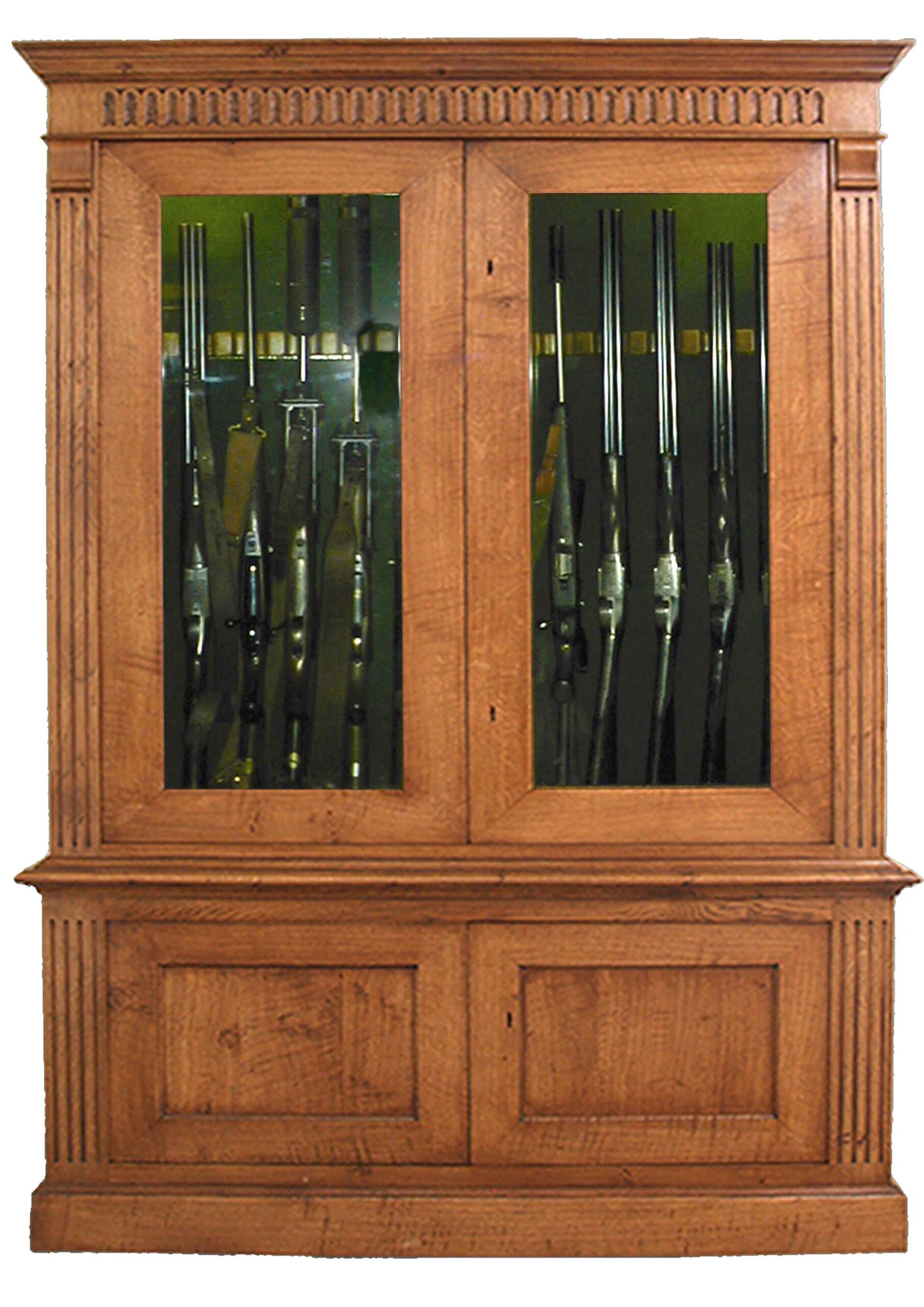
Fitted into the room
Scribed to wall and floor so it reads as joinery rather than furniture.
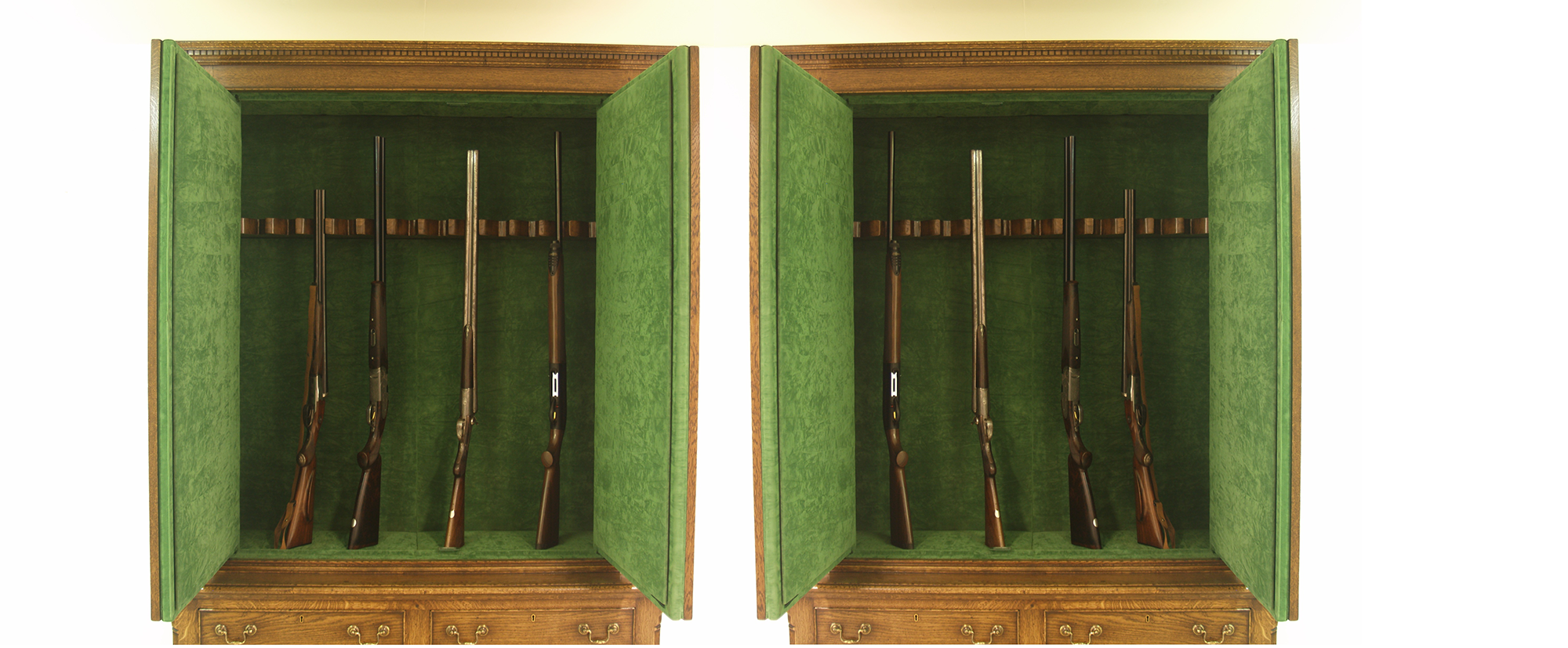
Behind the glass
Lined interior, guns standing without touching, scoped rifles left scoped.
Questions we are asked
Is glazed less secure than solid?
Not in the way people assume. The carcass, the locks and the fixings are identical, and laminated anti-bandit glass is a deliberate barrier rather than a weak point. What a glazed door does change is visibility — it tells anyone in the room what is inside. That is a judgement about the room, not about the strength of the cabinet.
Can I have glazed doors on some sections and solid on others?
Yes, and on larger runs it is often the right answer — the guns you want seen behind glass, the ammunition and kit behind solid doors below. Because every cabinet is drawn from scratch there is no extra complexity in mixing them.
Will the glass yellow or craze over time?
Quality laminated glass should not. What does matter is keeping strong direct sunlight off a collection generally, which is a reason to think about where a glazed cabinet sits in a room, for the guns and their cases as much as for the glass.
Does glazing add much to the cost?
It adds some. Laminated anti-bandit glass is expensive, it is heavy, and the door has to be built around its weight. The starting point of £7,000 plus VAT covers a basic cabinet; we will give you the figure for a glazed version before we draw anything.
All gun cabinets
The overview: what we make, what it costs and how a commission runs.
The specification
Steel, anti-bandit glass, locks and fixings, in full.
What the rules actually say
No law requires a gun cabinet. What the Firearms Rules do require.
Send us your gun list
Send us your gun list and a photograph of the room, and we will come back with a drawing and a price. From £7,000 plus VAT, delivered and installed anywhere in the UK.
Start a commissionFurther reading: gun room security, and what the rules actually say. Responsibility for the security condition on your certificate rests with you as the certificate holder, and the adequacy of any storage arrangement is a matter for your local police firearms licensing department.