
Reeve & Co Interiors
Bespoke Timber Panelling
Bespoke timber panelling from Reeve & Co — handmade in our Suffolk workshop for high-end and super prime residential homes across London, the Home Counties and East Anglia.
Bespoke timber wall panelling designed and made by Reeve & Co – from traditional moulded panel rooms and French-polished oak studies to contemporary flat-panel and batten schemes for modern interiors. Every panelling commission is drawn in-house, made in our Suffolk workshop and installed with the care due to a room that needs to feel both settled and architecturally credible.
Wall panelling that is made, not assembled
Timber wall panelling is one of the oldest and most enduring forms of interior joinery. When it is done well – proportioned correctly for the room, made from properly dried hardwood, detailed at the cornice, dado and skirting, and finished by hand – it transforms a room’s character in a way that no other wall treatment can match. When it is done poorly, the same room feels cheap and temporary.
Reeve & Co makes wall panelling as proper joinery. Each scheme is drawn in elevation, with frame widths, panel proportions, moulding profiles and finish all resolved before any timber is cut. We do not use MDF sheeting dressed up with applied mouldings as a substitute for properly made solid-timber or veneered panels; the construction is determined by what the design requires and what will perform well in the long term.
Our panelling work covers London townhouses, Belgravia and Kensington apartments, country-house reception rooms, private studies, hallways, dining rooms and commercial interiors including private members’ clubs and hotel lobbies. We have also completed significant educational panelling commissions, including work at Ipswich School.
Panelling types and styles
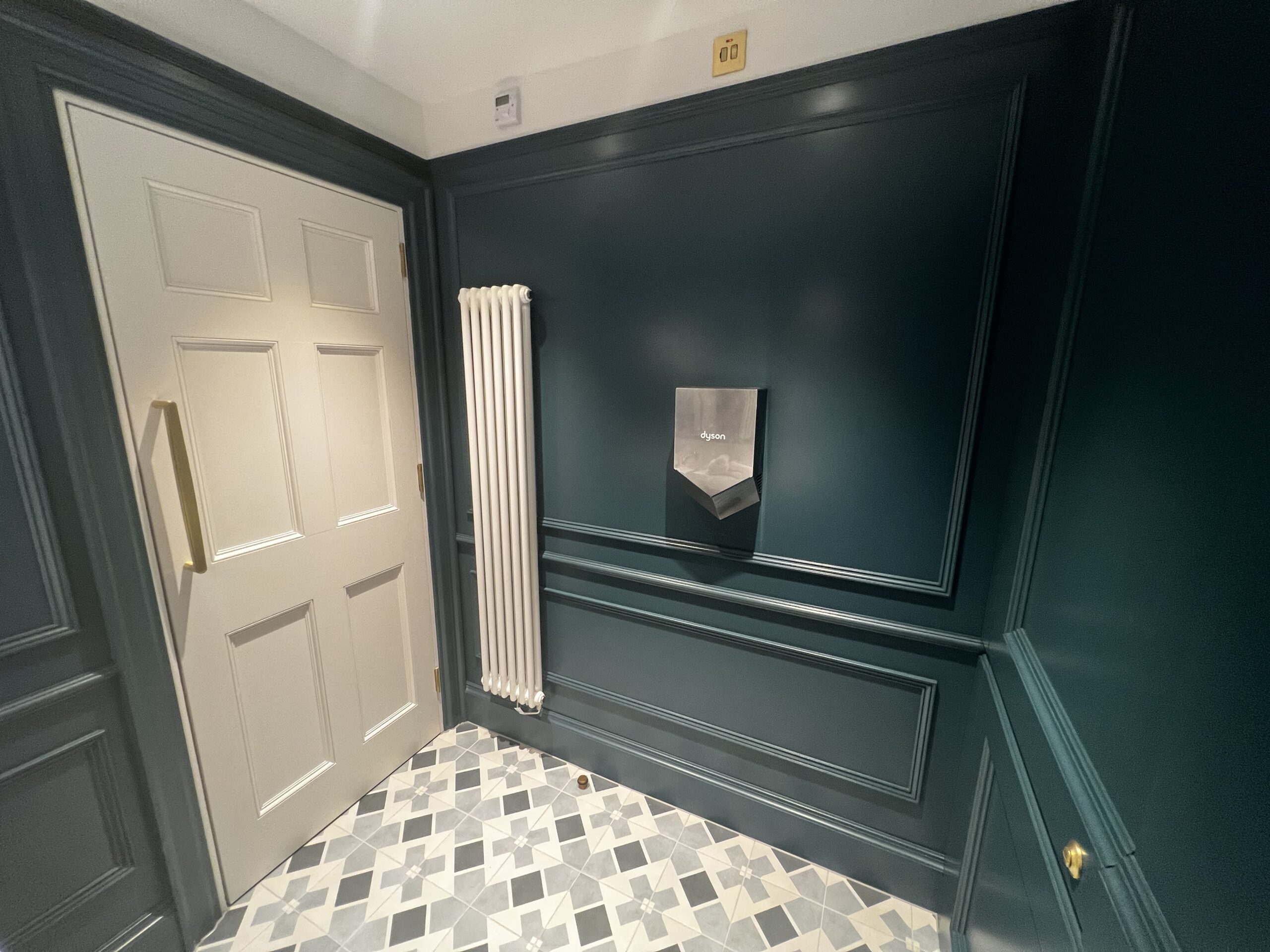
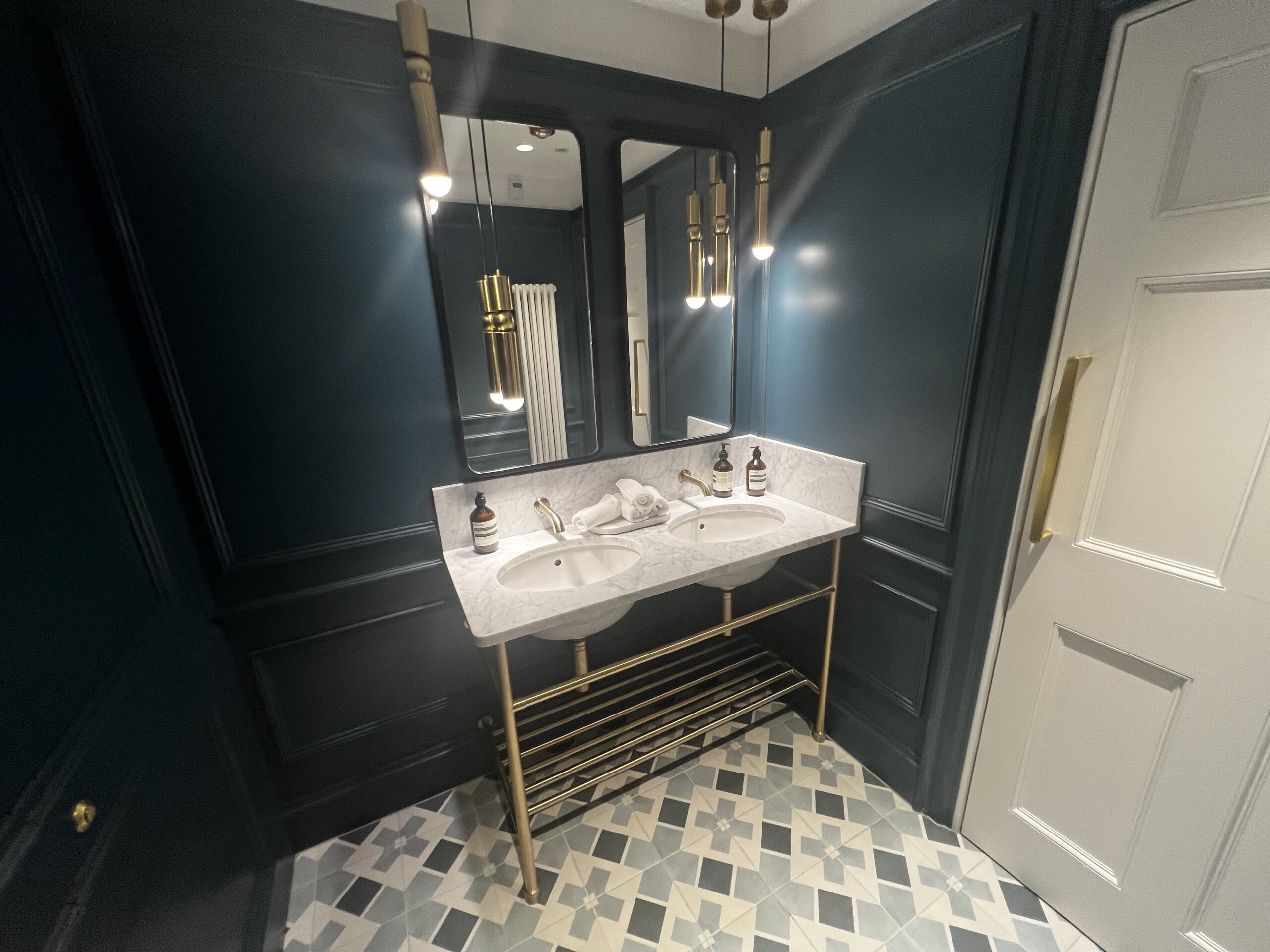
Traditional moulded panelling
Fielded panels with classical moulding profiles – bolection, ovolo, cavetto and ogee – appropriate for Georgian, Victorian, Edwardian and early-twentieth-century rooms. Painted or French-polished as the room requires.
Full-height and half-height panelling
Full-height panelling to the cornice line creates a complete, enclosed interior. Dado-height panelling (approximately 900-1,100mm) sits below a picture rail or dado rail, with plastered or decorated wall above – a lighter approach for rooms where full panelling would feel heavy.
Contemporary flat-panel schemes
Flat, unfielded panels in oak or painted MDF with shadow gaps or flush joins. A quieter language that suits contemporary interiors and gives wall faces visual order without period detail.
Batten and slat wall panels
Vertical or horizontal hardwood battens fixed proud of a painted or upholstered backing. A contemporary approach that adds texture and acoustic benefit to a room.
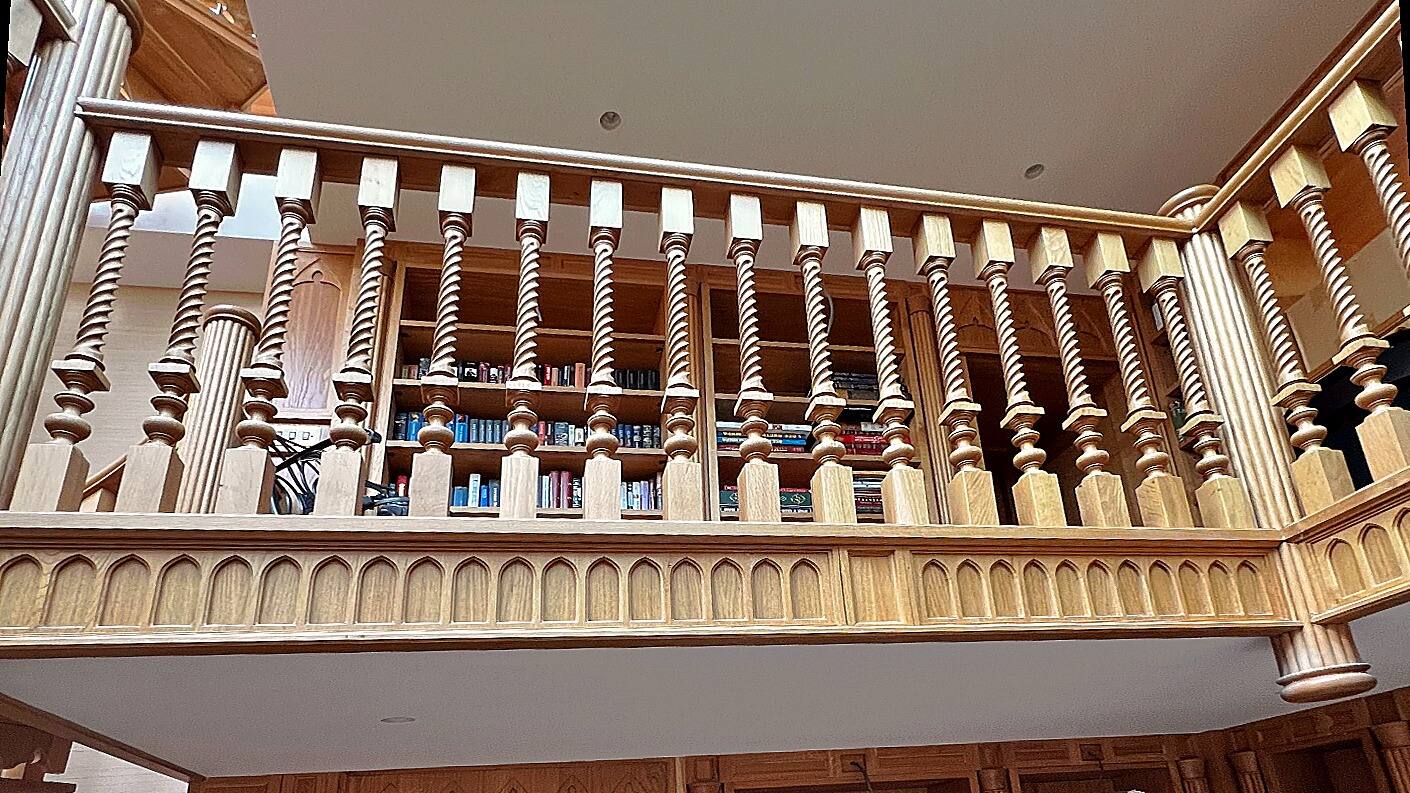
Oak library and study panelling
French-polished or oiled oak panelling combined with fitted bookcases and concealed cupboards. The panelling and the fitted furniture are designed as one interior rather than being adapted to fit each other.
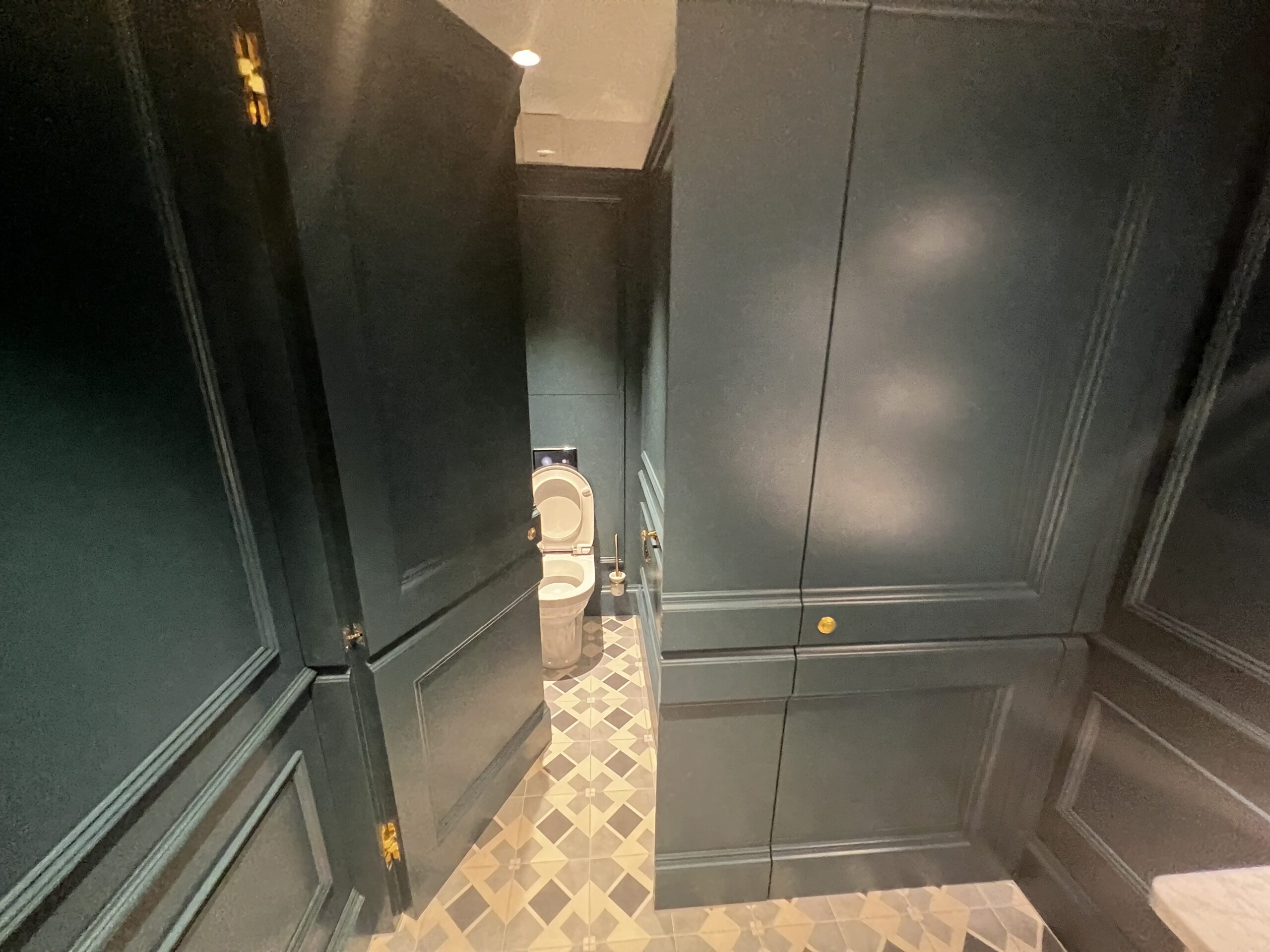
Panelling with concealed doors
Jib doors or hidden service doors incorporated into a panelled wall, flush with the panel faces and with concealed hinges. A technically demanding detail that Reeve & Co has delivered on multiple London commissions.
French polishing and traditional finishes
Reeve & Co has its own French polisher, which places us in a small group of UK joinery workshops able to offer this finish in-house rather than subcontracting it. French polishing – the traditional shellac-based hand-built finish – is the correct finish for period oak, walnut and mahogany panelling, and for reproduction furniture where a deep, hand-applied lustre is required. We also apply oil, wax, lacquer and painted finishes in-house, so a panelling commission can include multiple panel species and finishes within a single room.
The distinction between a French-polished surface and a lacquered or oiled one is not merely aesthetic. French polish builds up in many thin coats, each applied by hand with a rubber, gradually deepening the grain and creating a surface that has real optical depth. It is repairable by hand on site if damaged. It responds to changes in humidity as the timber does. It is the right finish for panelling in a room that will be used formally and cared for properly. Lacquer is tougher, more resistant to water and less susceptible to bloom; it is the better choice for rooms that are in heavier use or where the surface needs to withstand the contact of daily life without regular maintenance.
Materials and finishes
European oak
The most widely used species for English timber panelling. Warm, stable and architecturally sympathetic, available with straight grain, through-cut or quarter-sawn figure. French-polished, oiled or painted.
American white oak
A cleaner, lighter tone than European oak. Popular for contemporary panelling schemes where the material needs presence without the amber warmth of European oak.
Walnut
Rich, dark and formally impressive. Walnut panelling suits dining rooms, studies and reception rooms in townhouses and substantial private homes.
Painted hardwood and MDF
For painted rooms, we use solid hardwood frames and either solid-timber or high-density MDF panels, depending on the profile and finish requirement. Hand-sprayed in any specified colour.
Veneered panels
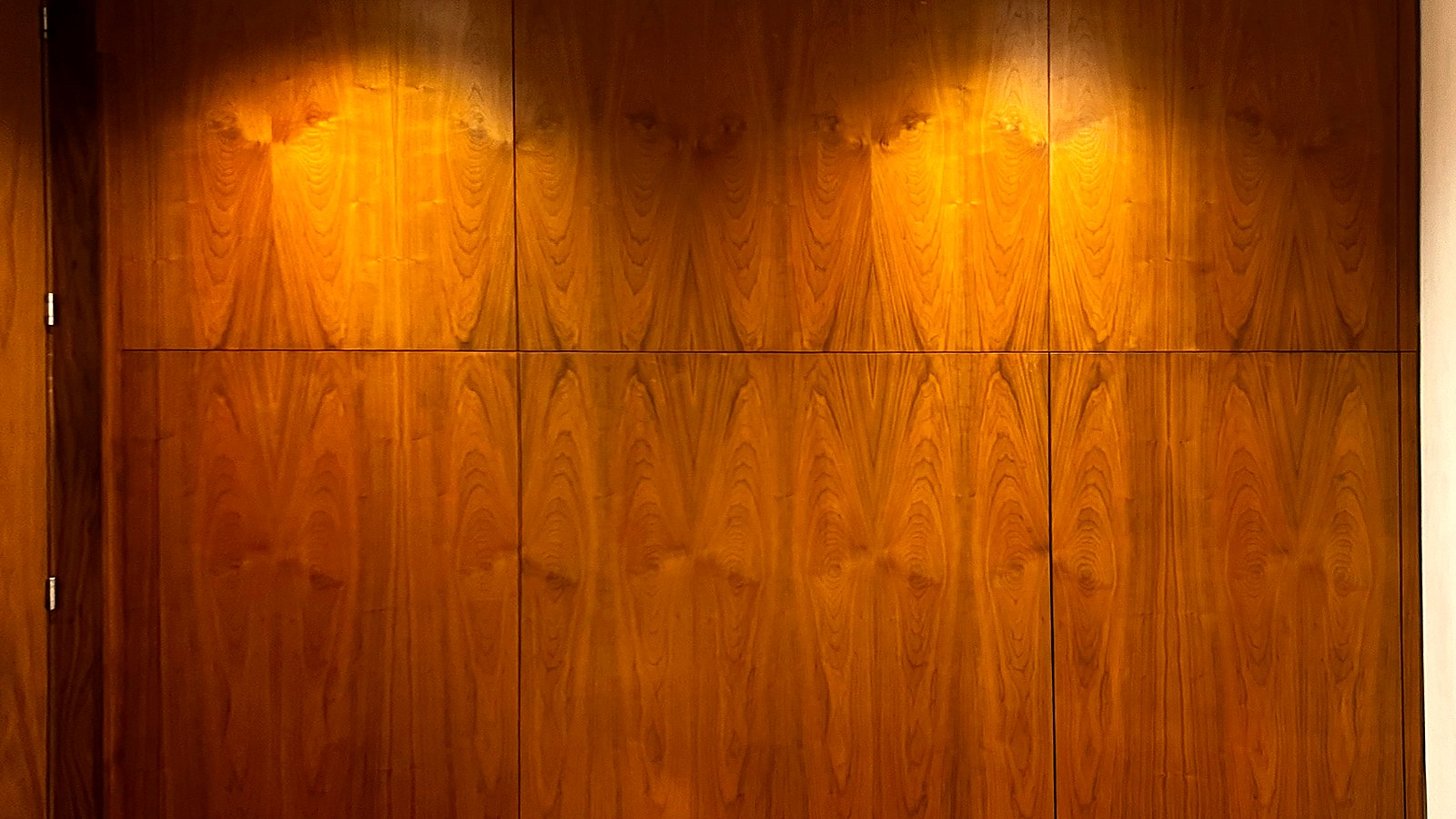
Book-matched or random-matched veneers on stable substrates for large panel faces where solid timber movement would be a technical risk. Veneers sourced to match species and figure.
French polish and lacquer
Traditional hand-built French polish for period rooms; hardwearing lacquer for contemporary schemes and high-traffic areas. Both applied in-house by our own finishers.
Recent timber panelling projects
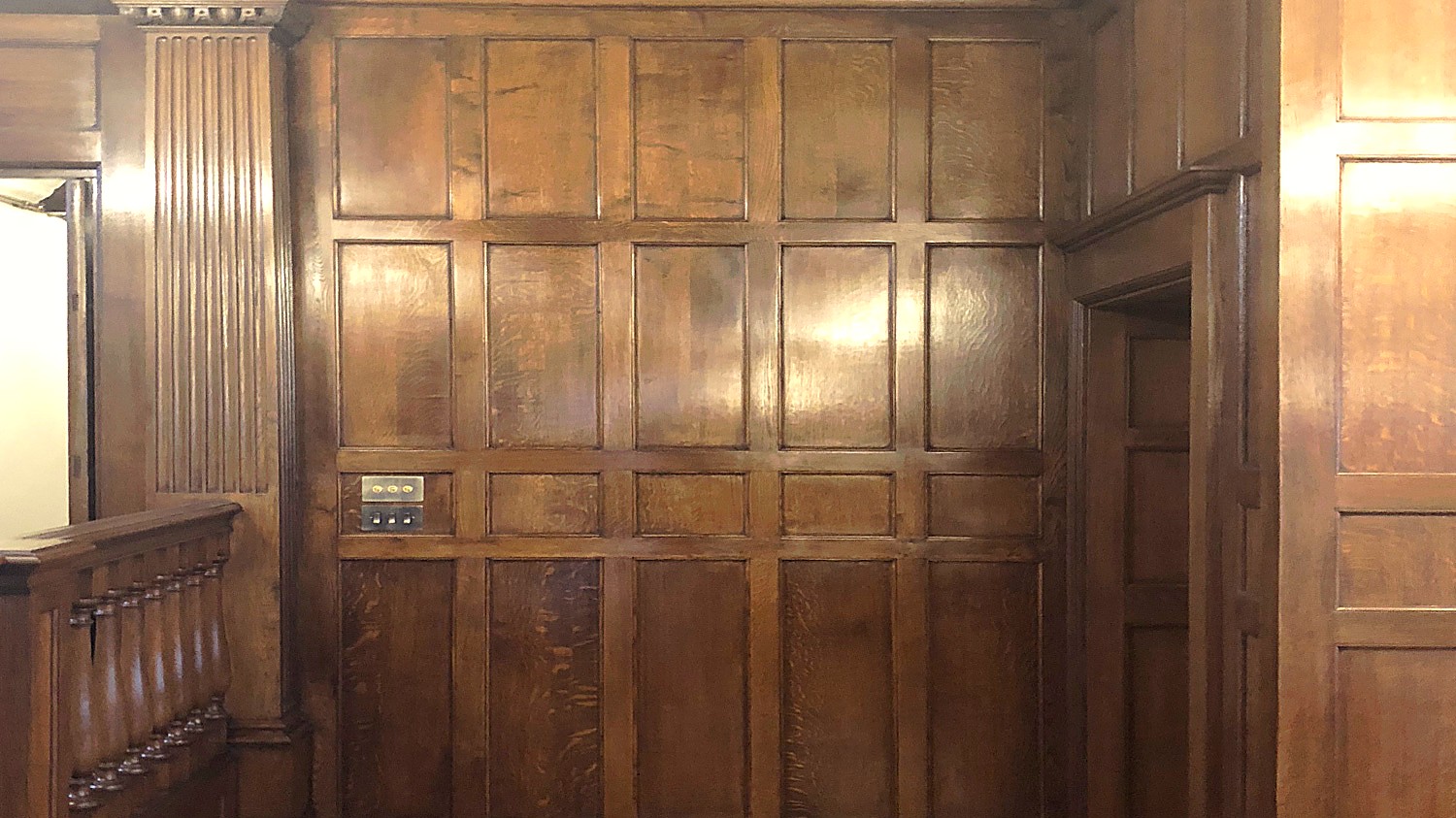
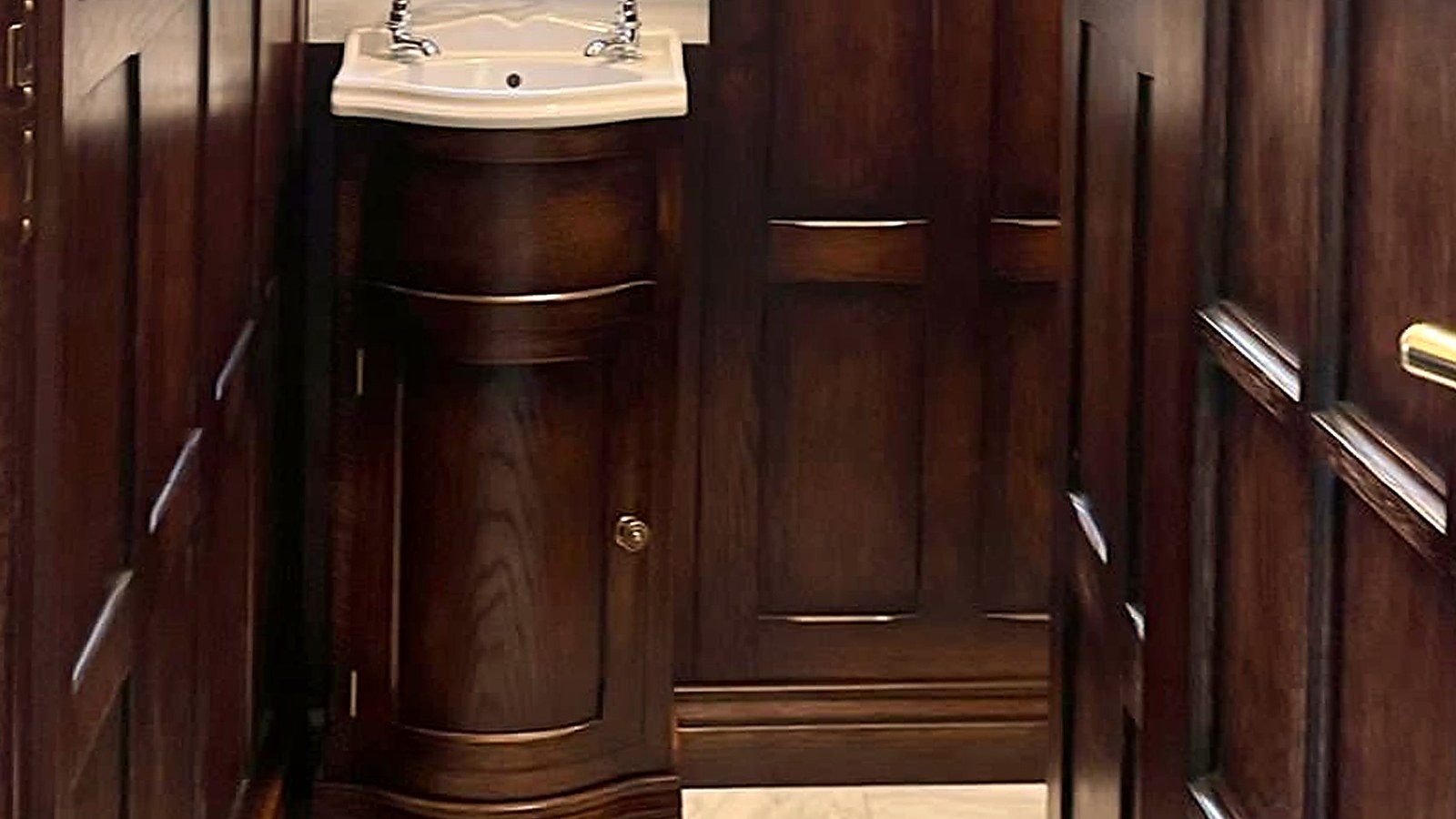
View all completed projects
What makes timber panelling last
Timber panelling fails when it is made without regard for the movement of wood. Solid timber expands and contracts with changes in humidity and temperature; a panel that is glued rigidly into its frame will split under seasonal movement. A panel properly housed in its frame with an appropriate clearance gap is free to move without deforming the face of the work. This is basic joinery knowledge, but it is often ignored in cheaper panelling installations where speed of production takes priority over long-term performance.
Reeve & Co makes panelling to perform over decades. We specify timber that has been properly dried and stored. We use appropriate substrate materials for painted work. We account for seasonal movement in the design of every panel and frame joint. We apply finishes that allow the timber to breathe where the species requires it, and hardwearing lacquer systems where the room demands it. The result is panelling that does not crack, does not delaminate, does not distort and does not need to be replaced within ten years of installation.
We have reinstated and extended existing panelling in listed buildings where the original eighteenth-century work was still sound, working to match profiles, timber species and finish so that the new work is indistinguishable from the old. This is exacting work and it is one of the most satisfying commissions our workshop takes on.
Where we work
Timber panelling commissions are accepted across London and the Home Counties, where the majority of our residential panelling work is concentrated, and in East Anglia and the wider UK for the right projects. We are experienced at working in occupied properties, listed buildings and heritage-sensitive interiors where the construction method and reversibility of the panelling are important considerations.
Panelling in the context of a wider project
Timber wall panelling rarely exists in isolation. In most residential commissions, a panelled room is also a room with fitted joinery: a panelled study will have a fitted desk and bookcases, a panelled hallway will have fitted cupboards and a boot room, a panelled dining room may incorporate a fitted drinks cabinet or display shelving. Reeve & Co designs and makes both the panelling and the associated joinery as a single scheme, so the reveals, moulding profiles, timber species and finish all read consistently across the whole interior.
This coordination matters. When panelling and fitted furniture are commissioned separately from different workshops, the junction between them is almost always visible: the cornice profiles do not quite match, the reveal widths are different, or the paint finish differs slightly. When they come from the same workshop, the room reads as a composed interior rather than a collection of individual elements.
Return to the fitted furniture overview or explore our related joinery services: home offices and studies, alcove and fireplace joinery and fitted wardrobes.
Timber panelling FAQs
Discuss a timber panelling commission
Send us photographs of the room, the architectural context and any design references. We will assess whether bespoke panelling is the right route and outline the process and timescale involved.
Bespoke timber panelling by Reeve & Co
From our Suffolk workshop we design, make and install bespoke timber panelling for high-end and super prime residential homes across London, the Home Counties and East Anglia. Every commission is made to measure, drawn in detail and finished to a furniture-quality standard, then installed by our site team.
We work directly with homeowners and alongside architects, interior designers and main contractors, building with carefully selected, responsibly sourced timber. To discuss bespoke timber panelling, get in touch or explore our case studies and about us.
Timber panelling in Suffolk
All our panelling is drawn, made, finished and fitted by our own people from the workshop on Stonham Road at Mickfield, between Stowmarket and Debenham. Panelling only looks right when the stiles, rails and mouldings are set out to the room itself — to the windows, the doors, the fireplace and the ceiling height — so every scheme is drawn in CAD to a measured survey before any timber is cut, then scribed to walls that are rarely true.
We work across Suffolk and into Norfolk, Essex and Cambridgeshire, as well as London and the Home Counties, on full-height and dado panelling, libraries and panelled studies, and panelling matched to original work in period and listed houses. Our current lead time is around eight weeks, and most schemes are delivered within 16 to 20 weeks.
Panelling we have made
- Panelling with traditional detailing for a period home in Ingatestone, Essex.
- Panelling and a library for a country house near Oxford, detailed to the period of the building.
- Wall panelling and fitted joinery for a private house near Sloane Square, Chelsea.
- Veneered wall panelling carrying the character of a workplace in Grosvenor, Mayfair.
Our piece on getting proportion and detail right in wall panelling goes further into setting out. To talk about a room, call 01449 710500.
Related pages
- how a commission works — survey, drawings, manufacture and site
- brochure downloads
Can panelling be fitted in a listed building?
Yes, but the method of fixing must be appropriate to the building fabric and any relevant listed-building consent conditions. We are experienced at working in period and listed buildings and can advise on fixing methods that are reversible and do not damage historic fabric.
Do you use solid timber or MDF for wall panelling?
Both, depending on the design and finish. Solid hardwood frames and solid panels are used where the moulding profile, finish or specification demands it. High-density MDF panels within solid frames are used where the painted finish or flat profile makes solid timber movement a consideration. We specify the right material for each part of the design.
Can you incorporate concealed storage or doors within the panelling?
Yes. Concealed jib doors, flush-fronted cupboards and integrated shelving within a panelled wall are all part of our offer. These are technically demanding details that we resolve at the drawing stage.
Do you offer French polishing in-house?
Yes. We have our own French polisher, which allows us to offer traditional shellac-based hand-built finishes on oak, walnut and mahogany panelling without subcontracting the finish. This is an important distinction for period panelling commissions.
How long does a panelling commission take?
A single-room panelling commission typically takes eight to fourteen weeks from drawing approval to installation, depending on the species, finish, moulding complexity and workshop programme. We confirm a realistic timescale when we quote.
Send us the drawings, or call the workshop
Architects, designers, contractors and private clients are all welcome. Send your drawings or a brief and we will come back with a clear, honest view of scope, programme and cost.